Writing Prompt for January 2026
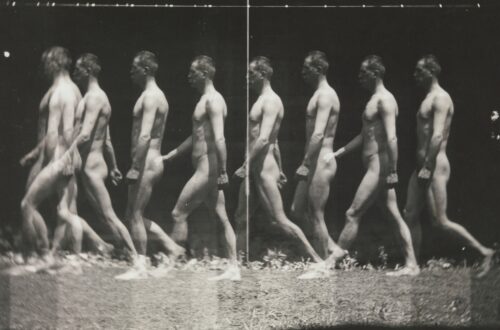
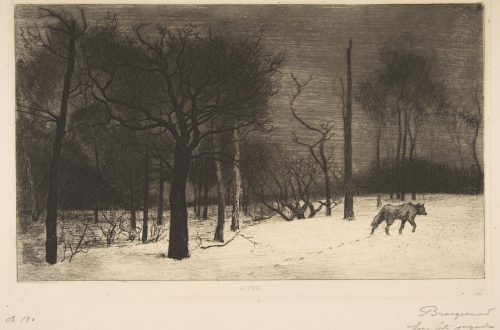
image curtesy of the Public Domain Review
On Optimism
by Charlotte Slivka – Editor in Chief
With the return of the monthly writing prompt series, we hope to engage readers with topical or craft related thoughts and ideas. Each month one of our editors will share a little of themselves and their writing and invite readers to write with a generative prompt. Thank you for reading and we hope your writing flows and flows.
January has already kept its promise of dreary winter doldrums. If we are lucky we are inside with our families, chosen or otherwise going a little stir crazy. We miss the sun, and watch our screens a little too much; we stew. Lately it seems every conversation I have about the state of the world and items in the news has speechless head shaking in place of language and discussion. What happens if we all despair at the same time? No really, that’s a question…
What is it I am trying to convince myself and others of when I use the expression radically optimistic? I’m not sure, I say, when friends ask, what does that mean? Insert half-remembered holiday party conversation here…. I find myself waving my hands around — a lot — in explanation; pens are waving, keyboard keys are jumping up, wriggling in space and waving. To my mind there is a resistance implied.
But what am I resisting and why is it necessary to use the word radical? A word that has current associations synonymous with politics and those who would resist. What is it about being optimistic that requires the use of the word radical? Why not just say extremely optimistic or, if I’m being honest, foolishly. Radically fits in a way that is open ended that I like; it seems to allow room for an as-yet-to-be-known more to happen; a word for evolving circumstances and perhaps meaning? What else is happening with the word radical besides this popular notion of it characterizing the woefully unruly. If we’re talking politics, capital (R)adical is not a one-sided equation but seems to describe both a severity of force and the reaction required to resist it on the other. What if another idea exists?
Here’s what I think I mean: to be radically optimistic is to choose hope and optimism within the parameters of a darkness so utter and complete that the choice to think and react in terms other than dark and hopeless does not exist. Within this context to choose to be hopeful and optimistic is to create a choice. I admit: in awareness of some recent world and local events optimism does seem a fools’ errand. Personally, I side with the fool but for those who don’t maybe the idea at work here is this: in dreaming an open-ended yet-to-be-known optimism is a kind of faith; that the dream will dream its errand forward like a kind of chain reaction of positivity that might pave the way – an invitation if you will – for some kind of joyful existence to occur, or an environment in which to create joy ourselves even in some small way. A shift of perspective from this current road of dread we are on, in dread of more dreadful occurrences that haven’t happened yet but surely will happen, because this is the World and the trajectory we are on can only lead us to….
In choosing a stance of radical optimism I am not stopping the bombs from falling I am not stopping fascism or the murder of poets; I am at risk of being called a Pollyanna: the excruciatingly optimistic heroine in the novel of the same name; the name that spawned an adjective that ironically stops in its tracks and does away with any threat of optimism: pollyannaish. Here’s where I’d like that to end: I am an extremely dark individual. My water can easily rise to the blackest of seas. I have instructed my friends to throw out a secret safe-word when my thoughts and language start to trend without any sign of stopping in ever increasing dark directions. With vivid detail to quell my own anxiety, I will imagine worst-case scenarios. With precise logic I will follow the darkest threads of my dread to their charred and terrible ends. This calms me down. It’s a trick I use to allow surprise and optimism in when things don’t turn out to be so bad. But these days, the surprise is the accuracy of prediction.
I sense that the parameters around the usage of the word radical have been greatly reduced or narrowed from its origins: why else this reach for the word and this feeling that there is more to it? With terms like: free radical, radical surgery, and radical sign what else is happening here besides woefully unruly math?
The origins of the word radical refer to literal roots: such as in trees and plants (thank you Merriam-Webster). Terms such as radical tubers and radical leaves refer the action of those things “proceeding directly from the source” the source itself being radical, the essence, the origin = radical. Why tubers and leaves choose to grow from the radical root, over a stem that reaches out of the ground or whatever tubers normally grow from as per usual is largely dependent, I suspect (I would remind readers that my MFA from The New School is not in Botany), on local and environmental circumstances at the time of its growing.
Etymology aside, I do wonder how a word can go from describing a type of growth that proceeds from the essential source, to being a word that essentially characterizes deviant antiestablishment behavior. Is the leaf that grows uncharacteristically out the dark of the earth from its root being radically deviant by growing erratically, or is it being radically optimistic in finding its way to the sun?
For this January writing prompt, we ask you to consider and explore optimism, and any word that might go with it. If optimism is not what resonates feel free to explore the blank at the end of paragraph 3.
We would love to know what readers come up with! Please follow us on Instagram @Litmagazine_1999