The Continental
art by Isabelle Carrasso
by Andrew Eastwick
After his grandfather died, Clark inherited the Lincoln Continental. It hadn’t been left to him specifically; the will made no provision for the car. But no one else wanted to keep it. His relatives were preoccupied with the house and the furniture and what was left of the investments. So after a bit of wrangling with a faction of the family who wanted to sell the car, and a bit more wrangling with the DMV, the Continental was his.
It was an improbable car for a high school junior who had just obtained his driver’s license. A full-size luxury model from the early eighties—a “boat,” his father called it—and white, which was difficult to keep clean, especially with all the rain and mud that spring. The interior had a peculiar smell, not the old-man smell Clark associated with his grandfather, but a strange combination of mustiness and mint. The mustiness made sense, but he wasn’t sure where the mint came in. He hadn’t known his grandfather to eat mint candies or smoke menthol cigarettes. But he had to admit that his grandfather had always been a mystery. Clark knew him more from his father’s stories than from any direct interaction he’d had with the man, which had consisted mostly of sitting on the shag carpet while his grandfather reclined in his plaid La-Z-Boy and watched TV—an experience that alternated, with the click of a remote, from full volume during “Family Feud” and “Tic-Tac-Dough” to ear-ringing silence during the commercials. Maybe the mint smell had come from an air freshener. But how could it have endured for so long? Somehow it had always been there, as elemental to the car as its V8 engine and opera windows. Clark remembered the smell from riding on the plush leather backseat as a kid, though he hadn’t pinpointed it until the car was his.
Everyone who noticed the Continental wondered why Clark would want to drive such a vehicle, rather than a Wrangler or a Blazer, something cool like that. Billy Joel, who knew about such things, had once enumerated a Continental with whitewall tires among the trendy items he was too proudly retrograde to own. But that was in 1980, before Clark’s car (which happened to have whitewall tires) had been manufactured, before Clark had been born. And if “It’s Still Rock and Roll to Me” had taught Clark anything, it was that public taste is fickle. There was the possibility of nostalgia, of course, but the car was still in the dormant phase of that cycle, and it wasn’t flamboyant enough to qualify as the right brand of eccentric. It was nineteen years old, still a little shy of classic and a long way from antique. It had poor pickup. It guzzled gas. But its parts were in good condition and it handled well. Clark’s grandfather had only used it to drive around town, so the mileage was low for a car its age.
The size came in handy. Clark enjoyed escorting large groups of friends to and from school and social gatherings, even if no one ever agreed with him that the car smelled like mint. His inaugural experience with alcohol had been underwhelming, and now he seized every opportunity to serve as designated driver. Once on I-95 his friend Dennis barfed out the window. When Clark got home he expected to find puke streaks along the side, but the wind had swept away any trace. He hosed it down anyway, because it would have bothered him if he hadn’t.
On another occasion he fit seven girls in the car. True, one was his sister Kelly, who called shotgun and found the whole experience less amusing than the other six, her softball teammates who needed rides home from practice. The girls squeezed into the back and sat on each other’s laps, filling the Continental with their lively chatter and jostling bodies and welcome female exuberance. The only one who took things too far was Ruby Bedirian, an old friend of Kelly’s who, come to think of it, Clark hadn’t seen around in a while. He wondered if they’d drifted apart. It wouldn’t have surprised him, based on Ruby’s present behavior. She hogged the middle of the seat while shouting wisecracks and letting loose with her off-kilter laugh. Clark kept catching glimpses of her outlandish aquamarine hair in the rearview mirror. As soon as she got out, the other girls started trash-talking her. Except for that, it was a pleasant experience. He hoped he might become the team’s regular chauffeur, but no further opportunities arose before the season ended.
Clark took over the food shopping from his mother, who was skeptical but seemed relieved to have one less chore. The trunk of the car fit groceries for their family of four with room to spare. Clark was a whiz at the supermarket. His mother would give him a list and a budget and he would save her money by clipping coupons and snagging sales and doing some shrewd comparison shopping, which freed up a few extra dollars for his culinary exploits. Having appointed himself family chef, Clark was always looking for new recipes to try. He made stews and pot roasts and perfected his homemade pasta sauce, mixing whole and crushed tomatoes with a proprietary blend of herbs and spices, chopping the onions and garlic so fine they melted into the texture of the sauce, and adding the peppers at the very end so they wouldn’t get bitter.
***
“Son,” his father said one evening after a delicious Hungarian goulash Clark had prepared, “I think it’s time you started considering what you might want to do with yourself.”
“I figured I’d mow lawns again this summer,” Clark said.
“That’s all well and good, but I’m talking about the future. Unless, of course, you intend to go into landscaping.”
“As much as I enjoy mowing lawns, that career path hadn’t really crossed my mind.”
“Well, it’s high time something of that nature did cross your mind. You’re a rising senior. Time to start thinking about college, and you can’t think about college without thinking about a career.”
Clark hadn’t made the connection between his academic choices and eventual career path, much less given serious thought to where he might want to go for college. A pile of brochures sat on his desk, but he hadn’t opened any of them. That was for next year. He was having such a lovely time cooking for his family and tooling around in the Continental that the future seemed, well, in the future. He had hoped he could just spend the summer doing those things while picking up some cash mowing lawns.
“I thought I might go the liberal arts route,” he said.
“Sure, get a well-rounded education. But you need to start exploring specific options, get a feel for what’s out there, you know? And rack up a few more extracurriculars for the old resume while you’re at it. Now, I was thinking perhaps real estate might be right up your alley.”
This, as it turned out, was not a suggestion of a possible course of action but an introduction to a scheme already in progress. Clark’s father had pulled a few strings and arranged for an internship at the agency of Stigler, Stigler & Tarp. Clark wondered what relation the two Stiglers were to each other and discovered they were first cousins once removed, which hadn’t been on his list of possibilities. Their job, apparently, was to “man the phones,” which meant staying in the air-conditioned office and bickering with each other while Margie Tarp did all the field work, staging and showing houses.
Margie resembled a blowfish with a pile of salt-and-pepper hair that seemed to account for a third of her height. She always wore silk blouses with strips of fabric dangling in peculiar places. Clark at first assumed they were the tails of bows, but no bows could be found on any of these blouses. Since it would have been improper to inspect Margie’s torso in any detail, Clark remained uncertain as to the origin of these strips and assumed they must have been sewn onto the garments at random.
His first day on the job, Clark wore his new double-breasted black suit. It was new to him, but it was as old as the car, another item of his grandfather’s that no one else wanted. The sleeves were a little too short and the pantlegs a little too long, but otherwise it was a near-perfect fit. He found a burgundy pocket square and paisley tie that picked out the suit’s pinstripes in a way that was subtle and tasteful. He wore the suit every chance he got and felt he was really pulling it off. But Margie Tarp told him he looked like a funeral director and made him change into a boring polo and khakis.
Clark’s job, as he understood it, was to follow Margie around silently. She sent him on errands to pick up things to put in the houses. “Accents,” she called them—plants and candles and knickknacks that would make the place feel homey without getting too specific about it. He was happy to do this work, because it allowed him to drive around town in the Continental, but the accents tended to be so small that he felt the car’s trunk space and roomy interior were being underutilized. Even the Stigler, Stigler & Tarp lawn signs fit too easily.
At the showings he was instructed to introduce himself, specifying that he was an intern, and not speak again unless someone addressed him directly. He handled himself pretty well for the first few, but one day when they were showing a house to an expecting couple, the wife said, “That crown molding is coming loose.”
Clark looked at it and without thinking said, “Yeah, it is.”
Margie had been with the husband by the fireplace, conjuring cozy images of the soon-to-be family of three snuggled in front of the blazing hearth. She came flying across the room, trailing silk strips and wearing a panicked expression that transformed to a reassuring smile. “That’s an easy fix,” she said. “We’ll just have the handyman tap it back into place.”
She shot Clark a look and led the couple to the kitchen.
It wasn’t an easy fix. The molding was curling up because the wall behind it had water damage. The handyman made it look presentable, but the couple pressed the issue, and the owner had to shell out four grand to repair the wall.
“Glad we caught that,” Clark said to Margie when she told him.
***
“All right, then, real estate didn’t pan out,” said Clark’s father. “How about consulting?”
His father pulled some more strings and got him another internship, this time at Lugo-Vink, a management consulting firm. Clark realized that although he had a general sense of what the words “manage” and “consult” meant, their application in this context remained elusive. The orientation clarified nothing, and after a couple of weeks everyone seemed to assume he had learned what it was they were all doing. So he pretended, using words like “assets,” “paradigm,” “optimize” and “leverage.” This strategy worked just fine, and he began to believe everyone else was just pretending, too, operating within a collective illusion that was tacitly and unanimously accepted.
The firm was ideally located, far enough away that Clark got to take the Continental for a drive to and from the office, but not so far that he had to get on the highway. There were some backstreets that lengthened his commute in distance but not time, enabling him to avoid congested areas and steer that boat around some nice wide curves.
One evening his supervisor Wendell’s car wouldn’t start, so Clark gave him a ride home. He offered to drive Wendell for the next few days while his car was in the shop. This catalyzed a carpool system, which was more of a busing system because it involved five employees and only one car, Clark’s. The new arrangement added twelve minutes and four miles to his commute each way, but everyone chipped in for gas and he enjoyed the extra time in the car.
Wendell joined, even though his car was fixed. So did Sandra, who asked if she could bring her nine-year-old son to drop off at day camp. The more the merrier, was how Clark saw it. And then there was Gary, who never spoke. Clark began to wonder if Gary even worked for Lugo-Vink, because after they got to the office he wouldn’t see Gary again until it was time to go home. And finally Joanne, who was seventy-two years old and kept the job not for the paycheck but to have something to do. “If I retired, I’d go nuts within a week, sitting at home with my thumb up my ass,” she told her coworkers, almost daily. Joanne lived closest to Clark, so she was always the first one he picked up in the morning and the last one he dropped off at night. Most evenings when they arrived at her house she would be snoring with her head tilted back and her mouth gaping at the ceiling. The other drop-offs never woke her up, but she would always open her eyes when Clark pulled up in front of her house. “Oh,” she would say. “Home already? You must have a lead foot, Clark.”
For the Fourth of July, Wendell invited the whole office over for a barbecue. All of Clark’s friends were out of town. His parents were going to the Jankelsons’, and Clark could imagine no worse way to spend the holiday than watching a bunch of adults get blitzed. Kelly had been invited to a party Clark wasn’t invited to. So he agreed to go to Wendell’s. Clark was the first and, as it turned out, only guest to show up. While Wendell’s roommate tested fireworks, Clark stood by the grill and chatted with Wendell, who flipped an alarming number of burgers and hot dogs for a party of three. There were also bowls of chips, potato salad, baked beans, coleslaw, the works. Clark began to wonder, with some unease, how much food Wendell expected him to eat.
“Want one of these?” Wendell asked, rattling the ice in his highball, which Clark judged to be his third in the last half hour.
“I’m seventeen.”
“A beer, then.”
“To tell you the truth, I’m not much of a drinker. Besides, it might be unwise, considering how you’re my supervisor and all.”
“Who cares? Those bastards are gonna shitcan me anyway. We’ve underperformed three quarters running. Not my fault, I’m pulling my weight, but they’ve got to make an example of somebody. Last one hired, first one fired, right?”
Wendell turned the hot dogs and one of them rolled off and fell on the ground. He picked it up and put it back on the grill without even brushing it off, and Clark resolved to monitor that one’s progress to the serving tray.
“It’s all good. This gives me a chance to do what I really want to do: start my own firm. And guess what? I want you to come with me, Clyde.”
“Clark.”
“You have what it takes, kid.”
“Well, I still have another year of high school—”
“Fuck that. I’m offering you an exclusive invitation to get in on the ground floor.” Wendell wheeled on him and gesticulated with the spatula. Clark dodged the greasy utensil and felt the heat of the metal as it sizzled past his nose. “This won’t be some bush-league operation like Lugo-Vink, this is gonna be the big time. Now, are you with me, or are you gonna pussy out?”
Clark’s cellphone buzzed. He stepped away to answer. The number was Kelly’s, but the voice was Ruby Bedirian’s.
“Your sister’s three sheets to the wind, Clark,” Ruby said. “Can you come pick her up?”
***
It was getting dark when he arrived at Robins Woods. He had expected Kelly and Ruby to be waiting for him out by the street, but no one was there. He sighed, annoyed, because this meant he would need to venture into the woods and find them. Kelly was a year younger than Clark but cooler. He’d never been to a party in Robins Woods and didn’t know where in the woods it would be or who would be there.
Although the sun had gone down he still felt sticky and hot in the suit as he wandered through the woods. He stepped in a puddle and splashed mud on the too-long pantlegs. Now he’d have to get the suit cleaned. He wondered if he was going in the right direction. He thought about calling Kelly’s phone, but he had no signal. Eventually he heard distant voices and laughter and headed toward the sound. He found the clearing where kids crowded around a cooler and sat on logs and paired off to make out. No one seemed to notice him. He looked around for his sister but didn’t see her. His eyes had adjusted to the dark, but it was still hard to tell who anyone was.
“Boo!” someone exclaimed behind him.
He jumped. He was already on edge—worried about Kelly, annoyed by the trek through the woods, uneasy in the alien environment of this party. He turned around to find Ruby laughing at him, that off-kilter laugh he recalled from the time he had driven her home from softball practice. Not just her, of course, though she had made the biggest impression for the worst reasons, by trying too hard to be boisterous and annoying everyone with her space-hogging and smartass remarks. He recalled her face hovering in the rearview mirror, her scraped knees nearly jutting into the front seat …
“Where’s my sister?” he asked.
“There you are!” Kelly shouted as she emerged from the dim gathering. She didn’t seem drunk at all as she marched over to Ruby and held out her palm.
“I was just playing,” Ruby said, handing Kelly her phone.
“Oh God,” Kelly moaned, rolling her eyes as she noticed Clark. “You called my brother?”
Ruby laughed again.
From somewhere behind her came a crash and a shout. “Cops!”
Everyone scattered. Clark thought this might be another prank, but flashlight beams slanted among the trees. He ran in the opposite direction of the lights, but a shove forced him to veer left, and he realized someone was leading him this way as a strategic maneuver.
“The trick is to break away from the pack and get as far away as possible,” Ruby whispered. “Then find a good hiding spot and wait for them to give up.”
They crouched in the brush, listening for the crunch of twigs, scanning the woods for flashlights. Clark picked prickers off his pantlegs.
“So Kelly wasn’t drunk,” he said.
“Maybe a little. It was just a prank. Are you mad?”
“No.”
“You’re a little mad, I can tell. I must’ve dragged you away from a hot date, all dressed up in that suit.”
“I was at a barbecue.”
Ruby laughed. “You wore that to a barbecue?”
“Sure, why not?”
“Seems kind of formal. Especially with this heat.”
The fireworks started at the football field a few blocks away.
“All right,” Clark said, “let me ask you a question. Why aquamarine?”
“You mean my hair? This is turquoise.”
“But why? Ruby means red.”
“I like turquoise. I mean, you don’t have Clark-colored hair, do you? And you wear a weird black suit in the middle of summer.”
“Do you think the cops are still here?”
“I think they must have passed us already. Let’s wait just a little longer, to be safe.”
They hid there in the darkness of the woods, hearing fireworks and seeing the bigger explosions cresting above the trees. Clark’s pulse sped as he realized how alone they were, and how Ruby’s knee nearly touched his as they crouched. He felt hot and realized she was looking at him.
“This suit’s kind of cute, actually,” she said.
“It’s growing on you?”
“Looks like it needs to grow on you. Those sleeves aren’t even to your wrists.”
He laughed. “I should get it tailored. But you’re right, it’s a little much. I guess I was trying to, I don’t know, stand out or something.”
“I wouldn’t know anything about that.” Ruby twirled a lock of turquoise hair.
“It was my grandfather’s. Like the car.”
“Yeah, Kelly said that.”
“I kind of hoped someone would notice. Like I’d be driving around town and someone would recognize the car. But nobody did. That’s why I started wearing the suit, to see if that would help. I just hoped someone who knew him would stop me and say, ‘Hey, isn’t that Ed Dunning’s car?’ And maybe tell me a story about him I hadn’t heard before.”
“It could still happen.”
He shrugged.
“You’re not going to get rid of it, are you?”
“The car? No way. But I might hang up the suit, at least until the weather cools off. And let’s be honest, black isn’t really my color.”
“What is your color?”
“Turquoise is growing on me.”
She punched him on the shoulder. “You know, I always defend you to Kelly, whenever she complains about you.”
“That’s funny. At home she just ignores me.”
“Dude, she talks about you a lot. Like, what a weirdo you are.”
“Takes one to know one.”
“Me, or her?”
He was about to respond but the fireworks exploded in the grand finale. The light in the sky brightened their faces for a long moment. Then it was over, and a distant cheer went up.
After the burst of light and sound the woods seemed darker and quieter than they had before. Clark couldn’t see the real Ruby, only the afterimage of her face, which flashed and faded each time he blinked.
“I think it’s safe now,” she said.
They walked through the woods and came out by the softball field. It was deserted. No kids, no cops.
“Remember when you drove us all home that one time, after practice?”
“Yeah,” he said.
“I hoped you’d do it again.”
“Me too.”
He turned to her. She pushed him against the chain-link backstop. She was slightly taller than he was, even in her flip-flops. He felt the dampness of her skin and smelled her perfume and sweat. Her lips pressed against his and he tasted her breath, sweet and a little sour. He wondered how he felt and smelled and tasted, hoping it wasn’t too bad, hoping she wouldn’t notice how he trembled a little. But he stopped thinking as a strange warmth filled his chest. His phone buzzed, startling them both.
“Better get that,” she said. “Probably Kelly.”
And it was Kelly, demanding to know where he was. He told her, and she told him where she was, and he promised to come get her. He hung up and looked at Ruby. The moment had passed, but his flesh tingled where they had touched.
They got into the Continental. Ruby scooted to the middle of the front bench seat, the backs of her thighs squeaking on the leather. She laid her hand on the seat and Clark steered with one hand and held hers with the other. He noticed that the scrapes on her knees had healed and left a latticework of tiny white scars.
“It’s nice to ride in this car without the whole softball team packed in here,” she said. “Even if it smells like mint.”
Clark stared at her.
“Okay, you’re giving me major serial-killer vibes right now.”
“You’re the only other person who’s ever noticed,” he said, with genuine awe.
“Really? It’s so obvious.”
They found Kelly, who opened the passenger’s side door and seemed surprised to see Ruby there.
“You can have shotgun,” Ruby said, climbing out and getting in the back.
During the drive Clark glanced over at Kelly, silent and inscrutable, and at Ruby’s contented semi-smile in the rearview mirror. They dropped Ruby at her house. Clark watched as her flip-flops slapped along the flagstone walk. She was slightly pigeon toed, which he’d never noticed before. She shimmered beneath the porch lamps and slipped through the front door.
“Gag,” Kelly said.
Clark felt a sudden chill, followed just as quickly by a flush of heat, as he realized his sister had watched him watch Ruby for the length of this foolishly unguarded moment.
“What have you two been doing?”
“We just ended up together,” he said as he pulled away from the curb. He tried to sound casual, and cringed as his voice rose to a queasy singsong.
“I tried calling you like five times.”
“It only rang the once. When I answered. We were back out by the street then. I must have lost my signal in the woods.”
“You were making out, weren’t you. With Ruby Bedirian.”
“We weren’t!” Clark objected, a little too vehemently. But he wasn’t lying, or at least he didn’t think he was. It had been his first kiss and he wasn’t sure if it had lasted long enough to qualify as a makeout. Maybe it would have, if Kelly hadn’t interrupted them by calling.
“For God’s sake, Clark. Just ask her out already.”
“It seems like you don’t even like her.”
“She’s the most annoying person in the world. I think that’s why she likes you, to annoy me. And I think that’s why you like her, because you’re a weirdo.”
“So you don’t like her.”
“She’s my friend, even if she is annoying.” She looked over at him. “You two can be cute little annoying weirdos together.”
He flushed again. They reached their house and saw that the driveway was still empty. Kelly hopped out, but Clark sat in the car.
“You coming in?” she asked. “Before Mom and Dad get home?”
“In a minute.”
Kelly closed her door and went into the house. Clark got out of the Continental and leaned against it in his wilted, mud- and pricker-flecked suit. The block was so quiet he could hear the low hum of the streetlamps. He gazed at the glow they cast on the pavement, pools of light blurring together at the edges. And the trees silhouetted against the starless sky. He felt untethered, boundless. He thought of Ruby in her house a few blocks away. Her hair, her laugh, her touch. The warmth he’d felt in his chest when they kissed. And now the warmth grew within him and beyond.
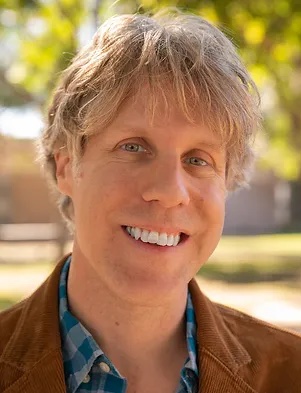
Andrew Eastwick's writing has appeared in Barely South Review, Blood+Honey, Kelp Journal, and Umbrella Factory Magazine. He lives in Los Angeles with his wife and daughter. Find him at andreweastwick.com.
Isabelle Carasso is a writer based in Los Angeles. She’s worked as writers' support staff in Emmy-winning writers' rooms, had short stories and essays published in The Catalyst and Cusper, and a knock-knock joke published in the LA Times when she was 4. In her free time, she shoots 35mm photos to capture moments that feel like movie stills. Her film photography has been published in Red Wheelbarrow Anthology and Door Is A Jar Magazine.