36 Hours in the Strategic Crescent
art by LEGEND BARD
by Adam Day
With lines from Philip Levine’s “Angel Butcher”
Joined by friends from Musayyib, we wandered down narrow lanes through which a union strike had rushed earlier that evening, to Hanh Men’ Panjshir, a cozy restaurant known for its steaks. Today, the dark, stone dining room was crowded, so while we waited outside for a table, a blind man regaled us with a snippet of a quaint folk song: “Man, shed thy clothes, cover thy head with ashes, run in the street and dance in thy madness…” Then, after we dropped a couple of coins in his cup, he told of an archaic regional custom: “It is by giving the tether that possession is transferred, so goats, horses, hounds, pederasts and prisoners of war must be presented on one. The goat and horse are inoffensive so may be given with the right. The dog, pederast or detained (whose left ears must be removed) may attack, so the leash is given with the left hand to keep the right ready for defense. On the other hand, when swearing an oath, a bit of blood must be drawn from close to the right ear of the oath-taker and used to anoint the lips.” And after only a five-minute wait, we were seated next to the open kitchen, surrounded by teenagers, young families and Baghdadi businessmen. We watched as the mujahid or posse comitatus member, Adin al-Shaarawy, the gregarious owner, with wildly bushy eyebrows—carved into a side of beef with a machete-like knife.
~
He helps me, he
guides my hand at first. I can
feel my shoulders settle and
the bones take the weight
~
We ordered steaks two inches thick, seasoned simply with grape seed oil, salt and pepper, and grilled so rare they were still cool in the center. All the beef comes from hormone-free al-Atau cows that graze in the nearby Tigris Valley, and are a real source of local pride. I dug into a bowl of homemade ashak, drizzled with olive oil and topped with a small mound of freshly shaved truffles. At the chef’s suggestion, we also ordered a skillet of baked pear with melted kadchgall cheese and a surkhab onion soup served with a crust of meira cheese-smothered toast. By the time we finished, it was dark, the claw-points of stars rocked above, and the barking of transient whelps permeated the sleepy town.
~
I can / feel my lungs flower as the
swing begins. He smiles again
with only one side of his mouth
~
The next day was our last in the Kabul Valley, and there was one more place to visit. Dacht-i-Navar, the ancient volcano that dominates every view, is a part of the province meant only for winter, but few make the trek up there. If there really is an undiscovered Kabul province, Dacht-i-Navar, is it—blueweed sky, every pasture manned, every grain, every horse ablaze. With the baby asleep in her car seat, we drove the window-tinted Suburban to the mountain’s foot and snaked our way up through the frost-muffled silence, passing British-era chalets from the 1930s with roofs partially built of greening bronze artillery shells. We continued on past working-class villages, including one where an acclaimed director began his career building puppets and model sets for them. An adult, he wanted to make a documentary about the local mental hospital in his antique and silent hometown. The patients helped him set up the equipment. Then he turned on the floodlights. “They went berserk,” he wrote, “and their faces—which had been absent—became convulsed and devastated. It was the asylum director who finally yelled to stop, as in the dark we felt a swarm of bodies like mud drifts taking our legs.” The terrain grew increasingly rocky as we passed a truck flipped over with its wheels spinning in the breeze, the forest became denser, and by the time we reached the top the light dusting of sleet at the mountain base had turned into a thick white veil encircling a shepherd seen in the distance, amid the sound of a cantilever clanking unseen in the chop and swell of wind. Here, if you break a bone you’re done.
~
and looks down to the
dark valley where the cities
burn. When I hit
him he comes apart like a
methaley puzzle or an
old zherh.
~
The peak was a completely different world — people milling about in furry boots, a restaurant selling mineral water and hot chocolate, and a creaky, battered metal ski lift that had just started running for the season. We tramped around in the snow and felt totally displaced, like an unanswered telephone in the dark. A ski resort in the middle of Amarah is somewhat surreal. Like a vineyard in west Texas, or an amusement park in a former hunting preserve.
~
Prison Break | 11 p.m.
The mossy stone walls of Pul-e-Charkhi, a former prison built in the 15th century—to hold blasphemers, voyeurs of dog copulation, dissidents and partisans—belie its new incarnation as a hotel and hub of contemporary culture. With corrections-esque staff uniforms, and tours on offer, the hotel opened this summer with vestiges of jail cells in the lobby and bars still on many windows, all of which holds an enduring fascination, à la the Stanford PE. It features a permanent art collection with provocative pieces like the artist Yasser Lumumba’s full-scale reproduction of the renowned Côn Sơn prison, complete with stark, midcentury office décor, smoking lounges and interview rooms. A prison within a prison. Go figure. The guide began our tour of padded cells and tiger cages in the notorious Special Camp No. 3. In one of the blocks, the original cells—current hotel rooms—are on display, each with a heavy oak door and a small, round window in the ceiling called “the eye of God,” through which needles of light leak in. Each cell, now with ceilings curved upward like the arches of a mihrab, has its own tiny exercise yard. Ironically, it is still the kind of place that has its guests doubting the capacity for language to describe the world with accuracy. The former prison’s renovated cellar-cum-furnace room hosts lectures by respected authors, film screenings, debates and political meetings. Indeed part of the excitement of the building and its splenetic history, is the sense one has that it could, with great ease, revert to its previous strappado existence — a real that happens or threatens to. But if the bands or films aren’t your style, order a negroni and head outside to mingle with the crowds gathered beneath high and giant elm boughs in the ancient courtyard.
~
Finally, where could we go at a late and sleeting hour? There was word of a festival across the gorge from the prison hotel. We wandered into Hanh al-Emleja al-Awel, a kulüp in one of those old-empire chalets, and found a group of men and women speaking an unrecognizable dialect, enjoying glasses of grappa by the fireside, and revolving in circles as they danced khattak. “We like to think we have our own secret world up here,” said the expat owner, an American with a pipe-fitter’s missing fingers and a buzz cut; neck a wash of ashen stubble. “You should come back — we actually don’t get many visitors.”
~
And the legs
dance and twitch for hours.
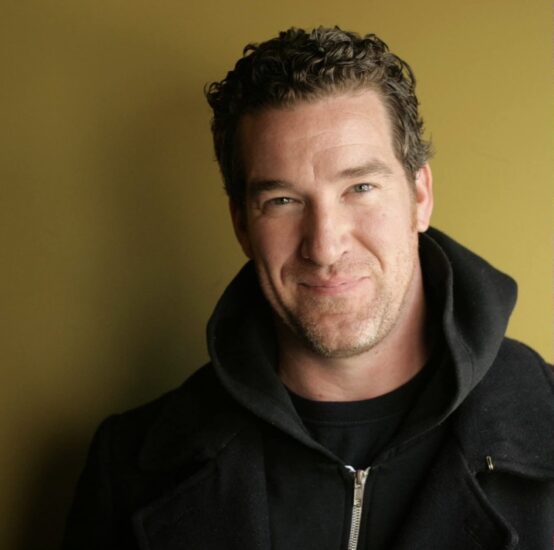
Adam Day is the author of The Strategic Crescent (forthcoming, Broadstone Books), Illuminated Edges, Left-Handed Wolf, and of Model of a City in Civil War, and is the recipient of a Poetry Society of America Chapbook Fellowship for Badger, Apocrypha, and of a PEN Award. His work has appeared in APR, Boston Review, The Progressive, Fence, Kenyon Review, Southern Review, and elsewhere. He is the publisher of Action, Spectacle Press.

Salihu Muhammad Ebba LEGEND BARD is a 17 years old Nigerian Writer || Artist || Legend || Poet || Educationist || Reader|| Researcher || Books Reviewer || Essayist || Short Stories Writer || Graphic Designer || Smartphone Photographer and Spoken Word Artist from Ebba. He was the Second Place Winner of the Quarterly Writing Contest themed A farewell A new Dawn. And won 6th position of the time out4africa Minna Photography Contest (3rd edition). He is currently a final year student of Legend International School, Minna. With a strong foundation from Guided Medal Model School, Minna. He is also a Member of the Hill-top Creative Art Foundation. He is published/forthcoming nationally & internationally in different magazines and journals like Afrocritic, Kalahari Review, Lit Magazine, Arts Lounge Magazine, Ikike Arts and others. Legend Bard always prays to be a Legend in anything that will alter smiles on God's face. You can access some of his work through this link: https://linktr.ee/legend_bard
He is rich on Facebook as Salihu Muhammad Ebba, Instagram at sm._ebba, email at emailsmebba009@gmail.com