The Outdoorsman
photo by Stephanie Ann Farra
by Lily Trotta
When you think of him, start with his hat. The latest in a series of nearly identical hats he started accumulating years, maybe decades, before you were born. The kind of hat Indiana Jones wears, brown felt with a strap around the circumference of the head, sometimes a feather on the side. You’ve always wondered if he started buying this particular style because of the movies.
He should also have his walking stick—a tall, hand-carved staff his buddy whittled out of a tree, right there on the side of the trail. They were backpacking in the Adirondacks; he took a bad fall a few miles out from the trailhead. The buddy, whom your mother has always hated, hacked at a fallen tree limb a few yards away and scraped until it was straight and smooth enough to be used as a crutch. He leaned on the stick all the way to the car, dragging his broken leg. He even carried it into the hospital. He’s taken it on a thousand hikes in the thirty years since, sanded and oiled it. He wants your brother to have it.
He should be wearing a flannel button-down shirt, no fuss over which one, and jeans with paint stains in a color you can’t source back to any house in which he’s ever lived. He likes green, so maybe that. There should be cracked leather work boots on his feet. Doesn’t matter how long ago he threw them out.
His beard, his trademark, should be full, but trimmed. Professional for his day job. The men in your family have vibrant red beards. People always comment on this—how their beards contrast with their dark hair. His nose is arched like yours, but larger. He broke it several times; you, only once. You should try to find out how he did it. Maybe your brother knows. Your brother’s beard is red, too.
Next, his eyes. Hazel, he calls them. But really, they are like a swamp, a marshy yellow-brown. Picture the way they look when he is talking too much and you are annoyed—sort of wicked. And always bloodshot; he smokes a lot of weed. More important are the crow’s feet, and you can envision them without effort because you’ve never seen so many on one face. They ripple out from his eyes all the way to his hairline, down his cheeks. They merge with the creases around his mouth. His whole face is crow’s feet, a grooved, topographical trail map of wrinkles carved by wind on mountaintops and the rough floor of the tent he carried in on his back.
You will have to sell his car to pay the creditors, so you should spend some time with it first. Remember the duct tape wrapped around the base of the driver-side mirror. There is mud splattered above three of the tires. The fourth is a donut that you know has been there a while. The interior is coffee-stained and full of tools—loose screwdrivers, box cutters, and other rusted gadgets you can’t identify by name. An empty ceramic mug lies on the floor of the passenger side. When he drives, he rests the mug, full, on the middle console and it splashes hot coffee with half and half across the front seats at every turn. Inside the glove compartment, find a tangle of bungee cords and rope, a couple tins of cinnamon Altoids. When you open the tins, you find a lighter and an empty pack of rolling papers. Count a dozen tiny burn holes in the upholstery.
Remember how the seat feels under your fingernails; the car goes too fast whenever he’s behind the wheel. He steers with his knees so he can tinker with the radio and point out passing birds. Remember nearly missing an exit, swerving at the last second when he spots a particularly lovely cloud. How your foot slams down on the passenger side floor. Sorry! I’m sorry, he says to the cars around you (but not to you), a weathered hand raised in sheepish acknowledgment. He wonders aloud what kind of cloud it was.
Work extra hard on seeing his hands. Sun-spotted and rough, callused from shoveling, mowing, and building. Hot from hard work, from touching fire. Remember his arms and legs are thin, but strong. He is not an athlete; he is an outdoorsman. His muscles are for pulling up tree stumps and climbing rocks. His skin is leathered and covered, down to the tips of his fingers and toes, in curls of red like his beard.
Let your leg hair grow out. It’s too dark, but there’s a lot of it. Pluck a strand out every time you think of him.
His tinnitus is horrible from years of power tools, but he says the calm of the woods helps him quiet the ringing. Remember him stopping short in front of you, walking stick in hand, and raising a free hand to his ear. Listen for bugs chirping and the flow of water on rocks. Remember him floating in a stream on his back and the dark, messy birthmark that stretches across his stomach dappled with sun. His mother always told him this was the spot where God stamped him done when he was born. Even he thinks that story is a bit much.
And what about the rest of the family? You don’t know them all that well. They may not even like you. You were always siding with your mother, they thought. But don’t dwell on that part. Remember how highly he thinks of them, how he worshipped his brother. Be cordial when you cross paths. Save their email addresses in case you need a family medical history. Go to your cousin’s wedding, but only if your brother goes, too.
Try to stay in touch with his friends instead. You should remember how many he has. High school friends, college friends, job friends. Even his landlady brings him dinner when she makes extra. She’ll forward you his mail, sometimes. Include a nice note. Remember he is silly, even though you hate that word. People like him. Consider why.
For work, he is a salesman, a professional charmer. The man never stops talking. Remember driving to meet for a meal at a crumby roadside diner halfway between your house and his. Him, singsong and gloating to the waitress, I’m having lunch with my daughter, I’m having lunch with my daughter, while you sit with your face in your hands. Let everyone tell you how much you look alike.
Look in the mirror. The beginnings of crow’s feet are already starting to fold in around your eyes, even when you’re not squinting. Stop applying sunscreen and go for a walk. Let them grow properly. Find one of those aging filters on social media to see how your face will turn out when you’re as old as him. Assure yourself you can see the resemblance.
When you clean out his things, try to capture their smell. Something like mold and soil and smoke. Find a tiny college t-shirt in the back of his closet. It won’t fit, but you can breathe through it. Hold in the scent for as long as you can, then stop breathing until you catch another trace. Wear his sweatpants to bed, his jean jacket to the store. Pull the collar over your nose and inhale when you feel like collapsing. Bypass any newer items. No fuzzy socks or blankets, nothing that smells like chemicals or piss. Everything else comes with you. Store every item you can fit in your mother’s basement. When you visit, smell it all.
Remember the house, his last one. He always refers to it as the cottage by the stream but really it is a two-room hut built into the edge of a muddy creek. He gets it for reduced rent by agreeing to take care of the yard. He sends you photos of the trails he makes through the back woods and the rock cairns he builds along the water’s edge. He calls the largest one Cat Rock, its topmost stone chipped and jagged like pointed ears perched on an uneven body. When you come across a video about how cairns harm local ecosystems, delete Instagram and say something horrible to your girlfriend about the way she does the dishes. Sleep facing the wall.
Think instead about his garden. Marvel at how he accomplishes so much with just a few square feet. He attaches latticework to the cottage wall and plants string beans that climb from its base. A lush, green wall of beans. Pick mint from a patch near his front door because your mother says it grows like a weed. His girlfriend helps you pull the herb from the dirt, wraps it in a wet paper towel for you to take home. Remember he has a girlfriend. People like him.
Remember him in the city, double-parked in front of whatever apartment you are subletting at the time, saying Dekalb, wow, that’s a pretty famous street, right? He says hi to every neighbor you pass on the way upstairs and hands you a paper bag full of homegrown cucumbers. He wants you to make pickles out of them. He asks you to bring what you make the next time you visit.
Don’t think about the next time you visit. Or the jar of homemade pickles that stays in his fridge for months, full except for the ones you eat yourself while he sleeps. Forget the sound of him moaning from the other room after daring to try one, despite the acidity. Forget bowl after bowl of Cream of Wheat, which you had never even heard of before, but is the only thing he can stomach. Forget the neon bottles of Pedialyte that he refuses to finish and the syrupy rings they leave all over the countertops. Forget the yard, delinquent with overgrowth and the chrome walker shedding tennis ball hairs across the kitchen floor. Forget the walking stick propping the door open for fresh air.
Forget his long arms and wide hands like Q-tips. His chest, serrated with ribs beneath the same limp t-shirt for days. Forget his dull eyes sinking into the curves of his skull and how his front teeth, worn away by bile and chewed pills, chip off bit by bit. Forget the tissue paper of his skin, patched with bandages from tearing at the lightest resistance—a brush against the doorframe, his fleece pants sliding too quickly on a chair—and too sensitive to cold to pick up a glass of water. Forget suggesting he try drinking through a straw and the day his lungs lose the strength to suck. Forget tipping fluid into his open mouth. Forget the dosage of his gabapentin.
A week or so before it happens, you watch Moonstruck together, a movie you never knew you both loved. Olympia Dukakis makes him laugh from the hospital bed in his living room. He falls asleep halfway through the opera scene, and you finish the movie alone before waking him to change the fentanyl patch near his groin.
Your instructions are to place the patch somewhere fatty or muscular. You share a laugh at the idea of finding any such place on this body. His thigh is thinner than your wrist, but the biggest piece of him you can find. You are silent as he pulls the seam of his underwear upward to create more space, revealing thick hair and a web of dark veins. You position the patch quickly, less gently than you want to, trying not to notice these parts of his body you haven’t seen until now. Your fingers feel chalky against the fine layers of his skin as you help him back under the covers.
Never watch Moonstruck again. Just to be safe, avoid media altogether. Easy rules: every movie is about cancer, the parents die in every book. Sad songs are insipid and self-indulgent and happy ones are too loud. If you need something to occupy your mind, watch The Challenge on MTV—all forty-plus seasons. Watch the spinoffs, too. Get drunk and watch them all again. Solidify a strategy for how you would win if you were thinner and athletics had ever been your thing. Jeer when Johnny steals the money. Cry when Diem takes off her wig.
Share nothing with your friends. No one knows what to say to you, but they sure don’t want details. Be sad, but fine; don’t be a downer. Crack jokes about cremation prices and your lack of an inheritance. Insist you still want to go to the beach. Keep a box of wine in the house for yourself. Bristle when your girlfriend asks how you’re doing. Rage when she does not.
This is why you have a cat. Companionship. If anyone owes it to you, it’s the thing whose shit you’ve scooped for years, whose food you soak in warm water. Pour all your feelings into her. She may not know what to do with you, either, but at least you can’t hold it against her. Bury your face in her tiny body while you try to sleep. Let your eyes get itchy and swell. Fiddle with her toes until you feel her claws extend into your skin. Cherish the way she looks right through you.
When she stops eating, take her to the vet. Feel the ice in your gut when they say cancer. Hear the laugh leave your chest when they tell you where. Her pancreas is a tiny, phallic mirror of his, the same angry red arrows pointing toward identical lumps of tumor. Tell them, I guess we both have bad genes, and savor watching them squirm while you go through the X-rays.
The vet says you can take her home overnight if you want to say goodbye, but you’ll have to bring her back tomorrow, anyway. Or, you can do it today. They give her a sedative while you make up your mind. Animals are excellent at masking their pain, they tell you. But shouldn’t you have been able to tell?
The day he dies he is yellow. His eyes are open, looking at nothing, too large for his head. The hospice nurse warns you not to let him stand; he could break a bone, but he keeps groaning, trying to move. You settle on shifting him between the hospital bed and a nearby armchair whenever he gets a burst of energy. It takes three of you to lift his body, despite how small it has gotten. On one of the transfers, you lay him too far down on the bed. His feet dangle off the end like he’s a little kid riding the subway. The metal footboard presses into his fibulas and the bruising starts immediately. His girlfriend balls up a blanket and places it beneath his ankles as a cushion. You open the living room curtains at the end of the bed. If he can see, he can see the stream.
The nurse shows you how to coach his breathing to prevent his heart from overworking, as if that’s his biggest problem. You sit on his right, your brother on his left, and each of you holds a cool, milky hand while you exhale soft and loud. When he tries again to sit up, his sharp elbows swing high and wild, and his heavy legs kick hard enough to dislodge the blanket beneath them. He grabs at your face with strength that surprises you, like a toddler.
I gotta get up.
His language is slurred, his mouth never really closing to form words. His eyes are flashing, still unfocused. You only know what he is saying because he’s repeated the same phrase all day. I gotta get up. His breathing is loud, too much for his hollow body. He is trying to speak, to run. You wonder again how aware of himself he is, if he can even see you. He is going to get hurt.
Your brother coaxes him back down on the bed while you fill a syringe with morphine, the way his nurse instructed you. Don’t let him get too excited, she’d said. You empty it smooth between his cracked yellow lips and his body relaxes into the bed, his eyes still open, his mouth hanging slack. His breaths quiet down and yours slow to match them. You take his hand again, rub gentle circles against its red hairs with your thumb. You’re not sure when exactly it happens.
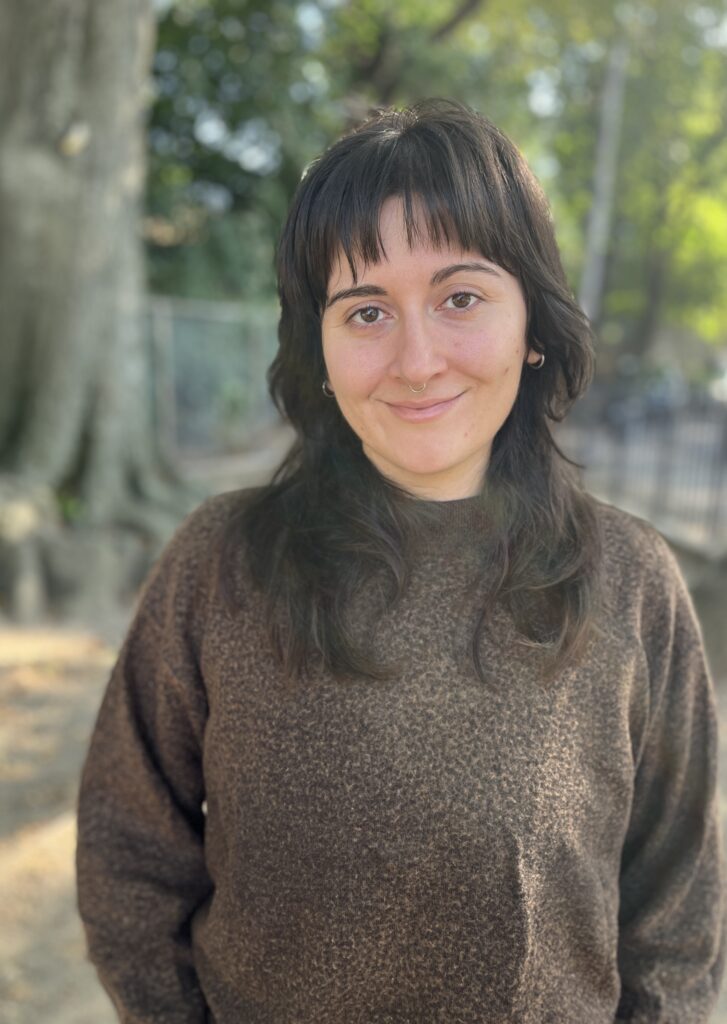
Lily Trotta is a writer based in New York City. Her Pushcart-nominated poetry and prose have been featured in Peach Magazine, Ghost City Review, and elsewhere. She is the author of two micro-chapbooks with Ghost City Press. Lily is a fiction student in the Creative Writing MFA Program at New York University, where she is the recipient of the Rona Jaffe Fellowship.

Stephanie Ann Farra of Philadelphia, is a photographer and writer whose work explores the subtle intersections of nature and human expression. With a deep appreciation for history and storytelling, she uses both imagery and language to capture moments that feel timeless.