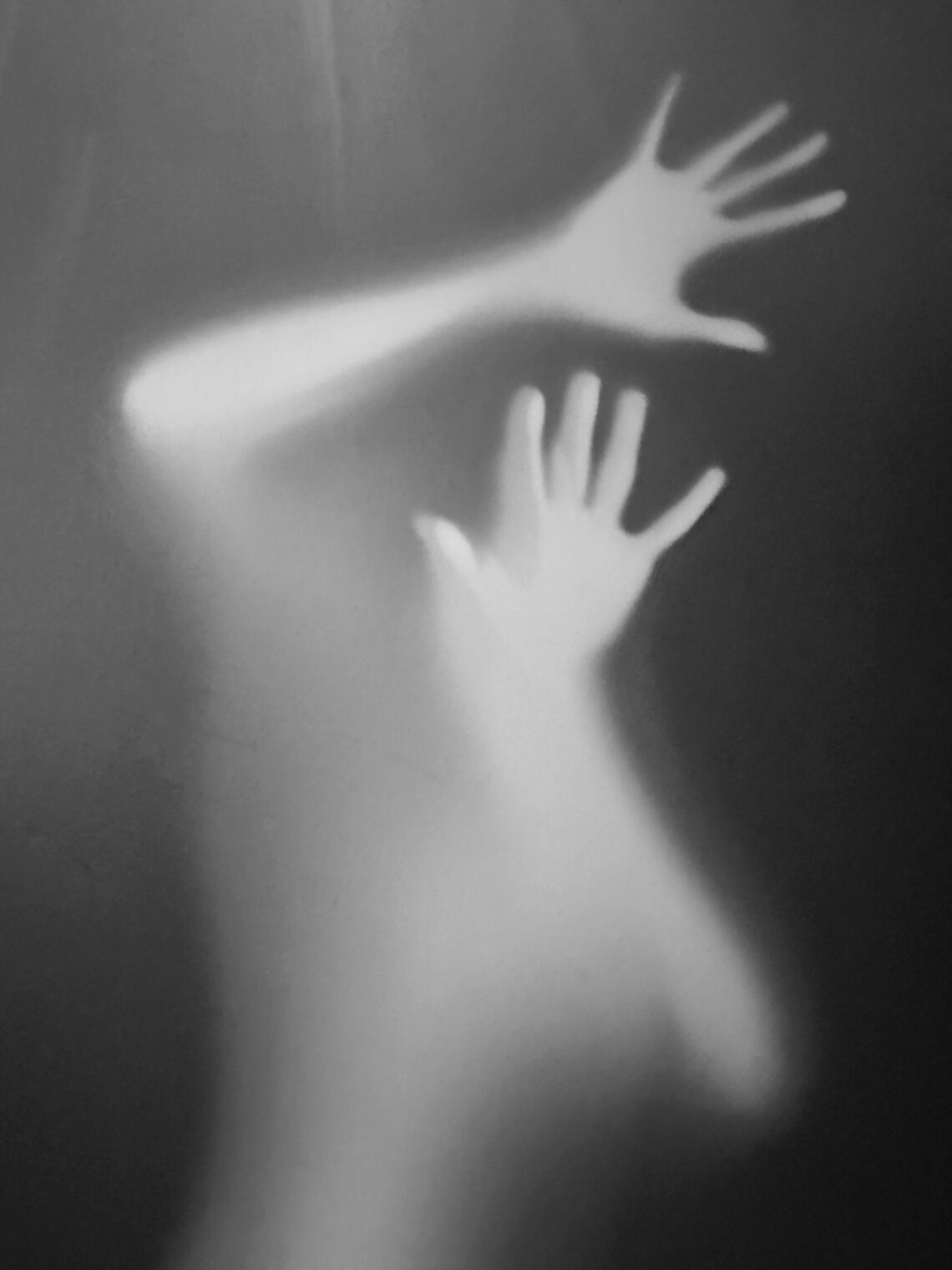
Shadows
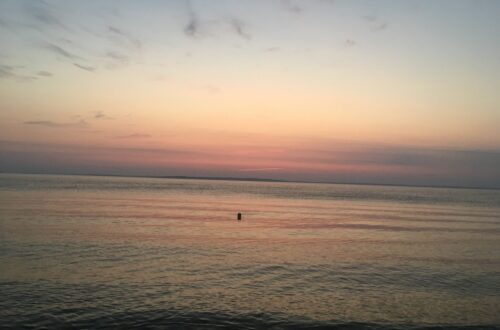
photo by Sherry Shahan
by Duane M. Engelhardt
For a moment he lost track. It was a concern, an omnipresent fear, that was becoming an ever-increasing reality. Lapses in trains of thought. Things becoming muddled, remembered through the haze, and then forgotten again.
By no real authority, other than the respectful commandeering by an old man of a place to stop and rest, scrutinize, and ruminate, he had claimed this bench, this spot in the park. He joked with friends that it was widely known and respected by exactly no one other than himself and perhaps a handful of strangers, now confrères, who stopped by, sat, and reveled in a shared anonymity.
He saw a painting once. He didn’t know who. Didn’t know where. It was trees. Like these. Not like these. There was sunlight, that he was sure of. He had been amazed at how the artist had managed to capture the light with paint. Sunlight and shadows so real he felt he could reach out and touch the drying dying leaves of autumn. The painting had made him stop and sit in the gallery, pondering then as he did now the beauty of nature. Flowers, trees, grasses, the plight of the bumblebee, the victory of gnats, the delicate fragility of a velvety flower petal. His mind reveled in beauty. The beauty of nature. The beauty of man. Skyscrapers. Long winding hallways going nowhere. Windows. City streets. Row homes with rusted fire escapes. Sirens. Old buildings collapsing back to their roots. People. Holding hands. Walking. Running. Smiles. Laughter. Tears. Sorrow. Grief.
Beauty.
He repeated the word over and over, sounding out the syllables as he configured, constructed the etymology from the Old French biauté, the Vulgar Latin bellitas, the French beauté, the Spanish beldad, the Italian belta, arriving at the English beauty. The word captured him, imprisoned his thoughts in a vast mental whirlwind of people, objects, paintings, places, faces–exotic and familiar.
The kaleidoscope of images settled and then focused upon a woman. A memory. Cold, distant, basking in the unfriendly fluorescent lights of authority, she sat behind a monumental oak desk. They sat confined within antiseptic barriers, boxed in a room, the walls of which were adorned with glass-fronted cabinets filled with medical paraphernalia, and unnerving anatomical charts. An ominous red box marked biohazard stared at him enticing him, inviting him, tempting him to peek inside.
Her voice was intoxicating. “It’s impossible to predict,” his physician, (she was a specialist in these matters), continued as if a distant echo, “That is to say that I cannot give you an exact timeline. There are always new therapies, new medications we can try.” Her voice, his memory of her voice, faded.
The sun was bright. He shielded his eyes, staring out across the park searching for a familiar face, a recognizable form. Perhaps a fellow courtier from his bench, willing to discuss the observable habits of man, woman, man and dog, child and parents, the gregarious overzealous partner leading their fraught timid companion, the solitary figure (man or woman) absorbed in some thought, oblivious to the obvious, while overlooking those and the world around them. This world, this stage, was blissfully populated with them all, but today, there was no one evident, no one familiar to ponder, debate, sit with, to amuse or by whom to be amused: he was alone.
A breeze committed to distraction, highlighted glimpses of blue skies through subtle tumbling leaves. The blue was always bluer here. When do leaves change color and abandon their livelihood in their performative jazz dance to the ground? He searched his memory. Autumn. There should be geese. It should be cooler. He should be sitting somewhere near a fireplace enjoying the wall of heat enveloping him from the fire confined, jailed in the hearth against its primeval wishes.
He breathed in the moist warm autumnal air, it was fresh, alive, mingled with the scent of disappearing flowers, falling leaves, far different than the sterile colorless air of that office. His doctor sat there in front of him in that room for a long time speaking before he realized where he was, who the woman was. She was attractive. Dark mysterious eyes. Brunette. Chestnut brown hair pulled back in a professional manner. A stethoscope draped around her shoulders. The black tubing, contrasting with her white coat, resembled a thin, friendly serpent casually hanging about. Was it the snake of Asclepius freed from its prison in the caduceus whispering and proffering advice on his care? If so, he hoped that the serpent was discreet in its prescriptions.
What followed at that meeting was long and involved. His wife sat behind him from time to time and acknowledged the proceedings with voiced affirmations, silent frowns, and sometimes by gently squeezing her hand on his shoulder as the doctor spoke. “There will be increased loss of mobility.” Bradykinesia the doctor called it. “Rigidity, stiffness of the arms, legs, or neck. Loss of balance. Shaking and tremors. For some dementia and memory loss.”
Five syllables. Bradykinesia sounded of possibilities. A new world? A new science? In that room, that afternoon his thoughts played with the word. Visions of Nikola Tesla amid his mad scientist laboratory sprang in his mind. Arcs of artificial lightning in the background. Examining the word in his mind, rolling it over counting the letters, twelve, five syllables. Maybe an exotic plant hidden in the jungles of the Amazon, the wilds of Borneo, discovered by some Victorian era member of a now defunct Explorer’s Club. He decided in his imaginary botanical dictionary to give the flower a purplish tint in honor of his wife.
The cool sterile atmosphere of the exam room brought him back to the discussion as he repeated bradykinesia aloud. The doctor responded with a practiced methodical list, “Slowness of movement. Hesitations. Difficulties with fine motor coordination. You may have trouble with your gait, your hands. You may see changes in your personal traits.” She looked at him, stared into his eyes as if awaiting a response, an acknowledgement.
With a laugh, his wife broke the silence. “That tug you do on your right ear when you sit at your desk searching for a word. I fell in love with that gesture. That simple sign that told me you were at work, that your mind was exploring the depths of something plain yet complex, that we mere mortals had so often overlooked.”
Her voice was soft, compassionate, loving, and he held onto it as the memories faded, when a brief strike of bright sunlight hit his face. Opening his eyes, he watched as the tree across from his perch on the park bench danced about in the breeze allowing the leaves, the golden, red, and amber leaves to permit sunlight through its canopy down to him. The warmth was refreshing and like a sunflower he turned to soak in its maximum effect.
Tournesol. How he knew that word he was uncertain. He was sure that somehow, he knew that it was in reference to sunflowers and that sunflowers adorned a garden somewhere. A high pink wall of sundrenched washed-out brick, a large garden. A table and chairs in the style one would expect to find at an outdoor French bistro, terraced café, or an Italian trattoria osteria.
She was there. Smiling. Laughing. Sitting in the bright sunlight they drank from tall glasses and discussed nothing. She was in a lavender sundress with sunglasses perched on her forehead. She traced the droplets forming on the glass with her finger and after fidgeting a bit she smiled again and looked at him as if she were examining, studying a masterpiece in a museum. “Yes,” she said as she reached out her hand and touched his on the table counting each finger stopping at his ring finger. Hesitating, she pulled a sprig of mint from her glass and twisted it around his finger. Satisfied she patted his hand, sat back, pulled her sunglasses down on her face, smiled, and whispered yes once more.
Anne. He could remember that. Her name. Her face. Anne in her lavender dress saying yes to being his wife. A poor unpublished poet, unrecognized by the world, struggling to get the money to stay in school. In a year they would be married, in five years, through the fates and admiration by the gods, he would be hailed as a poet laureate for their generation. His words turned into songs. Inscribed as epitaphs for lost souls. She was always there. Through his fits of pique and lulls of wordless days.
That morning, that room, Anne was with him surrounded by those bookcases, charts, and faded pastoral landscapes in metallic frames. Nature under glass. Kept at bay, as if locked away, kept in the distance, the wilds, the wilderness could be tamed. The doctor didn’t wear a mask the day she spoke to the two of them. Endeavoring to be human, less therapeutic, empirical. As if sucking in the germs along with ordinary people made her more of a person, a human being, an outpost of flesh and blood within the confines of so much antiseptic sterility.
In that office, showered in fluorescent light with windows concealed behind thick venetian blinds denying daylight access to the room, there was a plant. A house plant of dubious origins and fate. A philodendron struggling to survive. The remnants of a better life consigned to a single vine, a long trailing runner with indiscriminate leaves, young green curled appendages gasping for water and true light.
It would be that plant that agitated Anne the most. Sitting in the cab on the way back from that doctor’s visit, Anne enrobed within her own universe, transferred her anger, anxiety, channeled it away from them, from him, the room, medicine, the taxi, the world, and placed it, aimed it at the plant. “How much faith should one have in someone if they struggle to keep a plant alive?” She was yelling in a whisper so to not alarm the driver. “It’s her life’s work, her calling, to save and prolong life and her trophy, a representation of her, her commitment to that ideal is a dying plant. A dying houseplant. A scraggly unkempt vine.”
For the rest of the ride home, what followed was long winded strings of words that would go out and search for a meaning, words angry at the world, that would all come tumbling back resting squarely on the condition of the plant. “How could someone just sit there and allow it to die. To just fade away, wither away, as if no one cared. Water. Sunlight. A smidgen of extra care and kind heartiness. Warmth. Love.”
Several days went by before Anne conceded, abandoned her fight with the philodendron. They had returned from a walk and stood on the sidewalk examining their home, a brownstone covered in withered ivy. She grabbed his arm, “It ages well, don’t you think? The house I mean. The brickwork isn’t as bright, it needs repointing, but it has a prominence, a profile unique among the homes on the block.” She kissed his cheek and announced, “Things change. We grow old.” Then without hesitation repeated, “we grow old, but nothing says that we must surrender peacefully.”
This autumn afternoon Anne had brewed tea and they sat in the window seat overlooking the garden. Silent. Restrained. The telephone rang, hushed conversations while she disappeared into the rooms of the house. In the distance, he could hear her laugh echoing off the walls. And then the laughter was gone. Silent. Absent. Anne had gone to other matters. Absorbed within the house.
In the silence, his thoughts filled the empty rooms with the echoes and shadows of a recent reception. “Life in miniature,” he told those gathered. That is what the park reminded him of. “Life, the universe in miniature. If you looked hard enough, you could see it all laid out in front of you. Infancy. Youth. Adults. The humble. The victorious. The meek. The pompous. Conquests. Triumphs. Defeats. Surrenders. Retreats. Everyday life.” Friends smiled in encouragement that wrapped around him in solidarity, in a camaraderie that friends share. They championed his wit, extolling and respecting his musings, as if hoisting him upon their shoulders as one carries off the hero of the playing field.
Others that evening, wrapped in the disguise of familiarity, armed with pretentious smiles, clapped the poet on his back while reveling in quoting his work back to him. They spent the evening ignoring his observations, circling in an ever-tightening frenzy probing him about his new book. His latest collection. His newest poems. “Going back to your roots?” they asked. “Your best work was when you wrote in the Imagism style. Haikus of the American mind. We could understand you then,” they told him. “Can we get an advance copy?”
Looking for support, he rolled his eyes at Anne who smiled and nodded acknowledgement, but as the night wore on, he felt under observation and wondered to what degree people were trying to convince him or themselves that nothing had changed. Was every miscue, hesitation becoming fodder for private comments among themselves?
To escape those ghosts, alone, he had gone for a walk. To the park. To his bench. His realm of peacefulness. On his bench no one recognized him. It was sanctuary. The sun danced, played out its ballet on the ground beneath the trees for him as he walked. Like a school child obedient to a higher force, a distant calling, he began to pray. Always agnostic in his heart, he surprised himself as he recited ancient words from his youth. He dismissed the act, the devotion, replacing it with his words mumbled in some fashion to resemble prayer, a supplication, a surrender to an almighty power over everything.
As was his habit, he sat on his bench, sucked in air, closed his eyes, and listened to the sounds in the park, to his thoughts. Words. The right word. The exact word. Words. Syllables. Patterns.
Without warning, on the bench in the afternoon sunlight, everything faded away. His life, his soul, his words, his every day. Anne was his muse and now he had failed her. An overwhelming desire to head home overcame him and he tried to stand. His arm shook, his hands momentarily possessed themselves and ignored his wishes. He pushed hard against his cane. Nothing. Surrendering, he sat back down.
Exasperated, he exhaled, and tightened his fingers into fists. Invalid was not in his vocabulary. The thought, the idea of being inexplicably forever tied to the strength of someone else was foreign. To become that patient in constant fear of failing health. To rely on the strength of others. To be that old man sitting in a rocker wrapped in blankets or confined to a wheelchair being pushed around, demanding to be wheeled here or there. A human being crumbling into nothing, worrying over the slightest cough, spasm, traces of indigestion. A future he had not foreseen or wished to pursue.
Rubbing his face, he dragged his fingers over his head through his hair. There should be eyeglasses. There were always glasses perched on his forehead. Lost. Frequently lost on top of his head. Anne would laugh and play along helping him to find his glasses as he would become more and more temperamental tearing through his desk, his office, the bedside table, searching. Finally, when she could no longer take his exasperation she would point to his forehead, whisper, “QED. Problem solved, my love.” Kissed his cheek in triumph, and walked away whistling.
The game had dissolved from her gentle teasing into something more troubling. Now it served to highlight his increasing forgetfulness. The mild amusement of his missing spectacles now seemed an ominous harbinger of his approaching new life. Their new life. Their new fear.
The thought of Anne distracted him. Images of her silhouetted by the sun on a late summer afternoon. Anne surrounded by lavender. The color, the flowers, the scent. Smiling in her favorite hat.
The sun was bright here at the end of the day as it perched on the horizon behind him. How does one measure the distance from the sun to this spot? In miles? In degrees? He could feel its strength, its warmth on his back. In front of him, in the park, the colors of the day were dissolving. The brilliant last rays of the sun, the golden hour yielded reluctantly, silently overtaking his domain with a caerulean gauze.
The air became cooler, and he shuddered. He had been born to use words. To not be able to physically write, to compose words on a page, a sheet of paper, a notebook. To no longer watch the ink, blot, smear, dry on the page. That smell of paper, that feel of its glass-like surface. To not enjoy the worn-out space on a page where erasure after erasure has attacked the fiber, the composition of the atoms of the paper now hewed into a rough spot, a burr on the face of the page. Held up to the light, that spot now a translucent focal point of the words, lines, stanzas that surround it. All that would be gone, misplaced palpably, spiritually, psychically.
A woman called out to him, came over to his bench, sat down, and grasped his hand. He held hers tightly as if letting go would mean he would be swept away in the sea of the coming darkness that now enveloped them. He caressed her fingers and with his thumb explored the back of her hand connecting to her, felt her warmth, her safety. Anne smiled and gently brushed away the errant hairs that had moved, fallen across his face. Wiped the tears from his eyes. She smelled of lavender, of summer, of bright sunshine, of fresh tilled earth. Of love.
Taking a deep breath he pressed his weight against the cane, rising gradually into a distinguished familiar stance. “Home?” Anne nodded and grasped his arm in hers.
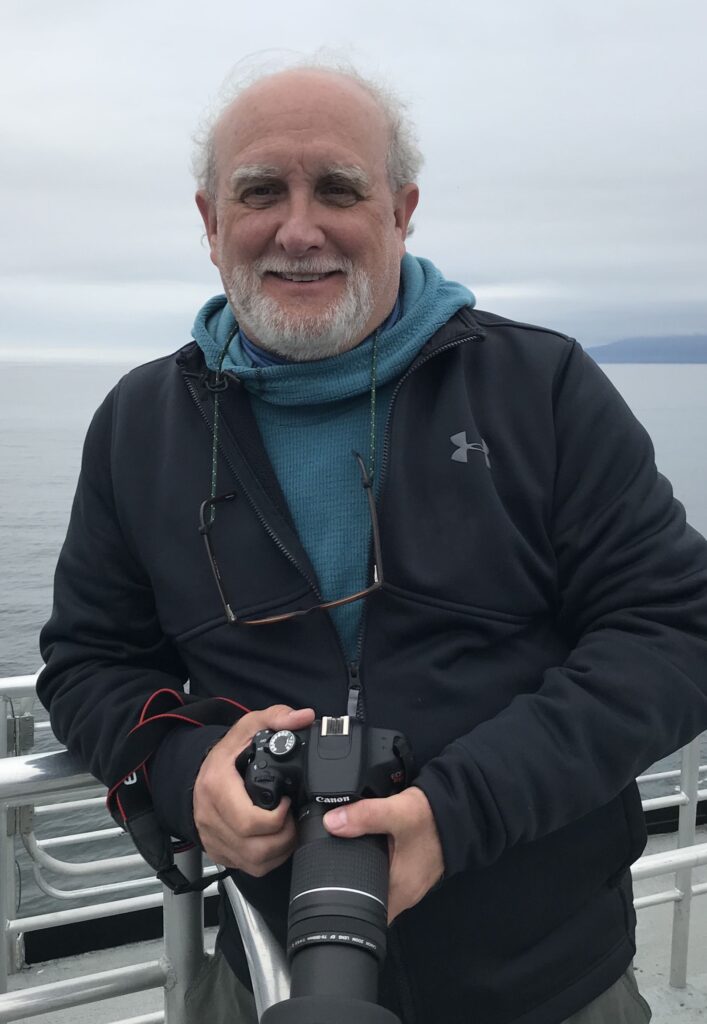
Duane M. Engelhardt, author of the novella CODE of SILENCE is an American writer whose short stories have been published in the Tulsa Review, Rockvale Review, The Charleston Anvil, The Freshwater Literary Journal, The Rappahannock Review, and The Bookends Review. Duane and his wife Kit live in Denver, Colorado, where he is working on both short stories and his novel Trade Winds.

Sherry Shahan is a 76-year-old woman who studies ballet and pole dancing in a small California beach town. She earned an MFA from Vermont College of Fine Arts and has been nominated for The Pushcart Prize in Poetry and Fiction and Best American Short Stories. Her photography lives in the Los Angeles Times, Country Living, Backpacker, Mother Earth News, San Francisco Chronicle, and elsewhere.