Learning Human as a Second Language
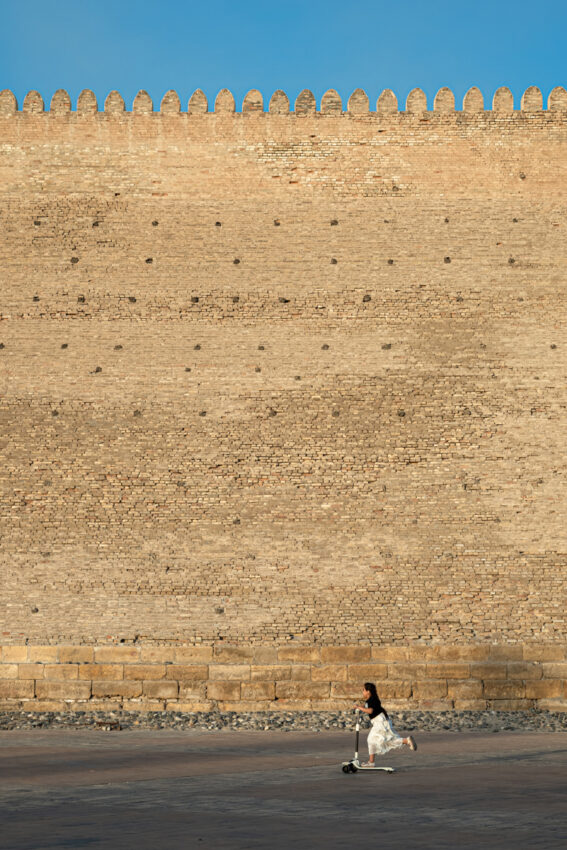
photo by Yasser Alaa Mobarak
by Meredith Jelbart
I was an only child. I grew up in a place my father called Island Hill. It was not an island, but a house on top of a hill, in semi-rural Australian bush, around twenty kilometres from Melbourne. There were other children in the general area, but the hill was steep enough to discourage kids from wandering up to play with me; and to discourage me from wandering down and up again, to play with them.
I was not entirely alone. I had friends. They were all imaginary. There were twelve of them. I thought of them set out around me like numbers on a clock, one for every age from one to twelve.
The girl who was nine, actually lived in a country town where the train paused when we went on holidays to the mountains each year. Every morning, I would tuck myself into the nook beneath the stairs, where the telephone was kept, to have lengthy phone conversations with her.
There was a boy who spoke another language. This entailed saying the opposite of what he meant. Thus, it was possible for him to speak my language and for me to speak his, but – anticipating the paradox, ‘All Cypriots are liars,’ said the Cypriot – we could not communicate, since we could never establish which language we were using. ‘I am speaking your language,’ might mean that I was already speaking his language, in which case I meant the opposite, which meant I was speaking my language. And so on.
At Eltham primary school, there really were kids who spoke another language. A couple of families from Holland, with that amazing white blond hair, favoured by the White Australia Policy of the time. For a while they could only offer words we could not receive, but quite quickly they picked up English indistinguishable from anyone else in the playground. There were the kids from England, also, whose particular accents seemed to evaporate quite quickly in the sun.
And there was me. My parents had built a house of mud-brick; slate roof from a demolished country hospital; structural beams, retrieved from a dismantled railway bridge, all left exposed. Though it was built of local materials, it had the look of a half-timbered farmhouse that might have been found in the Cotswolds. My father had a personal fantasy of being an Englishman and spoke in the modulated tones of news-readers of the day – the 1950s – which seem curiously British, now, when heard in old film and radio clips. And for all that my mother had spent years wading about in mud making bricks, she was a proper and formal person. They were both well-spoken.
Consequently, I arrived at primary school with an accent other kids found puzzling.
They asked, ‘Do you come from England?’
‘No.’ I was as puzzled as they were. ‘Mother and Father speak like this, I believe.’
Then a small girl pushed me over in the playground and I told her I forgave her, and it was obvious to all that I was irredeemably peculiar.
Going on through primary school, I watched and listened, very, very carefully, trying to do as others did. I felt I was learning human as a second language.
There is fascination with tales of feral children, those who grew up away from humanity – Caspar Hauser, Nell, L’Enfant Sauvage. How will they learn our language and our ways? The reason that the experience holds our interest, surely, is not because it is strange and exotic, but because it is familiar. Have we not all had to do something like this?
Not infrequently, our sympathy remains with these characters and the world in which they lived before they came into our hands. Caspar Hauser’s innocence and ways of seeing. Nell’s world seems so lovely. Was it worth it for the enfant sauvage to learn a minimal use of our language and our ways, if he could no longer survive in the forest?
From my own childhood, The Thing that Walked Tiptoe, could glide along a little above ground, but learned to reach down and walk on tippy-toes, in order to be accepted by children. Who spot the difference anyway. A kindly child says, ‘Don’t be sad Little Thing, for I like you best as you are.’ But the Little Thing is terribly disappointed, lifts up its toes, and runs home on the wind.
There is The Little Mermaid. All for the feckless human prince, her tail is split into two legs – walking will always cause her agony – and she must relinquish her glorious voice. Too great a sacrifice, surely.
I have heard the mermaids singing, each to each. Eliot writes,
I do not think that they will sing to me.
But he’s being disingenuous here. He really does think they will sing to him. They are singing now, as he writes, he just thought saying so might seem like showing off.
We have lingered in the chambers of the sea
By sea-girls wreathed with seaweed red and brown
Till human voices wake us, and we drown.
*
Characters who are somewhere on the autism spectrum also appear quite often in books and films. Rainman, Gilbert Grape, I am Sam, A Beautiful Mind.
Our interest may be a decent and respectful desire to understand human beings different from ourselves. But again, I can wonder if we are drawn to these people because their experience is not so dissimilar from our own.
Neurodiversity is a wide and complex territory. But the best-known characteristics of those with ASD can sound like a really severe case of being human.
Those problems with interpreting facial expressions – anger, fear, love, hostility. Understanding what other people mean; what they are thinking; what they expect of us. The famous quote of Temple Grandin, saying she felt ‘like an anthropologist on Mars.’ Who has not sometimes felt like that?
A music critic with high functioning ASD tells of the invaluable discovery in his adolescence of a book on etiquette. Which explained to him some of the rules. Those you encounter will say hello, and how are you, but you don’t answer that question, you say you are well. Then you must respond by asking how they are, and they will not really answer either. Then one or other of you may make a comment on the weather. That has to be brief; not with the kind of meteorological detail that might be of practical use to either of you. Then the other agrees. And the exchange comes to a satisfactory close. Who would have guessed you should do all that?
So much to learn and such hard work.
On the radio, a psychiatrist specializing in autism explains, ‘It is very common to have a private imaginary world where you feel you fit in.’
This is easy enough to grasp. All that is hard to understand is why he adds, ‘If you have ASD.’
He tells of a girl, who became extremely knowledgeable about sixteenth-century Sweden, which she had adopted as a kind of psychic home.
*
Growing up, I would sometimes retreat to my father’s library, which was already redolent of nineteenth-century England. There was wood panelling, acquired from demolition sites; chairs found in auctions, with wolves and lions and other creatures of Europe and the Empire carved upon them; and old books bought in job lots, which my father admitted he chose partly for their attractive leather spines.
Sometimes I imagined living in that room, in that house, forever. Alone, like a heroine from a nineteenth century English novel, increasingly festooned with cobwebs, tragic but interesting.
The library was on the upper floor of the house, and protected the living room beneath it from extremes of temperature. There was no insulation in the roof.
Consequently, in mid-summer, it was unbearably hot up there. Motes of dust from the books hung yellow in sunlight, as if blown in from the central deserts; the air had that oven heat which seems to dry out the lungs with each breath. It was not a place to spend much time.
Mid-winter was not impossible, but took some planning; warm clothes and scarves, an eiderdown. Since no one else moved willingly from the fire downstairs, no one would invade my territory. It was best on a day of storm. All those kids at school, with their bewildering ways, were held beyond the barrier of torrential rain. Perhaps they were in another time zone.
I could tuck myself, in an eiderdown, into a large leather chair. It was a combination nest and outpost from somewhere closer to some polar region. Iceland; Thule, Ultima or just in Greenland; Heard Island; The Shetlands.
*
There is the fantasy of living on an island, which is entirely uninhabited by anyone else, a world that is just for you.
Personally, I am drawn to something wintry. I see a small boat crossing deep-green, heavy seas; not too dangerous when you know the currents and the layout of those rocks beneath the surface, but enough to ensure privacy. A safe but secluded beach, which only the elect know how to find. Wild weather, a one-room cabin with a fire, a couple of hairy dogs perhaps.
Give myself too much time to think, and this fantasy could become a plan. On holidays south, I must remind myself that it would be unwise to move to a small island below the last tip of Tasmania; however dramatic and forbidding its cliffs might be; however tempestuous the surrounding sea; though it may be in the path of the Roaring Forties and winds fresh from Antarctica; though there may be the unlikely but enticing chance of snow.
More traditionally, such islands of the mind, are in latitudes close to the equator, where the weather is benign. Around the perimeter, a fringe of clean white sands, in which you may find footprints. Inland, there will be streams to provide fresh water, and coconut palms, and trees with fruit always in season and within easy reach. With palm fronds, you construct a shelter to protect you from showers of warm tropical rain.
Desert island books. If you were stranded on such an island, what is the one book you would take with you?
You had fantasised about splendid isolation, yet you wish to have all those words from another person? And this whole scenario is a conversational game. Necessarily with others.
Around a table, people present their choices. There may be laughter, surprise, interest.
Well, that is just what was to be expected of someone. But that particular book, for that particular person? Who would have thought it?
The game is all about revealing yourself, a little at a time, under the cover of disguise. To be accepted? To be admired? To be welcomed in the wider human world.
It is a kind of flirtation. So, that is your book? How intriguing. Do tell me more. I’ll show you mine.
On the island, there will always be a fire. Perhaps you had a magnifying glass in your pocket when you were washed ashore. That is the kind of lens you need. For all the savage battling over Piggy’s glasses in Lord of the Flies, the lenses for myopia disperse rather than focus the sun’s rays, and would have ignited nothing.
A fire is comforting and companionable.
And the smoke may be a signal to passing ships.
Beside your hearth, you read your book. On its many flyleaves you may keep a diary, so everyone will learn of your experiences. There is an edge, here, of being the surprise guest at your own funeral. On these pages, also, you can write letters to be put into bottles – perhaps they were washed up from the shipwreck – and sent out across the surrounding sea.
The footprints in the sand? The signal fire? The messages in bottles?
It is so pleasant all alone here, yet you seem keen to go back and join the human race?
The motivation of those who write from solitude seems also filled with ambiguity.
In my father’s library, I read Ring of Bright Water, Gavin Maxwell’s account of living with only his pet otters, on the severe, but extravagantly beautiful coast of northern Scotland. I particularly coveted his final home, in the lighthouse keeper’s cottage, on an island off another island, west of the Isle of Skye; wild and wintry weather, winds from the north Atlantic. Six acres, where he lived alone.
There was also Seal Morning, in which Rowena Farre tells of growing up with her aunt in a tiny croft in the remote Scottish Highlands, their only companions a tame seal, two squirrels and a rat named Rodney. Being snowed in for weeks in winter, out of contact with the world. This was from the time she was ten till about seventeen, about the age of myself and other likely readers.
I find them so seductive, these books. Come, the writers say, let me show you just how it is for me, how very beautiful, come share my life with me. Share my solitude? Yes, I felt sure you would understand.
Ring of Bright Water sold over two million copies. Maxwell’s book, written in the isolation of his island, went out across the sea to all those readers. Then there was the film.
Seal Morning has been translated into seven languages, and was made into a TV series.
Just before the publication of the book, the author disappeared, and it was with some difficulty that her publisher, and the press, established who she was. Perhaps she was serious about being alone.
In the library, I also read Salinger. Holden Caulfield wishing he could just ring up the authors of his favourite books, like old friends, for a chat. After Catcher in the Rye, Salinger was indeed inundated with readers who wished to do just that. Did he fear that he might be overwhelmed? Did he fear that any further words he wrote would not be received with such affection? Would the phone go quiet? Which option is worst? It’s the kind of emotional tangle that might drive you to half a century living as a recluse.
Thoreau can always seem a little suspect, writing away in his shack on Walden Pond, half an hour’s walk from the centre of Concord, and a similar distance from Emerson’s house, if he should wish to call in for a decent meal and a chat about his thoughts on solitude.
Virginia Woolf awaited critical response to her books, with intense trepidation. It was not just the judgments of her talent that she feared. Her books were tests of her sanity. Would she reach, would she achieve some accord, with other people?
Yes, yes, she needed to hear from all those readers, the world you create is recognisable as the one we know. You speak our language. Well, with a little more flair than we do. You are welcome as the minstrel at our hearth.
Leonard Woolf encouraged Virginia to work for a disciplined three hours of a morning. He feared more would put too great a strain upon her fragile psychological state.
Perhaps it would all be worth it, that stretching out, and other hands would be there to welcome and receive, a little as a skater may be received and supported in their flight – it’s all right, we’ve got you. But what if those hands are not there, and you fly straight on out into space?
Writing is simultaneously recklessly, flamboyantly sociable, offering yourself to anyone and everyone who is prepared to lift the page and read. But it is also solitary. There you are in a room, just you and your pen and paper or blank computer screen. And your mind.
The mind is a dangerous place. Don’t go there alone.
Who said this, originally? Augusten Burroughs? Anne Lamont? Some creator of aphorisms in AA? Anyone with a mind?
Quite where may you be taken? There are those times when – wherever you may have intended to be going, whatever your travel plans may have been – you find yourself swept away and marooned upon some wild and distant island deep within yourself, from which it is difficult to contact anyone in the wider world; when all of humanity, even your nearest and dearest, will be watched gliding past on the horizon, too far away to hear you should you call out, too far to see you should you wave. And would you really wish to gain attention at such moments, wild-eyed, with twigs in your hair? You can get like that quite quickly on an island. They may look seductive, but they are dangerous places.
*
Just as children can pick up languages and learn conventions, children born deaf can learn to speak. They must watch with care the movements of other people’s lips and tongues. They must feel the precise movement of their own and others’ voice boxes, as they produce sound. So much work. Despite the most acute observation, they usually retain a curious, tell-tale, no-accent accent.
The deaf heroine of Children of a Lesser God, refuses to use the vocalised speech of the hearing majority, purely for their convenience, producing sounds she will never hear, and others may judge. She will not compromise and will communicate by signing only. Watching the deaf actress do the sound of the sea, with her hands and body, completely takes your breath away.
And you rejoice in her fierce loyalty to her first, her own language.
This resonates. That perfect language, the language of me, the lost language of me, in which everything was expressed and understood, as easily as drawing breath. Somewhere that voice flies on, effortless, natural, gliding straight through high C should such a note be required. Haunting. Like mermaids singing.
Like siren song.
It is this voice that may call you down to the sea. Yes, isn’t it a lovely blue? And there may be islands out there, but if not, shall we just swim to the horizon? So clean and straight and even. Don’t worry about those stones in your pockets. You won’t need them. This is a genuine expanse of water. This is the Southern Ocean. No need to bring a thing. Just bring yourself.
That’s where it may be best to keep an eye out for footprints on the beach, which may lead you to a fellow human being. You may talk of favourite books and islands. And that occasional wild impulse to swim to the horizon.
You have all these things as well? Tell me more.
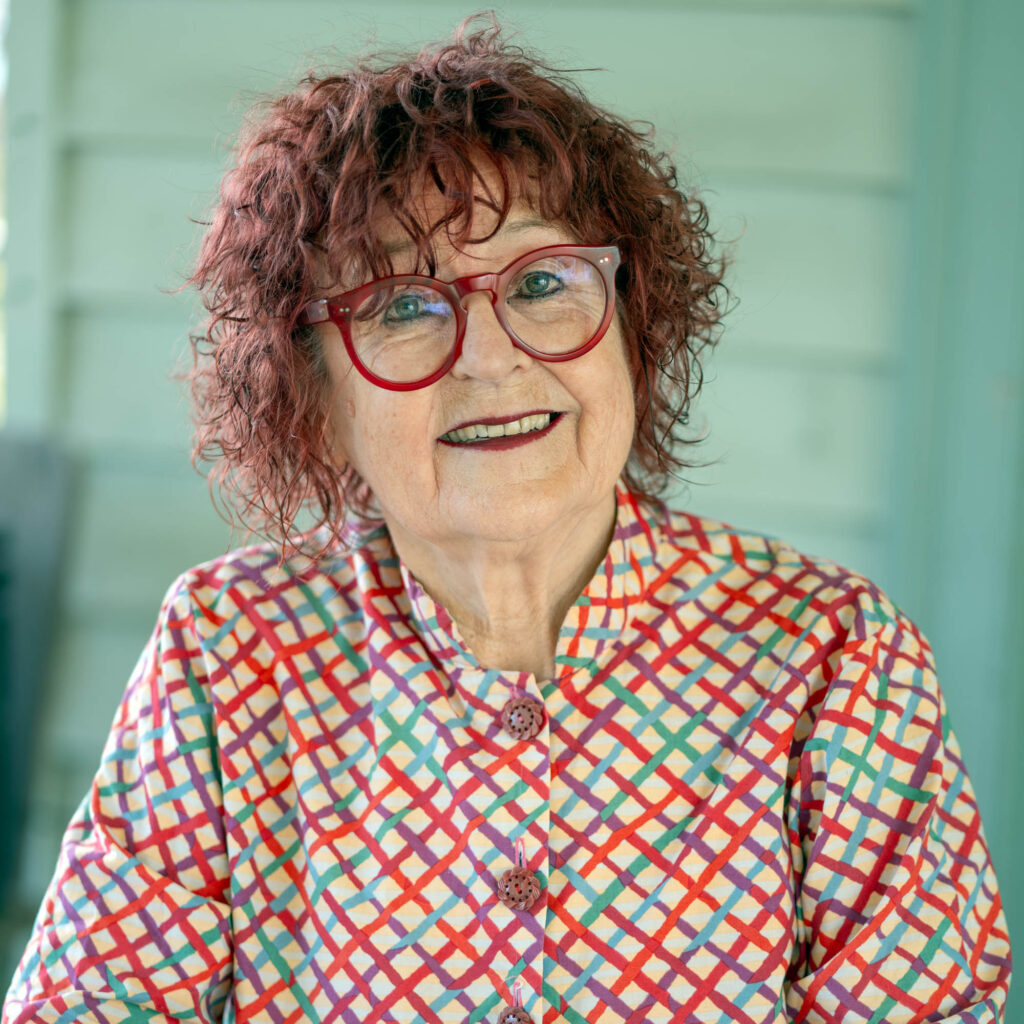
Meredith Jelbart is the author of a short stories collection, Max, and other stories, and the novel, Free Fall. Her writing has been published in the Australian magazines Lip, Luna, Island, Meanjin, and The Griffith Review; and in Adda, the Commonwealth Writers’ website; in LIT magazine, out of The New School in New York: and in The Perch, from Yale Medical School. She is currently working on a novel and a memoir/social history work about her family. She lives on the south coast of Victoria, Australia.
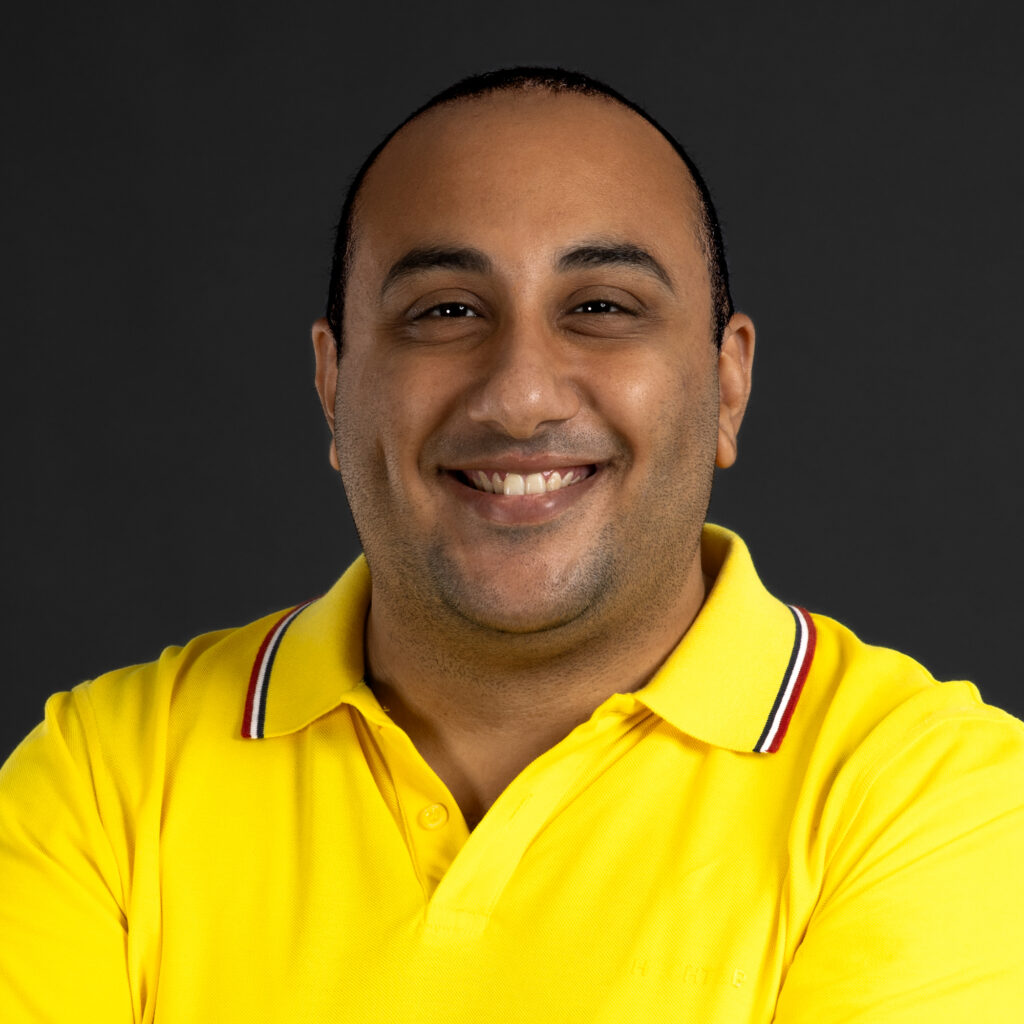
Yasser Alaa Mobarak (b. 1993) is a multi-award-winning photographer represented by ZUMA Press from Alexandria, Egypt. He is a Visiting Instructor at the Delhi College of Photography in India and a Licentiate of the Royal Photographic Society in Great Britain. Yasser has received international recognition for his images from esteemed competitions, including Travel Photographer of the Year Award, National Geographic Award, Sony World Photography Awards, the Florida Museum of Photographic Arts, the Sarajevo Photography Festival, the International Photo Awards, Egypt Press Photo, Paris Photo Prize and the Royal Photographic Society.