It’s Probably for the Best that I Don’t Remember
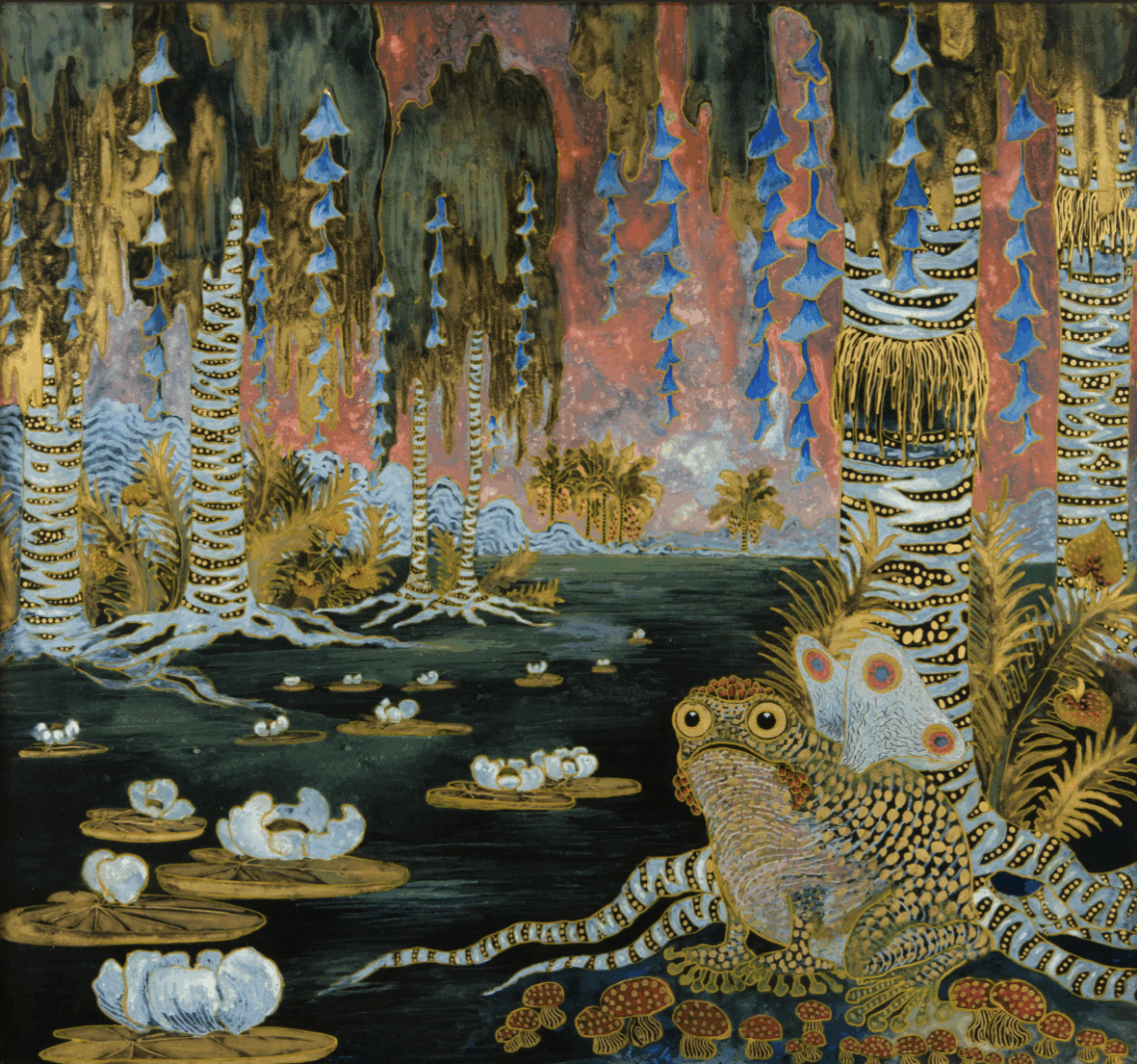
image curtesy of The Public Domain Review
by Sara Flemington
I pitched a tent on the beach for Jupe. It’d been a while since I’d pitched a tent, but this one was easy, it just popped up. We picked it up from the outlet mall on the way. So now, it’s like we can go anywhere, I told her. Because we can just walk, and when we are tired, stop, pop up our shelter. So, it’s like we are free.
Like wolves, she said.
Like wolves.
And whatnots, she continued.
Sure. Free-roaming whatnots.
Once pitched, we walked around the beach to collect things. Me, driftwood, Jupe, cracked mussel shells which she carried in a small, dinky bucket, red, also from the outlet mall. She then used the matching shovel to dig a fire pit hole. It was pretty shit, but I told her she did awesome. She dumped the shells into the hole. Thanks, I said, and scooped them back out before finishing the job myself.
Teamwork works weirdly. Even, at times, serendipitous. Jupe could care less I was going over her work, already busy down at the shore, dragging her bucket along it, scooping mud and water and carrying it a few feet back to a dry spot in the sand, where to dump it out. She did this many times while I worked on making a fire. Until she heard me open the chips, then decided to be finished doing whatever it was she was doing. What were you doing? I asked her. Making a lake, she said. What’s wrong with that one? I said, about the real lake in front of us. That one is for us, she said. The one I made is for those guys, and open palm pointed at the empty space beside us. Then, with the same, wet palm, took a fistful of chips and ate them like that, from her fist. Thus, her silhouette, her whole being, was transformed. Into barbecue flavoured dirt. I bathed her in our lake while the other guys bathed in theirs.
I know when I was small as Jupe I liked to walk some steps behind, to observe, alone, the world. Whether objects in aisles of stores, exterior elements of other houses, parents, two adults I knew, as moving parts of the natural machine at work. My own shoes chirping against epoxy flooring, or sidewalk, or side of the road as moving parts too, amongst bits of rubbery lettuce twisted with dust, crushed grapes, butts, sand, rocks, wrappers, popsicle sticks, from my own hand, even, after having been dropped.
So what I do is I let Jupe set the pace in the woods. Sometimes she is ahead, far, or stood in one place behind, waiting for me to be far. She squats to stroke moss often. Or will call out to me for no reason. It can be annoying, but still. I remember it’s not about me. It’s for Jupe’s sake. Also, I often wonder if there are not threats in the woods, waiting. Though it never feels threatening there, not at all, so.
Tortella fragilis, I said to her on a log as she coiled cling wrap around the tip of a stick.
I didn’t ask, she replied.
No, you didn’t.
Questions Jupe has asked: What does whatnot mean? A group of things that share something in common. What’s a thing? Any thing, all around you, that you can see, touch, taste, smell, or hear.
She opened her sandwich and peeled off the slice of bologna.
What are these? indicating with stick small bits of embedded boomerang-shaped cheese.
Cheese.
One at a time, she popped each out.
No, it’s a puzzle, she said, dropping the margarine side of her bread to the detritus, then ants. I looked out to the impenetrable, to where the threats hid. Preying on a trail of abandoned brown bread.
Why do you sit with your hands like that? she asked me for some reason.
*
There was a time when Jupe didn’t exist. We had a pet beaver instead. It roamed about the house like a large shadow, its tail sweeping hair and fallen bits of food into zig-zagged paths that we followed to go from one room to the next. That’s all we did then, all day long. Followed the beaver around making funny voices, as if we were conduits for its thoughts. This was the sum total of our life, so nothing was missing from it, literally. It was a happy time, a good time, of being arranged together in our house just so.
Until the day my stomach began to grow. I studied, in shock, the bedroom mirror. It looked like me, just me being gross, by way of puffing out my stomach. I explained to your reflection there next to mine how I wanted to go back to the old days. You know, just you and me and the beaver. You were like, Pshaw. Smile! And took our photo, which was basically just a photo of a flash of light reflected in glass, plus four legs at the bottom. But I kept wishing anyway. For nothing to change. For no extra variables to clutter our house, disrupt our patterns.
It worked. Night fell outside the bedroom and Jupe was born a ghost. Her eyes were telescopic, but I can’t remember what it was I saw when I lifted her to look through them. It’s probably for the best that I don’t remember. You took her off to where she had to go because you handle dead things better. Alone, I exhaled until fully deflated. My chest still engorged with milk. It hurt like freaking hell. I knew then that I preferred the questions.
*
In our tent, Jupe would see if she couldn’t make me angry, flashing the flashlight into my eyes.
I’m not going to yell, I told her. I’m just going to explain. That bright lights, in your eye like that, can produce molecules called free radicals, which will cause damage to the molecules already in the cells of your retina, which is a thin layer of tissue at the back of your eye that catches light and sends signals to your brain to understand what it’s seeing, and cause what is called photic retinopathy. So, if you keep doing that to me, one day, I may not be able to know when I am seeing you anymore.
Free is good?
Not the same.
So, not whatnots?
No. Radicals.
She pressed the light against my forehead.
Will this damage your brain? she asked.
Do you want it to?
Why does the yellow light make a red circle when I do this? she said.
Because the red light is passing through my skin and red blood cells while all the other colours emitted by the light are being absorbed.
She wasn’t listening though. What made more sense was to press the light against everything else to check for similar or non-similar effect. Cheek, chin, back of hand, knee, sleeping bag, wall of tent, inside mouth, until, slowly, raising the light to her own eye. I smacked the thing from her hand, reflexively.
How did I feel about making her cry?
She broke through the tent and I watched through the hole her running toward the dark lake. Over the water, hovering, called out that she wanted to go back to the outlet mall.
I’m only ever happy when I’m at the outlet mall, she yelled.
Next day, Jupe came down to you where you hugged her into some boys fossil-grey winter coat that went to her knees, threadbare at the bottom, and handed her a stick. Three quarters the length of her body, sturdy, thick as an oar shaft and forked perfectly in two at the tip. She was quieter with you, and also, held your hand when walking through the woods. Together you went up an escalator that moved to purple-carpeted tree-lined corridors, and walked those until reaching a pit with a screen. Sat Jupe down on a rock next to yours as the screen lit with an exceeding number of moons. I looked up. In the sky beyond the canopy was nothing. So, was no sky at all. Looking back to you, tipping M&M’s into the creature’s mouth as though she were your own palm, I called out, What are you watching?
But no answer.
Whose coat is that?
She gestured at the space on the other side of you and you turned your head. I don’t know. Maybe you borrowed it from the other guys. I guess it would get cold being over the water all night. From where I stood, she looked very musk-turtle-on-a-rock-like. Good style.
*
There were mornings on the toilet I would cry, silent, so you would never know. Cry and pee with hankerings for barbecue chips tucked beside a barbecued wiener within a soggy white bun. Soggy from being dipped in a lake, because to share with the minnows? And now, with you? And you must take a bite, because love?
Then I’d think, shut the hell up, put those tears away, and don’t be stupid. It doesn’t matter. I’d rather wake up in our house again, anyway. Follow the beaver a bit, eat some crumbs from the floor. Buy nothing from the mall, go on city streets and cover my ears against sirens. Whatever I pleased. Rise from the toilet, I’d think. Be resurrected, and do that stuff.
Then I saw her at the fountain. Plopped there on a bench, holding her shovel, not doing anything, two pigtails for like, three fine hairs, stuck straight out above her ears. Mouth hung open with red juice stains rung around her lips. Literally, just plopped. A nanny crouched in front of her and tapped a cell phone. Set the bucket on the bench, too, then lifted the cell phone to take a picture.
Pretty, I said to the nanny. The nanny smiled and said, Yes.
How old? I asked.
The nanny said fifteen months. I tried to figure in my head, one year, three months, plus nine more months, back to the moment she would have begun to accrete.
What’s her name?
Jupiter.
She looked up at the nanny. I watched the water behind her try to touch the sky then crumple back down to the pool.
Wow, I said. Big name for a little baby.
Nanny laughed.
*
We sparked the tip of a sparkle stick for Jupe. Showed her how to sketch things in the dark space in front of her real quick, but mostly she just drew J’s that looped up and over themselves and devolved into glow worms. You drew Simpsons characters, hearts with all of our initials, the letters C U N T. A big golden cunt in the sky. Stop that, I told you. You scribbled it out even though all the light falls anyway. Then wrote C A T. Drew a swastika. Jupe liked that. Laughed.
I sparked the tip of another. She took a deep breath in. Why it smells so good? she asked. It’s sulfur, I told her, and metal oxides, probably potassium nitrate or chlorate, decomposing. Actually, it’s not so much a smell as it is a bunch of particulate metals that produce a smell, as well as the sparkle.
She shrugged. Drew more J loops while you drew a gun beside me. I pulled my head down into my coat, into the neck, so to pretend you’d blown it off. Stumbled forward and fell to my knees like an ancient tortoise finally giving up. Because, though made for an average-sized man, the coat was so big on me that that’s how it looked from the outside. From the inside, it looked like nothing. A void. Because coat was a dark shade, too, so no moonlight or ferrotitanium passing through. Several moments were spent for me in there. Moments for both my sake and Jupe’s.
Then Jupe climbed on my back. Called out, Hello? Don’t die. Don’t leave me alone with Dad. Put your head back on now, please. I called back, I can’t.
What? she said.
*
Jupe has a sword. Surprise, it’s just a stick. But she brandishes away, whacking peoples’ hedges, stone steps. Whacking a passing dog on the butt. Also, doing stuff, like leaping over me, standing at the curb and reaching out to slash approaching cars, all of which drive too fast. Whenever I try to get a grip on her, she hits me, and runs. It sucks. For the love of god, take me back to the woods, please, I think. The threats don’t bother hiding, here. Then a firetruck slews, howling like a wolf. She backs up from the curb fast and holds my hand.
We walk normal now. She drags her stick along the ground. This is better, I think. Actually, best. This is all I really need. How I want it to stay. Us walking together, our matching coats, gifted from you because you knew how much we loved them, knew we could last longer out here if warm. Jupe points with her stick to sleeping raccoons I never would have noticed in hollows of houses, peaked attic crannies of homes, fire escape platforms. I swear she points out nearly eighty raccoons. One hundred and sixty marbled eyes. Then a gaggle of geese in a patch of grass near the bus depot, a coyote on a school track, a garter snake in someone’s bok choy crop, a hawk perched on the tubular chimney atop a six storey building. Then passes me the stick to hold, so to free her hands to pet the deco sphagnum plaited along a wooden fence. Then sees a full, three-piece charcoal wool suit spread at edge of the next lawn over. She lets go of my hand.
Can we give that to Dad as a present? she says.
Maybe. If it’s still there when we go back.
Go back where? she says, but forgets her question instantly, pointing two palms up to the sky. The clouds have disseminated the sunlight into a band of rays producing one expansive semi-circle.
Heaven! she shouts. Heaven’s shining down on us.
The rays brighten.
Don’t look directly at heaven, I tell her. It’ll damage your eyes.
She lowers her hands. Eyes, too.
Why all the best stuff does? she asks.
*
From the toilet, I call out into the void.
Hello? I say.
No one ever hears me in the void.
*
I think to myself: look to the bright side. She’ll never have to deal with welts from wasps, or Redass. No mean kids. No drunk drivers. No diabetes, heart disease, autoimmune disorders, irritable bowel, kidney stones, insecurities, mental illnesses, dark times, cancer surgeries. Jupiter won’t need to carry on through ebbs and flows of crap. My girl spins stalwart in her space. More so than the rest of us. No use for the word: despite. Sure, right now is hard, and whatnot. But don’t be stupid. Instead, think postliminiary. Like, downstream. Like:
When they’ve cut all the woman parts from my body, if it doesn’t make me more of a woman, really? Here with nothing but my own brains, facial features, and bones kept sturdy with fortified milk?
And then I ask you:
Will you stay with me? On this river cutting through the woods, with the dry pack and whistle I picked up from the outlet mall, that I thought could be useful?
Because now, it’s like we can just paddle, take all our things, can signal for help if needed. To whom, even, though, with no one around but us? Still. It is heaven, after all. Two seats behind you, in a canoe, and sometimes a beaver swimming alongside.
You point and I look into the light. Red now, because dusk.
Not that, you say. That.
There’s a suit laid out on a half-sunk dock ahead. So, maybe someone is out there. Passersby no one else can see. Like us.
It’d fit us both, probably, I say.
Pshaw, you reply. Leave it for the next guys.
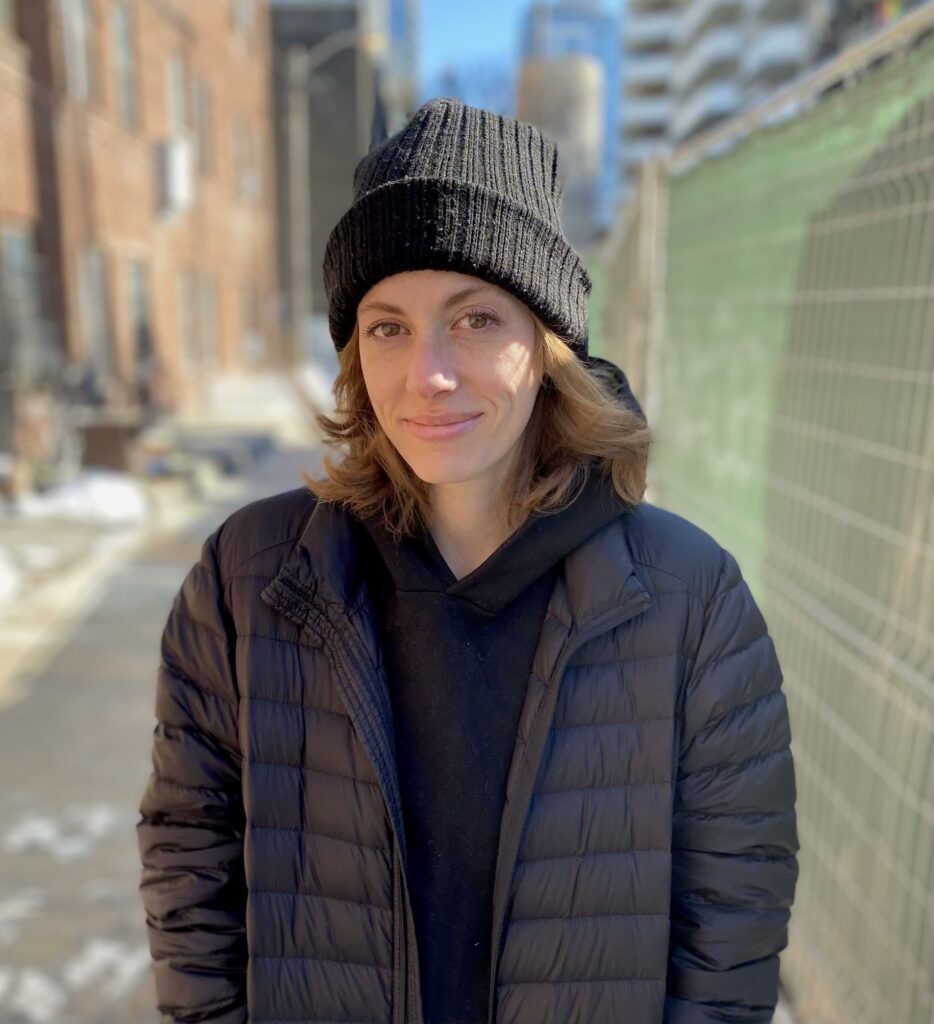
Sara Flemington is the author of the novels R.I.P. Scoot (2025, Nightwood Editions) and Egg Island (2022, Dundurn Press). Her stories have appeared in Painted Bride Quarterly, Eclectica, The Feathertale Review, and subTerrain, among others. She holds an MFA in Creative Writing from the University of Guelph. Sara lives in Toronto, Canada, where she also works as a flight attendant.