Searching Childhood: Driftwood Center at Night; Daughterland; Tongue-lied Girl; Lobotomy; Undaughter *
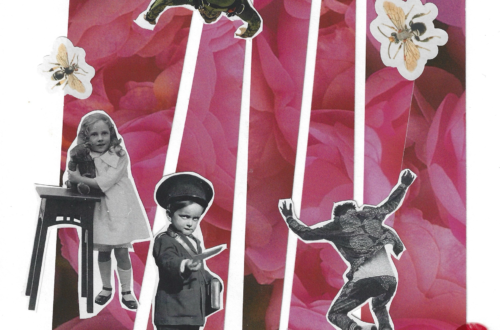
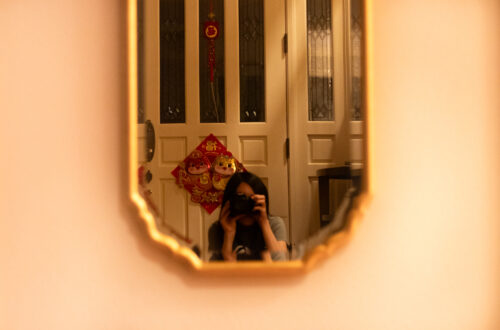
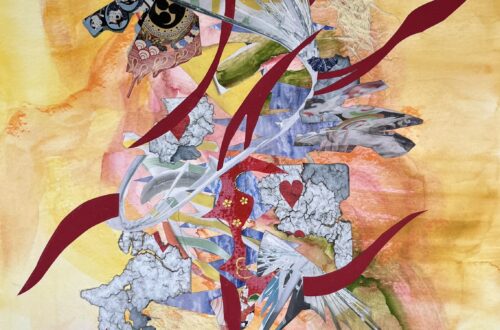
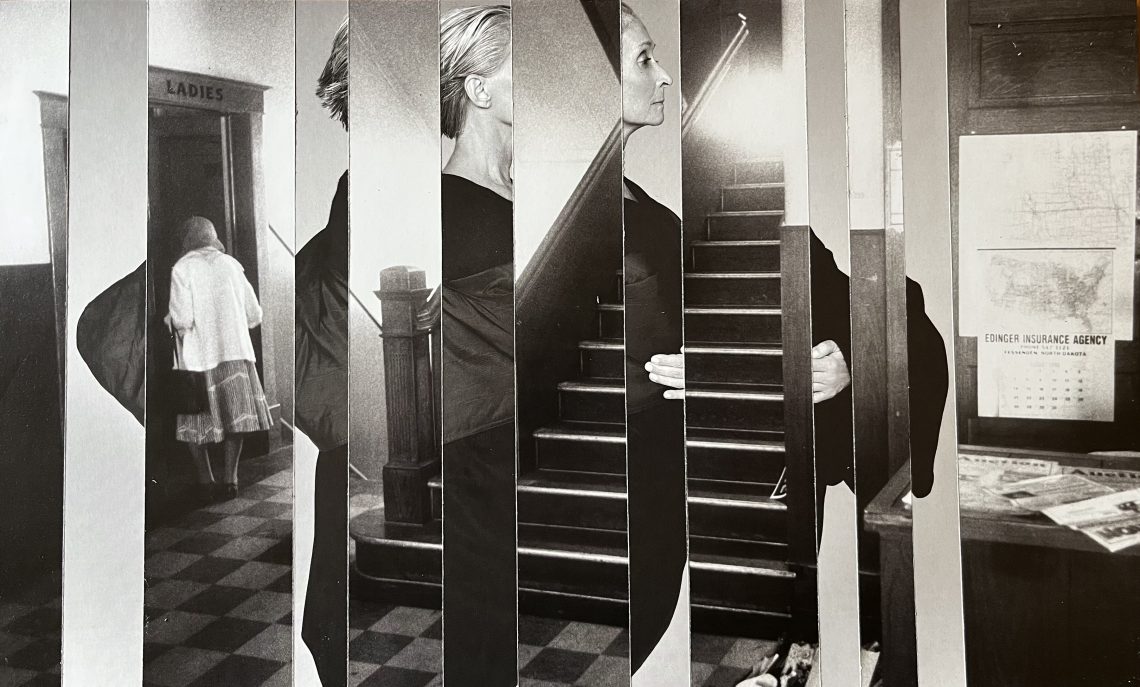
art by Jeff Hartnett
by Maggie Wolff
*We at LIT admire Maggie's bold and unflinching prose. But, we would be remiss without supplying readers with a trigger warning for strong content: trauma and emotional abuse, alcohol and drug abuse, behavioral health hospitalization and discussions of suicide.
Searching Childhood: Driftwood Center at Night
This is where you remember the night memories: your sleeping mother, her sleeping daughters, a night so still someone should have heard the crunch of grass under the men’s shoes. There had been a feud between your mother and the landlord. Eviction papers hung on the door like a curse. She filed a countersuit—an angry shout document rippling through the territory all the way to the landlord’s quiet slumber bed.
The men took position—one at each window, fingergripping bricks, a leader yelled out a countdown the sleepers couldn’t hear until the teenage daughter heard three. The kitchen, living room, and bedroom burst open in a shard shower of flying glass and bricks as the daughters danger-scrambled awake and afraid. The oldest daughter threw her body over the two younger ones, unsure of what was coming next—but all that followed was the silence of men walking away, and the crying of two girls pressed to the floor. Small shards covered the carpet, tile, beds, the daughters.
Your mother made her oldest daughter clean up the glass. Her hand swept some off the table, and they diamond sparkled from the yellow streetlamps pouring through the empty, glassless windows. Later, the three daughters picked glass specks out of each other’s hair—little diamonds everywhere. Blankets and towels were thumbtacked over the windows—a sliver of pretend protection, nothing real to stop the landlord and his men from coming back that night or the next or the next until the court date.
This was your first time keeping watch: you, 7 years of living with danger throat-gripping you awake, already old enough for the smaller battles, trained to watch for the movement of fabric pushing away from the window frame, fingerclaws slipping through, the thumbtacks popping off the wall like a loose tooth in your second-grade mouth, with your scream weaponized to wake the women of your kingdom.
Daughterland
- The entirety of this text takes place in Daughterland, a non-democratic, country nonspecific state with boundaries legible on any known map.
- The state has no recognized government. All decisions are made by Mothers, non-elected officials deciding the welfare and way of life for the citizens of the state. The Daughters do not pray to the Mothers as deities nor view them as benevolent leaders. Mothers make decisions; Daughters live them out.
- The actual land of Daughterland isn’t so bad after enough years spent barefoot walking glinted ground near the coast and yellow dead grass highlands above. In fact, some citizens of Daughterland claim cutting soft soles of the foot makes them tougher, stronger, better for navigating the state’s complicated terrain.
- Night-fires blazing charged colors to a purple-black sky start burning on their own. The Daughters choose to water them to nothing or stand back and let them rise.
- It is unclear if the Mothers know about the fires. It is unclear if they choose to look the other way.
- There are no men here because tourists are not allowed in the state. The Daughters stay Daughters for life, never leaving the state for long. They visit other places—Sisterland, Wife Island, Motheria (the country of the first Mothers)—but their first citizenship as Daughter is forever and forever tied to this state.
- Streets are safe for nightwalking here. Many of the Daughters don’t sleep. Most nights, the cobblestone streets are wet with sweat from the bodies and endless circle wandering feet.
- There is a place for certain Daughters, the younger ones, the bitter ones, the bloodwounded in white dress Daughters. The locals call it Birthdeath, a city the chosen Daughters never visit while others never learn to leave.
- Every Daughter came from a mortal mother, and that mother (a Daughter herself) is somewhere in Daughterland, but the Mothers lawed against prolonged interaction.
- The air here is different than other places. It is mostly oxygen, but the placenta (located along the spine, puffed up just under the skin, elongated now that it is no longer attached to a motherhost) still filters it for Daughter breathing like a pinkwet lung balloon sinking and inflating.
- The entirety of the state has no actual land; night-fires blazing it unclear. There are no streets. There is a mortal mother. The placenta no longer attached, still a wet lung inflating.
Tongue-lied Girl
Act 2
Scene: woman thrown overboard refuses life jacket
Setting: community college conference in Jacksonville, Florida
Characters: woman, age 27, always drunk. Two college professors capable of acting out disgust in disguise. One advisor, middle aged woman, capable of delivering lines such as, “What if you get drunk and fall off a balcony?” in all her earnest seriousness. Various community college students, ages 20-45, to make noise in the background and interact with the drunk woman.
Drunk Woman
This city smells like dirty toilet bowls and fish-floating rivers.
(Classmates pile and spill out of a used car.)
Random Student 1
This car is too small for our night-rushed needs.
Drunk Woman’s Understudy
I feel an itchy thirst. Do you feel it? Let’s just get something.
Drunk Woman
Another shithole liquor store, case of beer for them, vodka fifth for me—
just a little smoothing silk to sleep under.
(The cash register rings, and metal drawers click closed behind them as they ride the velvet of a Florida Friday night back to the motel. The students reach the elevator.)
Random Student 2
Are you already drunk?
(Two professors enter the elevator. They hawk eye the mouth of the drunk woman as it giggles & spills & vapors slip out.)
Drunk Woman
I’m fine, I’m fine, born fine, die fine, all the fine in between.
Drunk Woman’s Understudy
I’ve had enough. It hurts under my ribs. We’ve fire swallowed an ulcer in soft tissue. Let’s stop.
Drunk Woman
(sings) I’m okay, I’m fine, so fucking great.
(The understudy mumbles, passes out at the feet of the Drunk Woman.)
(Conference ends. Everyone flies home on Sunday. Pissed off, concerned advisor calls a meeting on Tuesday.)
Drunk Woman
Expelled? Suspended? Permanent record? Am I an honor student or dishonorably discharged?
Advisor
Do you have a drinking problem?
Drunk Woman’s Understudy
Yes, rehab me, make me whole. I don’t want to waste six more years burrowing sickness, masking decay under perfume.
Drunk Woman
I’m fine. I’m fine.
(The lie blister-bursts her tongue so she bites down harder to keep the sting inside until the advisor leaves the room. Drunk woman goes back to class, no lesson learned. Lights go down for a few more years.)
Lobotomy
Act 4
Setting: Behavioral health ward of an Orlando hospital, a quiet bed alone.
Characters: A young woman at the breaking point of a life. The same woman ten years older, singing battle-scar hymns. Clueless doctors missing the point and high-dosing drugs, little pill prayers. One grandmother ghost, one mother with lines only heard by the younger woman through an earpiece.
Scene: A woman tries to stay alive. The Suicidal Woman, 20, sits on a hospital bed, the stage illuminates the other women. The grandmother on the left side of the bed is chained to something behind her, something pulling her arms back behind her body at random times. The mother is on the right side, lips constantly moving in rapid fire. Behind the bed, the Suicidal Woman, 30s, stands behind the seated Suicidal Woman, 20. When she speaks, she leans down so her head is side by side with the younger woman, her chin resting on the younger woman’s shoulder.
Suicidal Woman, 30s
This is the year you first decide to die. You will be taken to the hospital where you’ll spend several weeks trapped in a different kind of leaving. Once signed in, the doctors won’t let you go home, even when you promise not to play with razors or lighters again, promise not to die by blood or burning.
(Lights wash everything painfully white, as the bed shifts to face a doctor in a white coat. The women move with the bed, so they maintain their positions.)
Doctor
Most people in here aren’t like you. They’re what we call lifers. You’re so intelligent, so in touch with reality.
Suicidal Woman, 20
Of course, why do you think I wanted to die?
(Lights go down, the doctor disappears as his spotlight is turned off. The grandmother lets out a horror queen scream.)
Suicidal Woman, 30s
The year after the first attempt, you make the second. It will be quieter and almost work, but after swallowing all the pills in the house, you sleep for two days and wake up in crusty vomit. You will even write a goodbye note this time on an index card because you had so little to say but leaving in silence felt wrong.
(The lights come back on—blindly bright.)
Doctor
Suicidal thoughts may increase as a side effect of Wellbutrin, but we are starting you on a high dose of 300mg a day.
Suicidal Woman, 20
Can I go home if I agree to take the pills?
(Doctor leaves the stage without answering. The bed shifts and the women turn with it. The grandmother screams as her arms are pulled behind her body again and the chains make a loud drag scrape, the mother’s lips move rapidly, and her body convulses like she is speaking in tongues.)
Suicidal Woman, 30s
What will the note say?
Suicidal Woman, 20
It will say: To my sisters, I’m sorry. This isn’t your fault. It’s just time for me to go.
Suicidal Woman, 30s
I want to give you instructions—a map of hidden detonators so you can sidestep the hurt. If I tell you not to let people near your busted open heart, you will board it up forever. We are still having that fight years later.
(The grandmother is pulled by her chains without a sound and disappears.)
Suicidal Woman, 20
I just want to leave.
Suicidal Woman, 30s
If I tell you to stay away from booze, pills, and the other thirsty wolves licking your waters, you will only want it more because someone told you no. You burn hottest for things capable of destroying you.
(The silent rambling mother disappears as darkness envelops her. The spotlight focuses on the two women’s faces, not even the bed is visible.)
Suicidal Woman, 30s
What I will tell you instead: there is no way around this part. The first 20 years of your life caused heavy damages. But that damage was never your fault. You will hurt, heal, hurt again. This will stay with you, and the same urge will try its best to kill you again in 10 years. I know you think it’s time to go. But someday you’ll be happy that you stayed. Stay.
Suicidal Woman, 20
Stay?
Undaughter
Act 5
Scene: A woman stops being a daughter.
Characters: Little Daughter, 8 years old. Adult Daughter, 20-30 years old. Mother, 50s, woman unstable and uncaring.
Setting: Cramped 1994 Ford Escort from Orlando to Fort Myers and back again, roadside grass where the mother strands herself, disgusting motel room full of trash and smelling like sun-rotten milk.
(The three of them stand facing the audience. The background screens display a grassy roadside, vehicle interior, and motel room. It repeats on a randomized loop throughout the scene, regardless of where the action takes place.)
Adult Daughter
How does a never-mothered daughter die? I go months at a time forgetting I had a mother. Did anyone give birth to me? Was I always just here, daughtering for no reason?
Mother
My mother has been dead 20 years, but I’m still a daughter.
Little Daughter
Do all mothers cry this much? Sleep all day? Say cruel things to their daughters? I put fresh batteries in the back of the mother and tried to find the reset button, but she sat there with her blinking glossy eyes and muffled gurgle-growl static from her voice box.
Adult Daughter
She only cuts through my brainscape when I realize she’ll be dead someday, a phone call I’ll never receive, but death will still happen, even unfelt.
Mother
Even when I die, you will still be my daughter.
Little Daughter
What happens to a mother when it dies?
Adult Daughter
She will likely be cremated, whatever is the cheapest option for an unclaimed body.
Mother
Don’t you know I loved you? Even if it was never shown. I did the best I could.
Little Daughter
Someday she will get help, someday she’ll be happy and act like the other mothers, someday I’ll have a mother of my own, someday she won’t try to hurt us.
Adult Daughter
Little Daughter, what did you ever expect of her? A mother aproned and airy, light on her laugh, small stars in her eyes? Did you expect her to get better, keep a job, call you daughter as anything more than property? Aren’t you old enough to know better?
Mother
I need money. I can’t fix my van without money. It’s the least you can do after abandoning me.
Adult Daughter
This feels more like daughterhood—being guilted while gutting my wallet.
Little Daughter
Maybe we can still have a mother? A mother with pink balloons spilling from her mouth, her sadness on a string as it floats away. Try one more time.
Adult Daughter
We can’t. She won’t do it. I’ve asked so many times before.
Little Daughter
This time it could work. Ask her.
(The lights come up to show a motel room: a bed covered in dirty clothes and trash, a desk with a small television on it, a yellow overhead light fixture loosely attached to a slow spinning fan.)
Adult Daughter
What if…we go talk to someone? Like a doctor? They could help you deal with things, get your life on track, start over. I’ll go with you. All of your daughters will go with you to the doctor.
(Mother starts thrashing around, piles of fast-food trash flying around the stage. Adult Daughter and Little Daughter try to restrain her, so she won’t get hurt. She hurls profanities but stops convulsing. She turns her back to the daughters, refusing to utter another word, even when Adult Daughter empties her crumpled savings on the desk and waits for a goodbye.)
Adult Daughter
There was always going to be a last time—the last time I would see my mother, the last time I would call her mom, the last time I would realize I was someone’s daughter. This is the reminder I didn’t ask for: a mother doesn’t have to die for a woman to be a motherless daughter.
(Mother disappears into the blurring background screen, followed by Little Daughter, leaving only Adult Daughter on the stage in long silence before all the lights go down at once.)
*******

*If you or anyone else you know is in crisis or in need of support please call 988 Lifeline, people have called them for help with substance abuse, economic concerns, family problems, sexual orientation, abuse, illness and even loneliness. Anyone who is in crisis for any reason is encouraged to call.
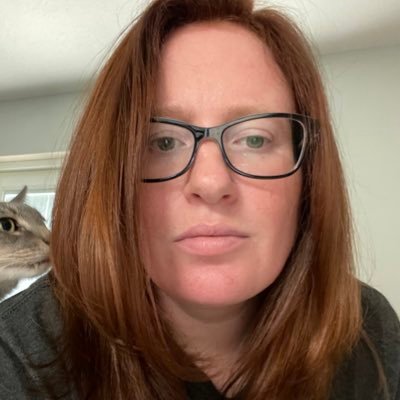
Maggie Wolff is a poet, essayist, and Ph.D. student in English Studies. She won an AWP Intro Journal Award for her poetry, and her work has appeared in Hayden’s Ferry Review, Reed Magazine, Juked, New Delta Review, Painted Bride Quarterly, and other publications. She is the author of a chapbook, Haunted Daughters (Press 254).
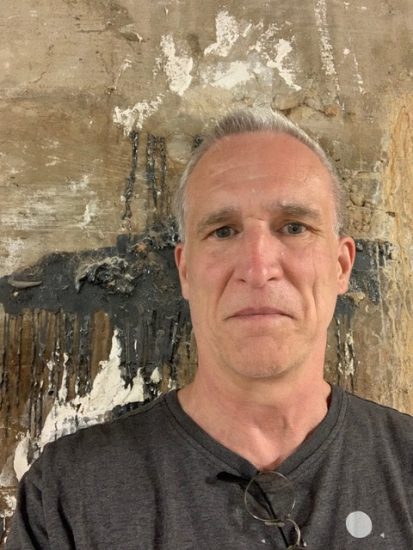
Jeff Hartnett is a retired architecture professor from the apple-scented Shenandoah Valley of Virginia, who tries to follow the example of Henry David Thoreau’s economics of aesthetic reflection in order to support the maximum proportion of his time dedicated to aesthetic indolence. His writing, photography, and art have been published in numerous literary journals. He has an unpublished novel, “A Heaven for Objects.” Jeff invites you to visit his website — jeffhartnett.weebly.com — and also welcomes your comments — hartnett2740@comcast.net. He lives in a yellow house in weird-and-rainy Portland.