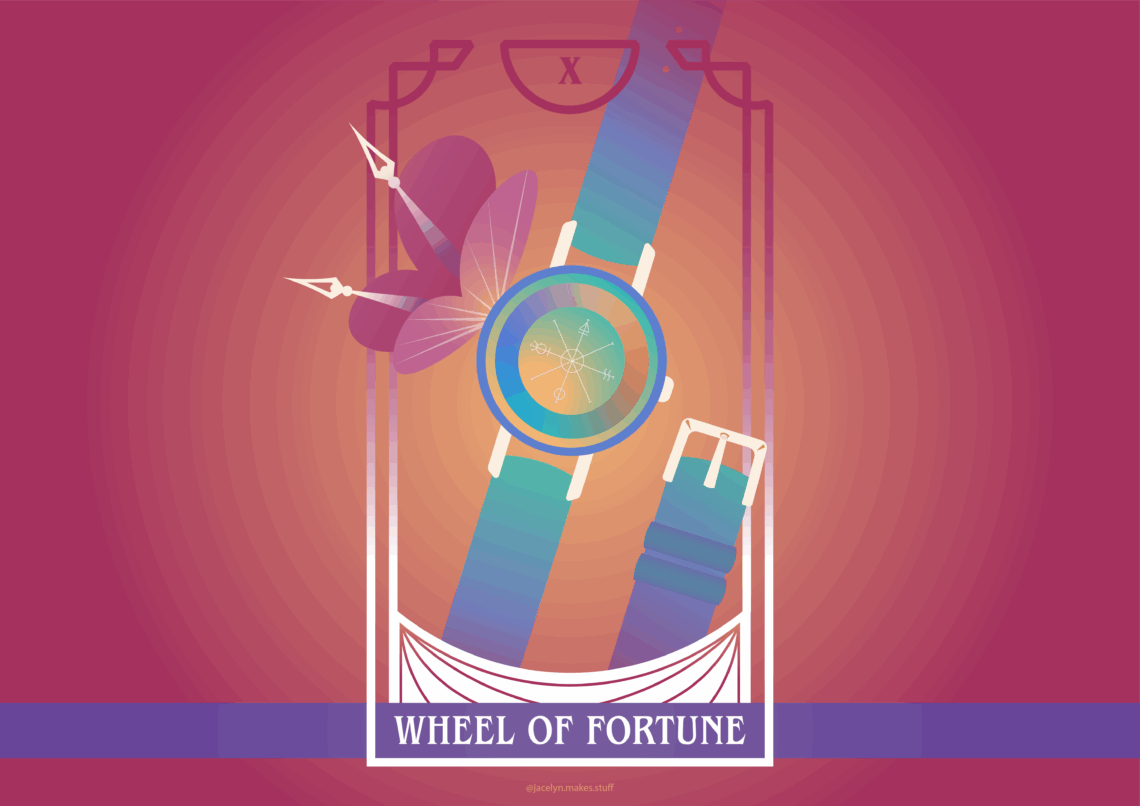
Apples in the Garden
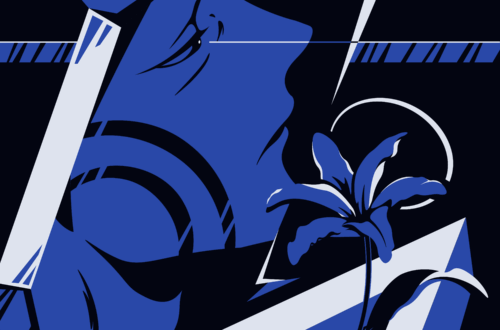
art by Jacelyn Yap
by Jo Galvv
A Magnetic Kiss, A Jawquake Headline, and the End of Possibility
I stood under the pulsing strobes of the year’s largest LGBT party—a labyrinthine
industrial maze, spanning three floors that vibrated with frenetic energy. I had dragged along
a reluctant fellow student, the only one willing to venture into the scene with me. The crowd
crackled with elation; each nook teemed with strangers in their universes. I couldn’t shake the
hollow ache for connection.
We approached a pair, exchanged introductions, and I ended up sidelined. The man, a
journalist, zeroed in on my companion, while the woman—a sharp, unyielding presence—
brushed me off with a curt mention of her boyfriend. Her disinterest was palpable, an
invisible wall I knew better than to challenge.
I drifted through the thrumming space, circling the venue like a restless shadow,
scanning the faces for someone who might return my gaze. But the Germans, as I learned,
required effort and patience—qualities I lacked that night. My companion had settled into his
rhythm with the journalist, so I headed for the bleachers overlooking the dance floor, resigned
to being an observer.
That’s when I spotted her again: Kea. Something in me stirred—a mix of intrigue and
an undeniable pull. She neared me but hastily re-erected a fortress around herself, declaring
her straightness and loyalty to her boyfriend as if reading from a script. Yet, as the alcohol
warmed my veins, courage—or recklessness—urged me forward, and I tested the limits of
her resolve.
I tossed out a provocative line. Perhaps the idea of being with a girl wasn’t as foreign
as she might think. Her reaction differed from the rejection I expected. Instead, a flicker in
her demeanor betrayed a crack in her defenses.
“I’ve kissed girls before,” the statement escaped.
The gulf between us sparked with vitality as if her earlier indifference had fractured. I
pushed on, emboldened by the circumstances.
“Would you kiss me?” I asked.
She paused, her glance swept over the throng, weighing the thought.
Then, with a slight shake of her head, she replied, “Not here. Too many people.”
Her words were a refusal, but they didn’t shut doors. Her tone had an edge of
defiance, not restriction.
I led her through the winding paths of the setting, bypassing sweaty bodies and
clusters of dancers, knowing where to go from my earlier wanderings. I had spotted the quiet
corner on the top deck, hidden from the chaos. She followed me without a word.
When we reached it, the half-light wrapped, and she leaned in. The music throbbed in
the background, its beats distant, drowned out by the stillness of our secluded spot. The kiss
was soft, like the embrace of a hoodie fresh out of the dryer.
One hour flew by. Then two. Then three.
Her lips became a magnetic force; they grounded me as everything else around us
evaporated—the beating music, the hum of the revelers, even my sense of self. In the cocoon
we had created, nothing existed except the passion of our touches. Each kiss teased more. I
craved it—hunger deepened. I told her I wished we could share a bed, where our chemistry
would skyrocket.
Sunrise brought reality’s return, dispelling the night’s haze.
The warmth of her presence lingered, but the world outside was returning to its
familiar shape. She recoiled, her smile small and transient, a vestige of what had been.
“We have to leave,” she said.
Her boyfriend. Of course. The unspoken truth and hidden barrier that remained in the
way settled back in place.
While escorting me to the bus stop, she seemed to distance herself from me.
And then, we bumped into my fellow student and the journalist. They had searched
the event for us. My acquaintance smiled; Kea’s friend offered a bemused glance. They both
noticed the strain in the air. With a final, veiled look, she was gone.
In the days that followed, we swapped tracks over Skype, brief glimpses into each
other’s worlds. Apples by Help She Can’t Swim played on repeat. Her go-to song had lyrics
that read as a discreet confession.
The piece captured the fragile nature of our tie; its upbeat indie rock melody and
escapist words mirrored the space between us.
I pressed. “When will we see each other next?”
There were rules. Always rules. The boyfriend had warned her—no kissing other
girls, not again.
Her kiss looped in my spine like a refrain I couldn’t avoid. The memory of our three-
hour fling clung to me, a heady, addictive thrill.
A sociology student and activist, she planned to distribute flyers for a demonstration
on Thursday evening with the journalist at a bar I used to frequent. It was the perfect
opportunity to see her. She cautioned me I should show no hint of romantic interest in public.
She retreated a step toward her boyfriend with every step I took toward her.
After her pal left, she walked me to the train station, kissing me in dark corners along
the way, the stolen moments full of longing. But when she got home later, her message
punched me. She accused me of crossing a line. She saw the hickey I imprinted on her neck
in the bathroom mirror, and to cover her tracks, she’d had wild sex with him—a try to rewrite
the narrative.
Our pseudo-relationship persisted through messages and songs; each exchange
intensified my desire to dive into her lips.
One day, she asked where I’d be, and I let her know I was heading to a party. I had a
university exam coming up, so I left early, disappointed by her absence. A text from her as I
walked away pulled me back to the spot.
She arrived with a girlfriend, offered me a brief, cold greeting, and then disappeared
without another word. Fury swelled inside me. Why?
I soon learned her boyfriend was out of town, and I assumed it was the logical
moment for me and her to spend the night together. She made it clear she would never invite
me to their place. She stated she didn’t want any drama in her life.
I redirected my attention to elsewhere. Kea was too elusive, too distant. She was a
tangled knot, better left untied.
Nine months later, I awoke to an SMS from her around 5 a.m.: “Are you in town?
Let’s sleep together.”
I thought about jumping out of bed, taking a quick shower, and catching the first train
to meet her.
As I considered it, her proposal at dawn seemed absurd. Her failure to ask me out
properly annoyed me. The words felt empty, a late-night drunken idea not worth entertaining.
I didn’t respond. Hours afterwards, she texted again asking me to ignore the previous
one, and admitted she had been drunk. Besides, I had met someone new—a person who could
be more present, more real, and with whom I was building a bond. Fresh from graduation, I
was also about to move to a different town in Germany for a master’s program.
Years passed. I relocated to the UK for doctoral studies and started another life. Then,
one day, her name appeared on Skype, a platform I rarely used anymore as technology had
moved on.
I said hello, curious to hear how her journey had evolved. She summarized: she’d
been at LSE in London, and at this point, she was in New York for her PhD, with a girlfriend.
I smiled and texted, “I suspected you’d end up with a woman”—but mused, too bad it
wasn’t me.
The thought hovered—what if we had met in England where I, too, had found myself?
Now, NYC lay across the ocean, and she was with someone else. The chance was gone.
Back in Brazil years later, I was undergoing IVF, excited about becoming a mother,
and had just discovered I was pregnant.
I made a list of potential candidates, leaning toward short, strong ones, names that
lacked any past associations. Khali, Kali, Cali, the finalists. As I kept brainstorming, Kai and
Kea came to mind. But as soon as I attended to them, I hesitated. These names evoked faces.
Kai reminded me of my former German boss and Kea… When I thought of her, I Googled
her name. What would she be up to now?
In seconds, several links surfaced.
A train in Union Square had struck her!?
Her death clouded in uncertainty—was it suicide, or a person pushed her? She had
been carrying apples for a pie, a gift from her supervisor, with plans to watch the presidential
debate that evening with her girlfriend and friends.
A woman claimed she had thrust her, but the police insisted witnesses had seen her
“tumble.” How could anyone slip into the gap between two cars if that were true? Only
someone who understood physics could time it to land there.
Weeks later, the same lady shoved another person onto the tracks, with fatal
consequences.
The tune she cherished most replayed in my head: “Meet me in the garden, we can
pick some apples,” and “Maybe it was to be expected.”
The embryo, never to become a baby, dissolved—its fragile form slipped into
nothingness in the shower. The jellyfish fluid mixed with blood vanished into the drain,
expelling any trace of life’s potential.
And in the same way, our relationship departed unfulfilled. The imaginable futures I
once pictured, of what we could have evolved into and the memories we could have created,
disappeared as if the life that never materialized. The possibility was there, tenuous and
brimming with hope, but it was lost like her name now buried in a headline.
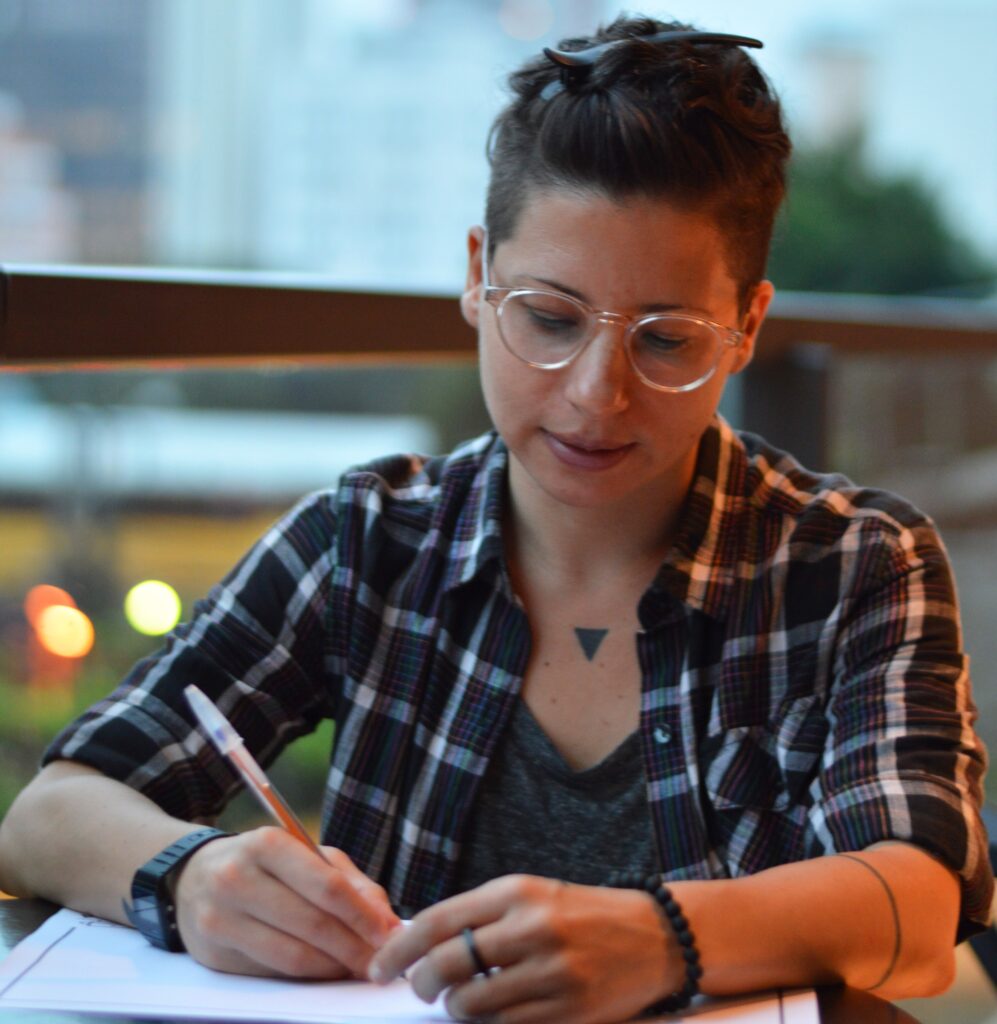
Originally from Brazil, Jo Galvv studied professional communications on a full athletic scholarship in West Virginia, USA. She later pursued psychology and neuroscience (BA, MSc) in Germany, followed by a PhD in cognitive innovation (UK & Australia) through a Marie Skłodowska-Curie Fellowship funded by the European Commission. Additionally, she completed a BA in language and literature in Brazil, with a semester exchange supported by the Government of Canada’s Emerging Leaders in the Americas Program (ELAP). A Berlinale Talents alumna, she now works on independent creative projects in literature and film. jogalvv.com
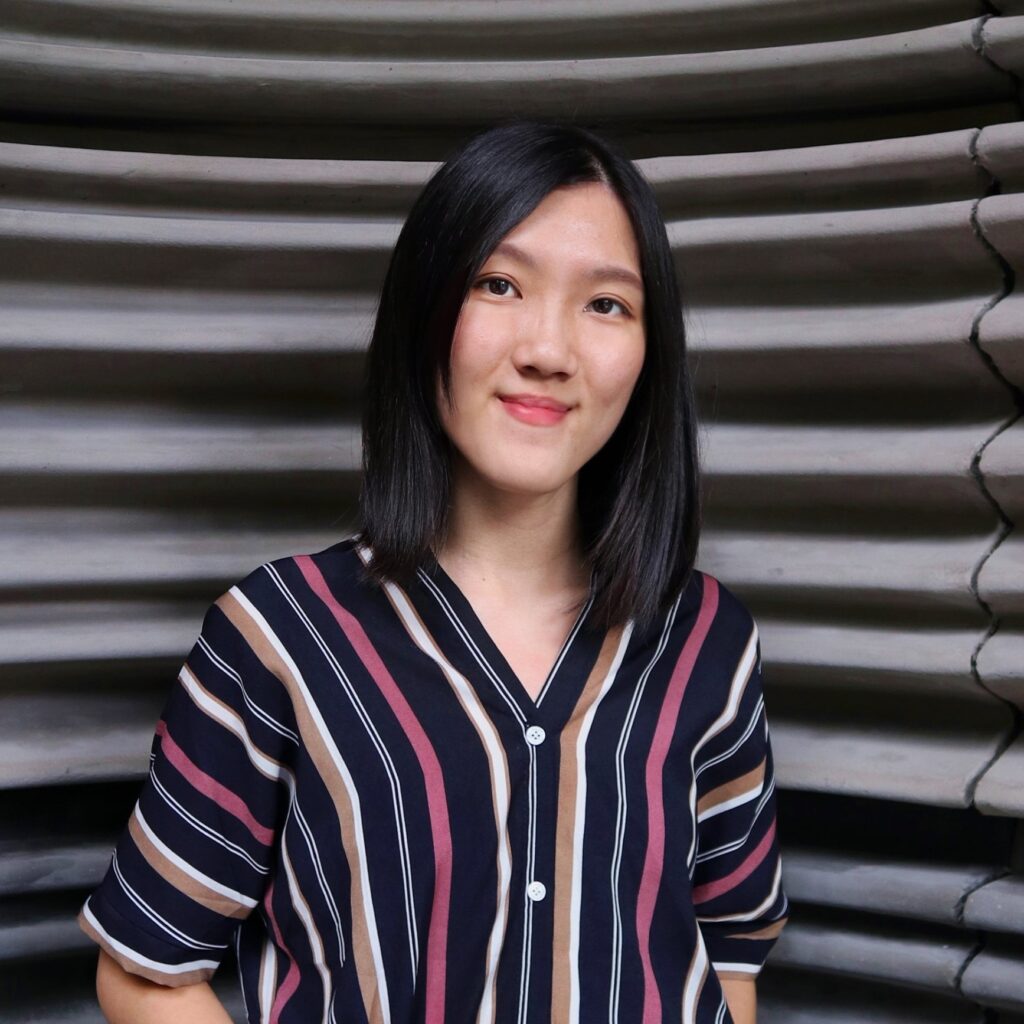
Jacelyn Yap (she/her) is a self-taught visual artist who ditched engineering to make art because of a comic she read. Her artworks and photography have been published by the Commonwealth Foundation's adda, Chestnut Review, The Lumiere Review, and more. She can be found at https://jacelyn.myportfolio.com/ and on Instagram at @jacelyn.makes.stuff