Cachexia
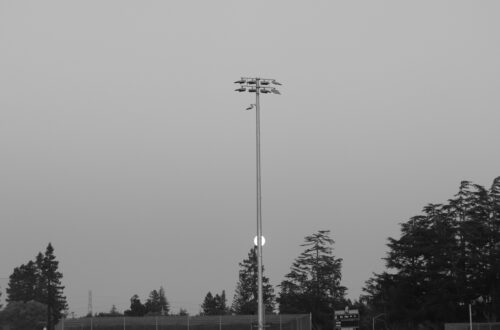
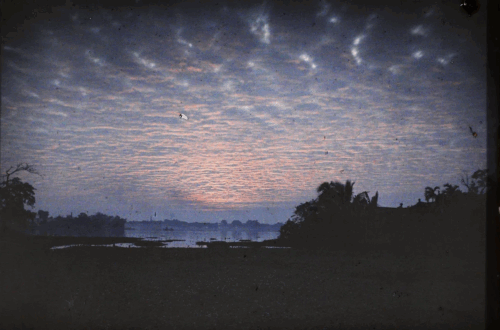
painting by Robert Rogers
by Sydney Lea
A friend from the dawn of our boyhoods is cachectic, a word unknown to me until I heard it from a doctor– a friend of similar longstanding– who’d recently seen him. “It just means he’s withering away,” the doctor told me, adding that our mutual pal had also dropped, as if overnight, into dementia.
I knew that in my own fairly recent talk with the man in question, he had kept repeating himself; he’d even felt obliged to inform me that he’d once been a cancer patient, as I knew full well, of course. I’ve repeatedly tried to call him since, but each time I get the same voice mail message. He doesn’t answer my emails, and I grieve to conclude it’s because he can’t.
So what the fuck do I do?
This is the imbecilic question I keep asking myself, aware that there’s no answer. Do I hope his wasting’s mercifully quick? Do I truly want nothing left of him? Of course. Of course not.
Age should bring more wisdom, not less.
Whatever’s left of my own life will radically change the minute he’s gone. The world will simply no longer contain someone whom I can’t claim ever to have met, exactly. I can fetch no memory of our first encounter, which happened in nursery school. He just always was–as he has been ever since.
I wonder whether, from his dark burrow of befuddlement, he might still recall those summer nights when we cruised country roads in his olive-drab, army-surplus Chevy, harmonizing to doo-wop tunes on the radio. 1958: we were sophomores in high school. He had a driver’s license; December’s child, I didn’t.
The Shields’ “You Cheated, You Lied” was a favorite of ours in that sophomore year. I try to sing it now, but my rendition’s far different in my husky, age-withered voice from back when I could manage a tenor’s high C without falsetto.
Oh, love is something you know nothing about,
Love is something you can’t do without.
My companion’s late-life cancer attacked his tongue. Stage four, it was. Even after a typically brutal course of treatment, his prospects remained grim. Among other things, radiation’s effect on his teeth made eating solids a challenge. Always slender, he became almost skeletal, though not yet cachectic. And yet he proceeded into what has seemed sustained, astounding remission.
Almost ten years have passed since his cancer was diagnosed. No, they have flown. In our eighties things fly. Against all reason, I keep calling that swiftness a cheat, a lie.
I’m talking about one of the few men to whom, kicking all bullshit macho to the curb, I’ve said I love you. He’s always said it back. It’s the way we’ve ended all our telephone conversations.
We haven’t agreed on everything in adulthood. Indeed, we’ve seen many things–especially political–from almost diametrically opposed perspectives. Our sensibilities are, well… different. And yet we’ve never lost a shred of our affection. We live 400 miles or so apart, and neither of us travels the way we used to, so those phone chats have had to sustain us. That our love endures despite these challenges defies logic. But logic need not apply here as I fumble around in grief.
What the fuck do I do?
Since I’ve entered my own late phase, I’m increasingly aware that I won’t get any true grip on life’s deepest questions. I had no idea when we were young that this would be so. That friend and I must have presumed we’d have the world all figured out by now; in fact, like most witless teenagers, we likely imagined we already had.
What do I do? Nothing strikes me. It’s as though a gavel banged. Case closed!
But at least I can say this much. Small consolation, maybe, but there it is. Love, damn it all–never mind our old tune–is a thing we did know something about.
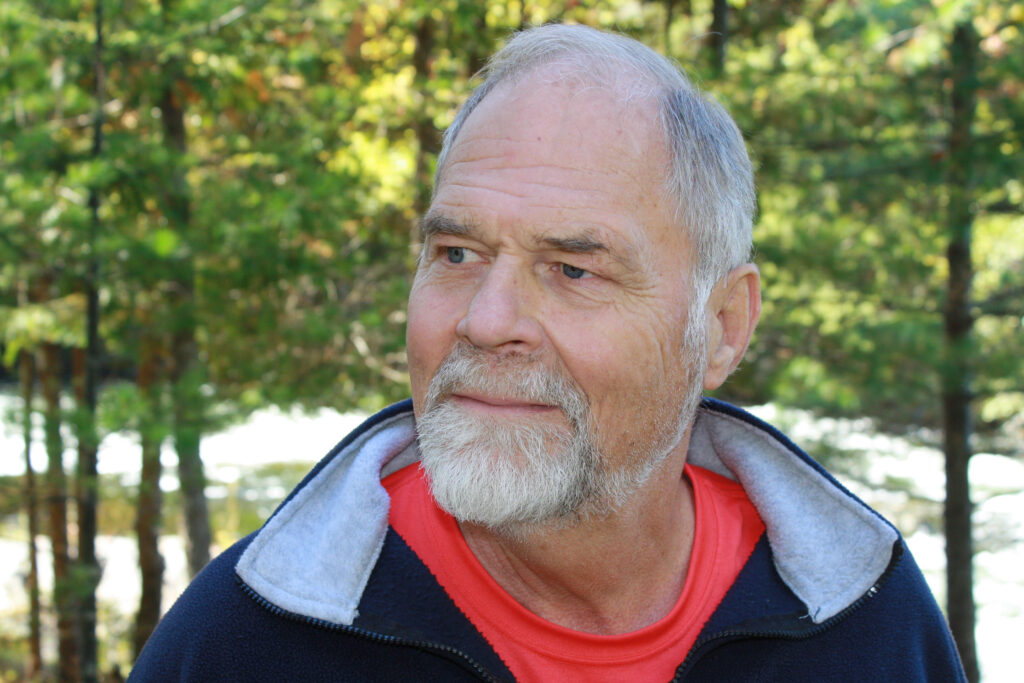
SYDNEY LEA is a Pulitzer finalist in poetry, founder of New England Review, Vermont Poet Laureate (2011-15), and recipient of his state’s highest artistic distinction, the Governor’s Award for Excellence in the Arts. He has published two novels (most recently Now Look, 2024), eight volumes of personal essays (most recently, Such Dancing as We Can, 2024), a hybrid mock epic with former Vermont Cartoonist Laureate James Kochalka called Wormboy (2020), and sixteen poetry collections (most recently What Shines 2023). His new and selected poems is due in early 2027.
Robert T. Rogers (b. Memphis, TN) artistic practice spans painting, digital photography, drawing, and writing. Drawn from intimate reflections and a studied curiosity about belief systems, his work often engages with secular culture while drawing inspiration from devotional art and Judeo-Christian spirituality. He holds an M.A. in Advertising and a B.A. in American Studies from The University of Texas at Austin, along with a Graduate Certificate in Visual Arts from Harvard Extension School. He studied visual arts at the Museum of Fine Arts, Boston; Harvard University; and the Massachusetts College of Art and Design. Rogers’ work has been exhibited at Independent & Image Art Space, Chongqing, China; The Naturalist Gallery of Contemporary Art, Washington, DC; The San Diego Museum of Art Artists Guild; Photo Artfolio, Boston, MA; and has been published in Abstract: Contemporary Expressions and Vita Poetica Journal. His work is included in private collections and corporate settings, including Mass General Brigham, as well as Hilton and Marriott hotels. https://inventingvision.com/