Exilers
art by Alessandro Avondo
by Alice Russell
One.
Downstairs, parallel grooves are worn into wood floor, kitchen chairs dragged out, pushed back. Between the taxidermized heads of a buck and doe, above the fireplace cold with plywood, a garland of red and gold letters spells MERRY. In the corner, Granny’s portrait as a young woman faces a mirror. And at the mantle, a dusty collection of palm-sized birds’ nests, snakeskins, cobwebbed candlesticks, a newly dead bird soft and small.
From her studio upstairs, my mother is screaming: “I can’t hear a word you’re saying.”
In her storeroom-turned-atelier, she’s illustrating last night’s dream on a blank page in a black leather journal. Volumes stacked behind her, decades of dreams bound. Enlarged photocopies Scotch-taped to the wall as she pulls for threads across recurrent visions of deer, hives, her mother, and me.
Weeks before my birth, in a destructive effort to shield me from herself, my mother burned a lifetime of work. But the chasm in the wake was worse than being witnessed, and months later, in a postpartum gasp, she boomeranged back to the page. Albeit smaller, bound.
When I tell her I’ve got a job proofing for the Tennessee Senate, Mom asks if I know what a split infinitive is, holds open a journal page: “Last night you were in the sky floating away.”
A hollow wasps’ nest suspended from the ceiling by clear line.
In the living room, my father is building a wooden boat. His latest in a lifelong series of unfinished house projects over which my mother agonizes: swimming pool a pit in the backyard six feet deep; roof a quilt of mismatched shingles; the house’s exterior in hues of pink, like a healing wound Dad repaints in patches; the house perched on permanent makeshift scaffolding. This visit, no U-pipe in the bathroom. Orange bucket instead gathering our grime.
“How will you get it out?” I ask.
“The window,” he gestures. Boat a soft skeleton. Sun setting. Thinner. He leaves Mom in the evening to sit at its hull in the dark bay windows beneath two chandeliers sipping wine from a rinsed Bonne Maman jelly jar.
Sometimes I look into my father’s eyes and see him fifty years younger, a beaming child. When his mother died, he donned her orange overcoat and cooed through the house, “I’m a songbird.” When I lived here, I took a kitchen knife to the Bota Box and rained red wine over the gravel of the backyard.
This visit, I look for myself along the walls and can’t find her. Mom’s exiled every family photo to the cupola. A haunted climb. A lighthouse view. When our limbs still fit through the windows, we’d played on the roof, looked into yards, marveled at up here.
Now childhood hangs on panels between the windows, looks in.
Two.
Outpace a storm the full drive south. In the dark, hills of trios: father, son, and holy ghost illuminated for a threatening instant, again and again. Roll finally into Music City, sit still at a stoplight off the highway, hair frizzed to a tumbleweed in the humid air, burger joint block letters advertising, “Feed the whole fam with a sackful.”
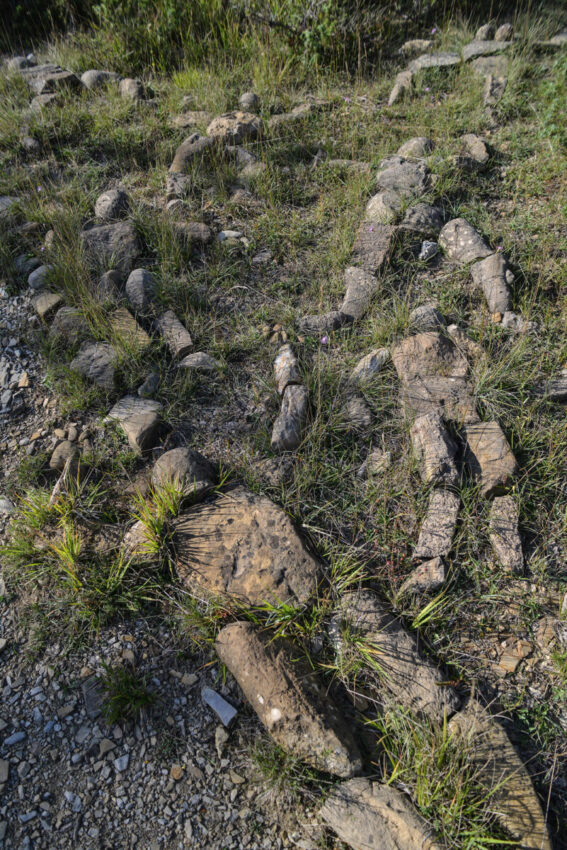
Four hundred and eighty-five million years ago, Nashville was a warm pool of shells and algae. Today is bluegrass, buildings, bachelorettes, highways blasted through their fossiliferous spirals, the city a dome in the center of a limestone basin.
There are houses here that remind me of my parents’ home in Providence. As if they’ve been scissored out of a photo, hole left behind. Mom somewhere inside. Drive thirty minutes southwest, you can hike the rim of the Nashville Basin, look back at a blurred and mighty metropolis.
Amy Jo later tells me her resume read “Fan of the Oxford Comma,” to which Jack said, “Well, we don’t use that here.”He asked me one question in my interview. I replied, “I’m from New England.”
Three.
The first day of work, I can’t get in. Moveable signage shouting “USE OTHER ENTRANCE” directs me in circles around Nashville’s capitol.
Wardlaw, the first one there. A thin man with sharp eyes in a wingback chair, Styrofoam black coffee, right leg over left, leaning back. Ward proofed here last year, which means he knows our entrance sits behind a dumpster, a pair of brass doors in a dark enclave.
Our shared desk unfolds in another, deeper cave. Rock wall painted white. Tom Sawyer, perhaps, commissioned by the Assembly to whitewash this grotto.
Amy Jo twirls her long, straight hair into a claw clip that immediately loosens to a messy chic updo. The youngest daughter of a preacher at a Catholic school in North Carolina. “Full of knots!” Of the Lord but also twenty-two. Thin ringed fingers undoing.
Four motley office chairs for the four of us who proof. Faux wood table a constant tilting battle of elbows. One shared monitor onto which Ward loads DuckDuckGo, because Google, like sugar, will kill you.
When Amy Jo asks if I have a concentration, I say no, “but I like Modernism because I’m into disillusionment.”
Every other color besides glossy white a hue of faded tan. Retro but not cool. Carpeted floor. Humming printer. Tennessee Code Annotated. Wire bins. Stacks of nearly empty boxes of teabags, brewed comfort forgotten by proofers past.
“What people don’t realize is that STEM includes the arts!” Joanne retired from teaching high school English last year. Moved home. Now her commute from Murfreesboro to Nashville is predictably harrowing, late more days than not, breathlessly recounting each new route as she pumps coffee, stirs in three creamers, tears a pink packet from her purse, brushes back curtain bangs, sips from one of those little stir straws.
I live just up the street and will never be late, which is good because Jack Gould only has two rules: “No drama and don’t be late!” His Kentucky accent so thick I think it’s a joke. H as in white, what, where, and who are you?
A brown metal desk lamp behind my seat, tucked under the standing electrical box. Long and broad and heavy with a round two-prong, cloth-cord plug-in. Sits there sturdy, bowing over.
Four.
Our first project is the redistricting bill. Davidson County hacked in three. The Tennessean reports, “Gerrymandering is an extinction event.” In the basement of the capitol, we’ll proof eighty pages of pale blue numbers for a week.
Until then, we go to HR.
Brassy golden box moving up and down. We’re fun-house distortions of ourselves. Look at yourselves, frozen ugly in off-brand gold! But it doesn’t matter; at ground level, we split open.
Back through a subterrestrial tunnel lit like we’re above ground, a bridge between the capitol and its newer administrative building. Manufactured daylight. For weeks I’m turned around, unsure which way is up.
Five.
A full-scale replica of the Parthenon in Centennial Park is most of what remains from the 1897 Tennessee Centennial and International Exposition. The second floor of the temple-turned-museum features a forty-two-foot statue of Athena. I walked the park last summer, circling the faux temple, hands lonely, never knowing she was in there. But there she stood—golden, armored.
Do you think the temple in Nashville ever calls to its mother in Athens?
Augusts, we used to visit Granny, humidity, lightning bugs, screen doors, tiptoes, and the twisty tie of every loaf of bread she ever bought. Each year, I’d open the kitchen drawer, assess the confetti of wires poking through the colored paper coating. An ever-larger, multicolored knot. A cardboard box in a drawer we threw out when she died.
I imagine mom as a child upstairs in her lilac bedroom, sad, hiding felt animals behind a loose panel in the small closet. The rosy fawn her favorite. A small shelf in her studio now cluttered with her finds: matchboxes, single panels of photobooth strips, Lego people, clam shells, wedding rings, pressed lilac, model firetruck, wooden boxes of childhood teeth, Granny’s thimble, watercolor on a mini easel, bird figurines, a baby shoe.
At Black Dynasty, Amy Jo and I slurp noodles. I tell her I daydream about never talking to my family again. She tells me she collects bookmarks, easy to spot along aisles of used copies. So we wander the bookshelves of McKay’s. She pulls Twilight while I thumb through a tome of Greek tragedy, think maybe if I too had some autochthonous craggy mountainside origin. At least then no pressure to be home for Christmas.
I put the bookmarks I find at McKay’s in a shoebox: an insurance card, a prescription for Benazepril, a napkin with a pen doodle of a woman. I leave the box alone for a few weeks, and then I throw it out.
Six.
The tomb of President James K. Polk and his wife is draped with caution tape while the capitol courtyard is blasted and rebuilt. Blocked safe by wooden sawhorses and neon orange barriers striped in reflective tape.
A man is screaming over the bridge while we eat sandwiches on the lawn. Detonation to our left, a couple running up and down the steps to our right. Amy Jo says it’s almost a perfect day, if only there wasn’t wind. “Lord, please stop the wind,” she says. And then, “I don’t really miss home. I just wish I could have lunch with my mom.”
There’s been construction outside of my apartment every day except Sunday. Plus, a handful of sneaky Sundays. There’s a metaphor about rebuilding in a city that’s rebuilding itself, right? Joanne says she knows the face of every tornado that’s blown through middle Tennessee since the day she was born, even in the years she didn’t come home. I hear the clatter of plywood, think of Dad’s makeshift scaffolds, and wonder if I’m holding on wherever I go.
In the bathroom I stare at a pubic hair waxed into the marble floor. Curling toward me. Marble stalls. Everything thicker, heavier than it needs to be. “A curse,” Ward says. “Once you learn to see this way.”
While I pee, Mom sends me the latest dream, a drawing of us, black and red and yellow crayon lines. My waxy, cardinal scribble of a mouth is shrieking at her. On the way home, I misread racing gasoline as raging and agree: let’s scream.
Seven.
Pretty young blonde women work upstairs. Where there are real walls. Where light isn’t mainly fluorescent, doesn’t scream through slits in barred street-level windows. Put together. High heels on casual Fridays. Jeni used to be a proofer, but now she works up there, clerks for a senator. Comes down here for empty cardboard boxes. Jack laughs with her. Ward thinks she smells like Christmas; I think she smells like the dentist.
Sandwiched between an electrical box and ever-whirring printer, we sharpen everything we say. Simplify language wherever we can, expedite our process. Comma read aloud as “com.” Semicolon sliced to “sim.”
“Well, Jeni, you know the proofer last year, said some things that—and these are not my Wards—were interpreted as racist language.I don’t think she has it in her, Jeni. But something like ‘Miss Regina.’ And then she didn’t come back in for the rest of the year. She’d bring in coffee in the morning and then wouldn’t come back the rest of the day. Alan had to get involved. They kept saying ‘Miss’ upstairs too and wouldn’t stop. She’d tell them she didn’t like it. Was a whole thing. Like I said, just what I heard. But she did stop coming in as much.”
By nine I can smell the black coffee on Ward’s breath across the table. We correct “Pee Ridge” to “Pea Ridge” as he tells us the North were terrorists.
I stand at the printer, photocopy the jackets of amendment folders. They come out warm and soft, black and white on long paper. No more manilla or red or blue ink of signatures. I steal a copy of the journal we’re proofing. No one cares and nothing happens, and I have no use for it.
The difference between the North and the South is that neither is very nice.
Eight.
Ward’s sure potholes are causing all the accidents. Around 3:30 he loads the tn.gov traffic map on the monitor while we read. I say they’re much worse, potholes, in the North—wet whiplash from cool to freezing and back cracking streets open. He shushes me. Click, click. Refresh. Looks for pileups. A pothole prayer.
From Providence, Mom texts: “Your bedroom ceiling is leaking.”
Then Dad: “Check attic for leak. Headlamp may be useful. Hurry now please.”
Artistic direction by my father, I spent my youth in a submerged room, ceiling of my bedroom painted like the surface of a pond from below. Above: Lily pads, lolling stems, gliding fish, balmy sunlight. And now a crack through its glossy middle, droplets accumulating in an orange Home Depot bucket, and we’re surprised.
On the lawn, House reps compete in cow milking competitions while storm clouds linger humid. In the hallway a Trooper is cackling. At lunch Jack slams shut the microwave door. Fragmentation pressed upon us.
Nine.
On Valentine’s Day, the house votes to recognize Day of Tears in Tennessee, mourning Lives Lost to Abortion. Our biggest find of the day: a pattern of missing periods. I propose rewriting “needy children”to “children in need,” but the clerk rejects my suggestion.
We don’t have much control over the narrative if we’re being honest.
Amy Jo is starting a monthly “moodsetter newsletter,” a curation of photos, links to podcasts, the books she’s reading, a playlist she’s compiled, horoscopes she’s written. The photos this month, the inaugural month, are all candid pinks and reds, twinkly disposables with text over them saying things like, “Home is where your heart is.”
Ward says he and his brother were taken by aliens as children. “No other way to explain it.” A homecoming. On the edge of our seats. “Oh, I was young. Nothing else to say.” Ward may be vague, but if he’s an alien, he’s further from home than any of us.
Joanne whispers, “I think this is his second wife, but I’m not sure. He seems very private, so I didn’t want to ask.”
She lives in the family home, a two-floor with a porch at a fork in the road. After her mother passed and then her father a year later, she emptied the rooms, resettled. A home with her son and her pug, plus visits from her boyfriend, “who rides a Harley Davidson.” Twinkle between the bangs. She loads the topographical view on her phone, a blurry gray rectangle in a blurry green triangle framed in an arrow by road. Generations here.
At lunch, I recline on the lounge couches of the women’s room and read, “The past history of Ivan Ilyich’s life was most simple and ordinary and most terrible.”
When I return, Bigfoot is mid-stride on the proofing monitor. Ward’s explaining to Amy Jo that by the laws of physics, there’s no way that’s a man in a gorilla suit, his pinky fingering the sagging breasts of the blurred beast.
The pain is that reality creates escapism. The truth is Ward grew up twenty minutes from here. It’s all his children who left. A grandson in New York, birthdays apart, too liberal raising him like that, so last year Ward sent him a terrific book, The Hitchhiker’s Guide to the Galaxy.
Ten.
We’ve almost memorized the last names of senators, an alphabetical song we sing, loping from name to name. An immediate sense of loss when one is missing.
In Providence, my ceiling has fallen in, damage worse than we knew, a concave that bends a fresh river of rainfall along the studs, a gush to the skeleton boat below, and further, saturating the basement’s foundation to wet cement, flooded corners. “We’re selling the house.”
In my silence, the sound of Dad sipping from his jar.
Mom sighs, “Besides, it’s too much space for us now. Too many rooms. All these old feelings, you know? I go to turn a doorknob and I’m angry. I stand at the mantle and I’m sad. I just don’t know what to tell you. You’ve left, and it’s time.”
After lunch, we hit the absurdity jackpot and proof resolutions for both Carlos A Raccoon and the NRA Bass Pro Shop Food City Race, “evocative of dirt races.” No errors found.
Coats on, we find our underground tunnel is closed for repair. Low marble detour lit through the visitors’ entrance. Watery reflection in the glass doors. Down the hall. I’m blinking into the light, blinded, until suddenly, I’m past it, just a defined swatch of hovering particles.
Eleven.
On Monday, there’s a Bible Reading Marathon at the entrance to our underground parking garage. I climb the steps to meet a woman, her Book, and a cameraman. Amy Jo said they’d been there all weekend. Weird, I think, but then, I suppose Jesus is everywhere.
In the afternoon, a folding table standing in the fluorescent hallway hosts pressable carafes and tented names: Original, BOLD, Roasted, Morning. We’re sampling brews to choose the new office coffee. A bouquet of State Troopers sipping, guns on hips. I try two of the four, decide Original is good enough, cast my vote in a tissue-turned-ballot box.
“Which one did you pick, girl?” A laugh. The voice of the shortest one, the camouflage of dress-up, thick fingers, a chunky class ring.
“None of yourbusiness.” My reflexive response. In a rage-sweat imagine myself Eileen Myles in Bath, Maine shouting, “I’m a poet, you fools, you asshole cops!” Pink ears, sweaty pits: an exposé. WHACK! Jack drops a warm stack of amendments in our wire basket.
“That was the head trooper, too,” says Ward. Printer churning. Joanne adding creamer. Amy Jo smiles small at me, puts down the stapler remover, fingers the collapsed staple. I shrug, roll up my sleeves, reach for the top copy.
In her latest drawing, my mother is a prophet atop a hill touching the sky. “In history,” she texts, “people who saw these things were crucified.”
“You won’t be crucified,” I say.
“Well, you never know.“
Twelve.
Structuralists hunt myths for binaries—basic, human ones. Mom or not Mom; food or not food; home or not home. The dichotomies of Sophocles or Euripides no different than ours. Dualities never fully resolved serve as friction, move stories forward.
Mom is accepted into an art show, a drawing of her mother as a wounded deer, but after agonizing over the offer, declines. “Well, you know it’s pointless. And then what?” Artistic exile virtuous, distance as protection.
The myths we tell stage the tension in our lives.
In Villanova, my mother’s face hangs at the base of the stairs, next to the family room, by the garage, on floral wallpaper, in its narrow frame. Linoleum self-portrait. Short, sharp lines of black rain down; shading whittled like confetti. To exit or enter my grandmother’s home, you must pay a token to the sad eyes of my mother. Dark against a wall of red and orange tulips. On every side severed, too big for the space, trapped within.
I stand in the bathroom by the pube, look at my flushed face. Since childhood my own recurring dream of paralyzing flames. I cup water in my palms, carry it to my cheeks. Home or not home.
Thirteen.
“Actually, I don’t want kids,” I say.
Someone’s changed the church sign to read Ass Wednesday. Our cave smells like fresh paint, though no one’s painted. There’s a new intern sitting at Jack’s desk. Glossy oversized suit. Orange “T” pin on his lapel.
Jack is draped over the filing cabinet, top drawer open, eyes drooping, lamenting, “You’ll understand when you have kids.” By Granny’s accounts, I should’ve been aborted anyway. Like Mom, “One too many.” A line she folds under her tongue, unfurls at Christmas, to strangers, when we have lunch together.
“And dead last.” Jack points to me, leading the intern’s introduction parade. “No, not in any specific order. I don’t have a special fact about her, though she is very nice.” What do you make of the scraps left over?
On Sundays, Dad hunts Monday’s trash. Cords of ropes as door handles. Screened windows bent to abstractions. Ceramic shard our dining room centerpiece. 1990 Volvo 240 full. My mother’s horror (“it’s trash!”), my father’s delight. Sometimes I worry I am defined by these fragments of repurpose. Look down and think these are not my hands.
Jack says as soon as he learned Amy Jo is from Charleston—her special fact— he “knew she’d be fine.”
Joanne quietly pulls a bottle of peppermint oil, holds it open under her nose, sniffs twice, does a shiver, screws it tight away.
After lunch, I watch the “T” sidle in, tell some humorous story, head bowing down and toward Jack like a dog for pets, mouthing “Black girl” softly, well loud enough, despite Jack’s blaring financial news, that I can hear. Hands out, palms in, tenderly holding a loaf of charming partisanship.
A maintenance man comes in to assess our phantom paint smell, and I wonder if Tom Sawyer is haunting us.
Fourteen.
“Anyway,” Mom says, sighing, talking over the phone about liminal space, the time between sleep and awake, the realm of dreams, “tomorrow’s the day.”
Sunday, windows are freed of their sashes, Dad’s boat lapping fresh air atop the Volvo. Cuts of plywood spilling out. Photos relieved from walls. Granny’s portrait able to see, for the first time in years, something other than herself. Leaking ceiling in my room left to its next inhabitants. Small objects nestled together in a cardboard box. MERRY in the trash. Deer heads placed out front, between the buck’s antlers a cardboard sign marked FREE.
And the next morning, two crest-shaped indentations in the grass, dewy.
Fifteen.
The day of the Junior Meat Judging Competition, Amy Jo resigns. She leaves me a lime green envelope, my name written like a wave, Charleston tide reeling her in.
Ward looks up as I unfold the tongue. “You’re not leaving us, too, are you?” Loopy handwriting, heart-stamped stationery, and a promise to keep in touch.
Out and back on a trail along the basin’s rim, I run down a path wider than I imagined. Halfway, I turn, hand to my sweaty brow in warm evening light, and gaze back at Nashville. Smaller than I imagined. The outlines of buildings vanished, a soft egg I could hold in my palm, its nest a blurry bowl of molded earth.
On Monday, I find a giant leaf on the third floor of the parking garage as I climb the stairs to street level. I’m so astonished I shout, “Big leaf! A Big leaf!” at a tall white man in a gray suit coming toward me. Holding the weight between my fingers, “Life! Down here.”
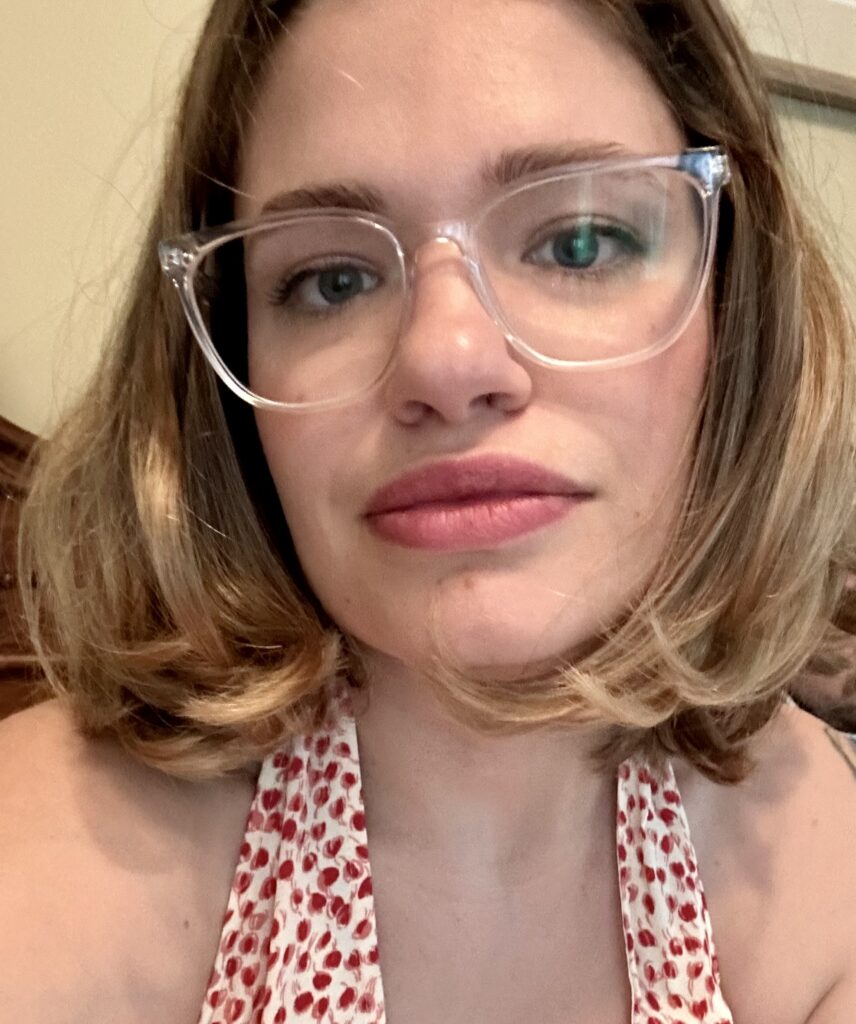
Alice Russell (she/her) writes about the fragmentation of inheritance and what’s hardest to say. Her work has appeared in Away Journal, Thirteen Bridges Review, and elsewhere. She is currently pursuing an MFA in Fiction at the University of North Carolina at Greensboro.
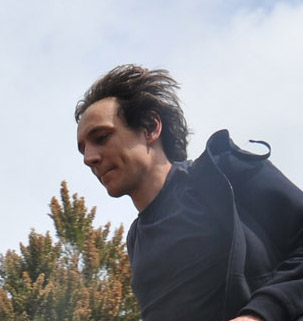
Alessandro Avondo born in Milan, Italy in 1983, studies languages and then audiovisual production. He meets, at his first job, photography that accompanies him daily for 20 years. Over time he experiments with countless photographic applications in different sectors but the constant of his work, as if it were a backbone, remains the editorial work. This passion never fails and in 2019 Naive was born, a small agency that collects and distributes his personal photographic work that focuses mainly on "our presence on this planet". The agency's website can be reached at www.naiveagency.eu