Monkeys, Lioness of Judah, and Hometown Photo
photo curtesy of the author
by Alex Farber
Monkeys

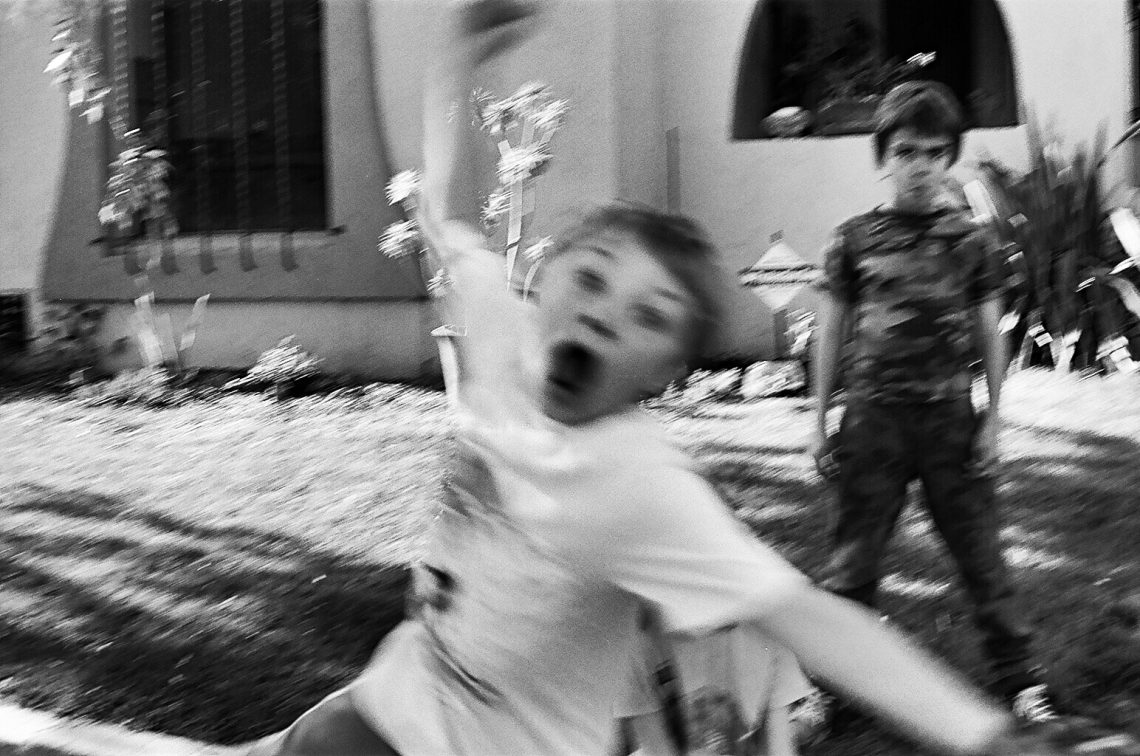
John Swartt wanted to be a monkey. He checked out every book in the library—every species, every jungle, every fruit they ate. His obsession grew intense. At school, he’d leap onto desks, grab his armpits, screech like a monkey, and spit bile backwash on anyone nearby. At recess, he climbed to the top of the swings and hung upside down for nearly an hour, like it was nothing. Everyone was scared of him.
One day during reading class, John saw a bee. Without warning, he sprang to his feet, grabbed a dictionary from the teacher’s desk, and swung to squash the insect. He missed and smashed the window instead. His arms and hands were cut badly. Blood smeared across the floor like spilled paint—except, strangely, it looked purple, not red like in the movies.
The following year, word spread that John had been sent to military school. When he came back, his hair was cut short. He answered questions with “yes, sir” or “no, sir,” even though it was just us. At the mall, he held doors open for older women. His shirt was buttoned all the way to the neck and tucked into pressed trousers.
We asked if he liked the new school. He just nodded. His eyes were blank, like the gap in the smashed window. No one mentioned monkeys anymore, and he never brought it up. We stared at him, more scared than ever—not just of John, but of whatever world had done this to him.


The Lioness of Judah

And afterwards we were going to walk,
so the three of us could finally have it out.
But it was sleeting,
a bitter burning-face wind,
and she—being who she was—
managed to grab the only free cab.
Halfway over the bridge,
Judah in his perfect suit
didn’t even ask to stop.
He just opened the door
and jumped into the fog.
We had to pull it closed after him
as we started to move.
Where were we going?
I had no idea—always her plan.
It was one of those vans;
we sat facing each other—
you
in that black dress,
the obedient schoolgirl you never were,
and me
in my rumpled, ill-fitting suit
I hadn’t worn in years,
since I’d been wearing another life.
I pulled it out from the ash
for the fun of these kinds of memorials.
The melting ice sliding down the window,
the bridge,
me not knowing how to pay for it
or how to tell you—
though I knew you knew:
my mismatched socks,
your jewels, your ring,
the veins rising on your now-woman’s hand,
elegant, certain—
with that purse you accused me of losing
when you went to the bathroom.
A purse? In this world?
Who was naïve—
you or me?
You slid off your heels,
held your feet in your hands,
and then you were speaking—
as if you’d kidnapped my mouth,
the cab filling with your voice alone,
the old argument restarting in the dark
	I made love to my doctor.
  	I made love to my teacher.
  	I fucked Judah again and again
  	with you watching in your innocent mind.
  	To find out, you just need the courage
  	to make love to your tombstone
  	before the name is carved
  	in our ancient letters
  	none of us understand.
	There’s never anyone around
	when you do these terrible things.
	No one’s paying attention.
	No one cares.
	So if you drown, you drown—
	and if you kill, you kill.
	“If” is the middle word in life—
	meaning nothing
	since he left us.
	What if I came by sometime
	and we took your daughter and dog
	for a walk by your precious creek—
	our precious creek—
	the one you moved home to,
	so close, so far.
	You could never be in my life every day,
	and I promise I wouldn’t give you a handjob
	on our rock—do you remember?—
	after I didn’t do it,
	just like I didn’t sleep with you
	while my husband was away
	on his bachelor party
	in my parents’ house by the ocean.
	We could go for pizza
	the way we would,
	and I could ignore you—
	even though he isn’t here
	to ignore you with.
	We could bury him by the trees
	where you’d lay out your jacket
	to lie on
	as you entered me
	and I surrounded you.
	We could burn and bury us there—
	for him, for us.
	Even now he sits with us,
	like a chair pulled out for Elijah.
	I promise this:
	all my secrets left
	in the middle of our old town.
	Don’t break down—
	my love I could never say.
	I’ve always been cruel
	to you this way.
	I’d knock on your door
	when we were six
	and tell your parents
	you had to come out to play.
	There’s this fucking bridge to cross,
	and all our children to set free
	before they come for us.
	There is a vacancy
	across the street
	from where we can’t teach them to read—
	so I’ll do their homework
	until my next vacation
	back to Trieste.
	You’d know I was there.
	You’d stare through your window,
	strategically positioned.
	We would never meet—
	but I’d show you everything
	through the ice glass,
	in my time, my way,
	my pose.
	You’ve always accepted—
	scared and weak—
	and so I’ve lusted for you.
	We can finally live
	in the prison of our free will,
	hope against hope,
	and no one will ever know
	as we stare at each other
	at the funeral.
	Don’t look away now.
	You cannot ignore.
	Who do you think you are?
	The other side
	of the crumbling bridge—
	this is the patience of our fall.
	It comes to none of us.
	Man up.
	Rub some dirt on it.
	Here are my withered fingers.
	This isn’t your manhood—
	this is your wound.
	Feel me.
	It’s time to consume.
	Skyscrapers and streams,
	a million times before—
	our ancestors who lived and died together,
	bleeding on the floor,
	their eyes open
	in the shower.
	Look at this city.
	They do not care.
	They’ll send us to hell
	with a shrug and a stare.
	Is there a tomorrow?
	I don’t know.
	My darling,
	we have no choice
	but to go.
	I can bear it—can you?
	I can bear it—
	you are my truth.
	This is morality:
	our lack of imagination.
	You took what you wanted—
	I whispered it
	in your ear
	again and again.
	Touch me through this invisible dress.
	It’s you—
	all your changes,
	the crosses, the tears—
	you, my completeness,
	in these lying fears.
And so we came across,
With stained pants and dress
ready for the wedding
that was never ours.
And somehow Judah—
forever rival—
was waiting there.
The driver stopped without being told,
just as the ice finally
enveloped us.
He jumped back in—not wet at all,
hair perfect,
werewolf satisfied
by moonlight kill.
He—our only thrill left.
He looked at us and smiled:
		We’ve done this before
  		and will again.
  		There is no end.
I stared out at the water
that tried to save us,
brought us to this
again and again—
his hand on her knee,
both staring with pity
and their forever love
of me


Hometown Photo

Late August, Wawa parking lot, unopened cigarettes in her pocket,
Snapple sweating in her hand.
The asphalt soft and black she can feel through worn souls of her Chucks,
the air thick enough to drink.
She stops—transfixed—as a storm rolls in.
Somebody’s stereo blasts Zeppelin suddenly booming with Bonham’s dominating drum,
a car door slams, the music muffles behind glass, then disappears.
She stands still, remembering storms like this as a kid:
the people she was with, people she pretended to be to escape,
dirt roads ripped open by momentary streams, now only to return.
Thunder cracks. A cold drop on her neck.
A pickup honks: “You’re standing in my spot.”
She raises the camera at the driver staring impatiently at her through the windshield.
Watches his expression change to surprise then trying to hide fear.
Click.
The sky opens on them both.
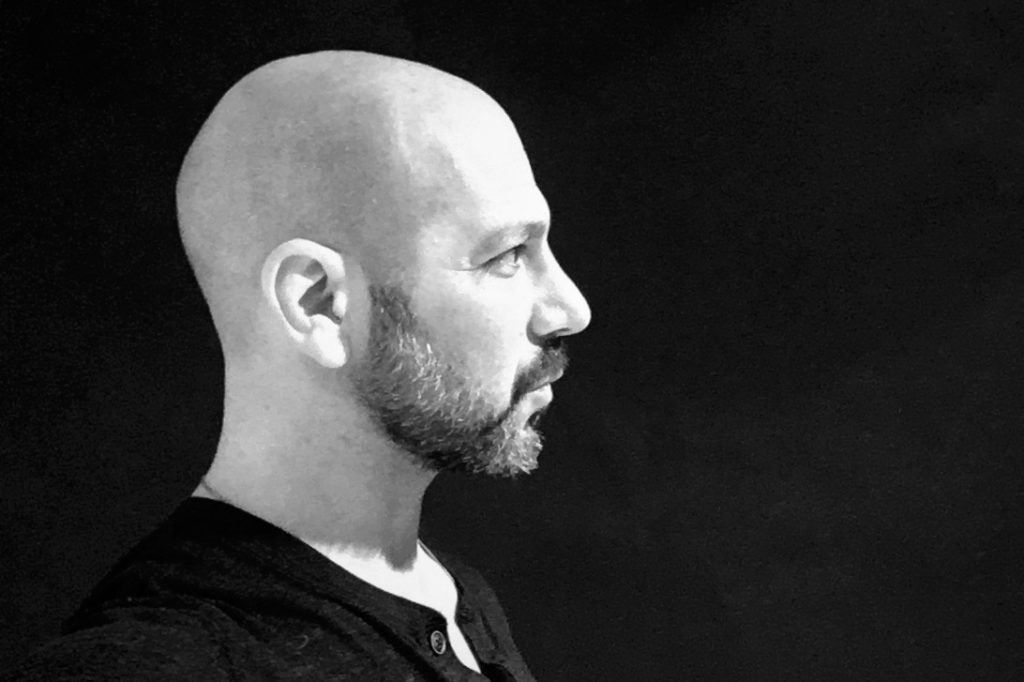
Alex Leigh Farber writes from Pennsylvania, where he mentors and teaches. His work blends experimental forms and mythic undercurrents with intimate explorations of memory, desire, and human (dis)connection. His work appears or is forthcoming in LIT Magazine, Poetry Salzburg Review, Apocalypse Confidential, Apofenie, and Mediterranean Poetry.