The Peng Paradox
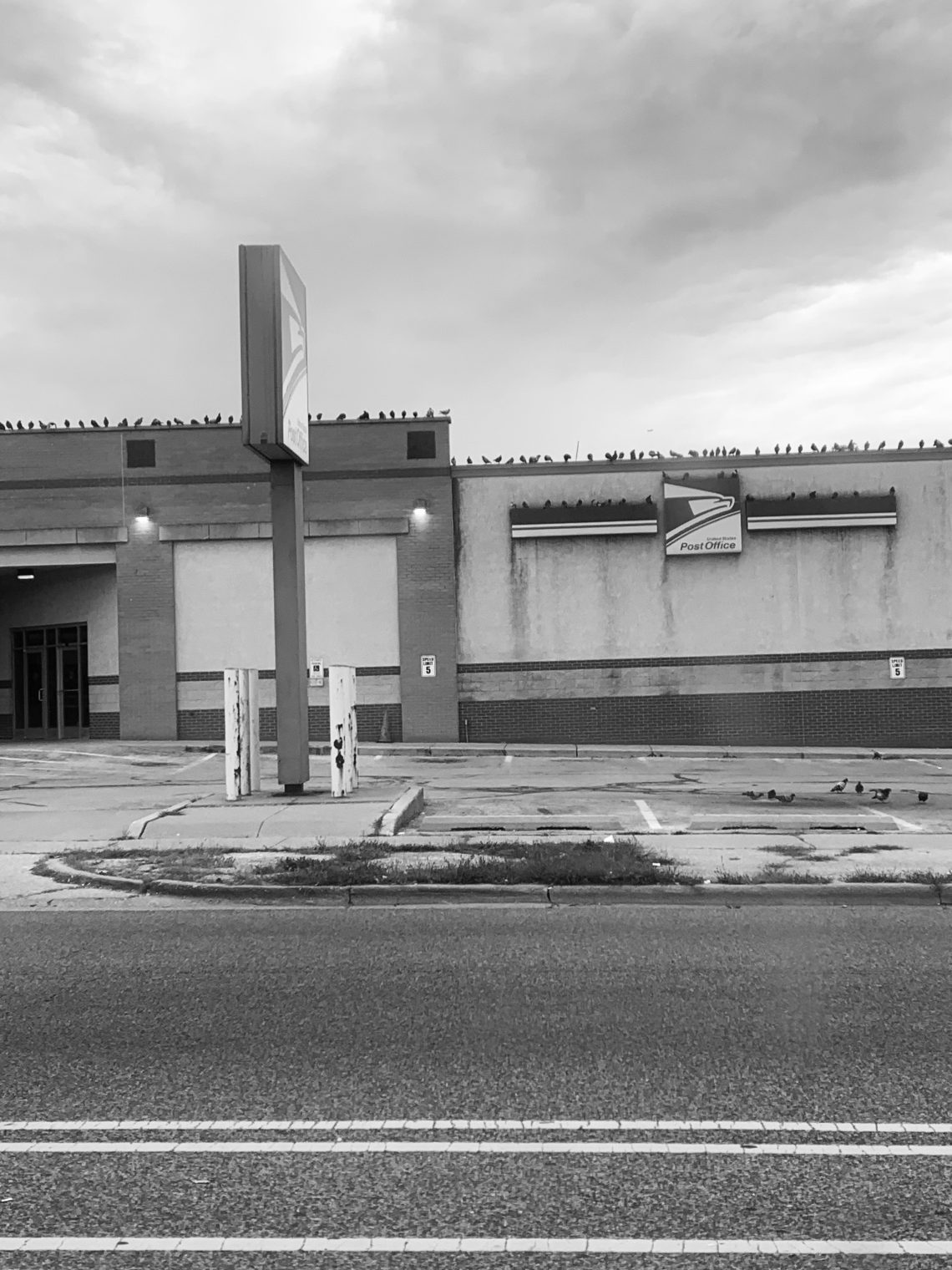
photo by Charles March III
by Yutong Li
Far in the northern darkness there is a fish called Kun, which transforms into a bird called Peng. Riding the whirlwind, it soars ninety thousand li into the sky.
— Zhuangzi, “Free and Easy Wandering” (adapted)
Initial Condition
There is a Peng, riding the whirlwind ninety thousand li into the sky. It flies so high that both the blue heavens above and the earth below are obscured by clouds, making it impossible to distinguish where the sky ends and earth begins.
Supplementary Condition
To maximally harness the wind, the Peng continuously rotates its body during ascent. To reduce the wind’s impact on its retinas, it keeps its eyes tightly shut throughout the flight. So many rotations accumulate that it can no longer remember how many times it has turned, and therefore no longer knows which side of its body faces up and which faces down. And because it has completely surrendered to the currents, it gradually forgets the boundaries of its own body—no longer knowing where self ends and wind begins.
Questions
- Without up or down, without bodily boundaries, how can the Peng determine its position in space?
- If it cannot determine its spatial position, how can it perceive its own movement?
- If it cannot perceive movement, how can it know that time is passing?
- If time does not pass, is the Peng still flying?
The Paradox
The Peng’s flight is the cause of its loss of spatiotemporal coordinates; yet the very concept of “flight” requires spatiotemporal coordinates to exist. The Peng must, through flight, cancel the conditions of possibility for flight—and this cancellation can only be achieved through flight.
A Key Reframing
The conventional formulation would say: the Peng “loses” its sense of direction, “does not know” its position, “cannot” perceive time.
But this presupposes that direction, position, and time are prior frameworks from which the Peng has simply become disconnected.
An alternative formulation: Up and down do not pass through this Peng. Inside and outside do not traverse this Peng. It is not that the Peng has lost its coordinate system; it is that the coordinate system does not occur upon the Peng.
Anyone who has watched a bird in high wind knows this: at a certain speed the feathers stop fluttering and cling flat to the skin. Spacetime behaves in much the same way.
Core Thesis: Time as Bodily Secretion
A body’s mode of interacting with space is time. A body’s mode of interacting with time is space.
For a body to produce “space,” it requires boundaries (inside and outside), orientation (up and down), and reference (here and there). For a body to produce “time,” it must perceive change—and change requires a stable spatial reference to be recognized as such.
Thus, time and space are not containers in which bodies dwell, but products of bodily operation. Different bodies secrete different spacetimes.
The morning mushroom’s body does not secrete “the waxing and waning of the moon.” The cicada’s body does not secrete “spring and autumn.” The Peng, rotating in the clouds, no longer secretes “up and down,” “inside and outside,” “before and after.”
Corollaries
If spacetime is a bodily secretion, then a few consequences follow.
First, there exists no universal, objective spatiotemporal framework for all bodies to inhabit; there exist only the incommensurable spacetimes secreted by different bodies.
Second, a body can, by altering its own mode of operation, enter a state in which spatiotemporal categories do not apply. This is not “departure” from spacetime, for there is no prior spacetime from which to depart. It is the cessation of secretion.
Finally, the state the Peng reaches in the clouds is an arrival before the rift between time and space. And the experience in which time and space do not fissure results in the disappearance of the body.
Conclusion
When the Peng is flying, spacetime disappears from its experience. And it is this disappearance of spacetime that retroactively defines what the Peng is when it is not flying: a bird that flies very, very high.

Yutong Li is an MFA candidate in Creative Nonfiction at Saint Mary’s College of California. Her work has appeared in The Massachusetts Review. She examines family as metaphor, cultural translation, and the philosophies embedded in ordinary life. She lives in the Bay Area, where she practices boxing, collects beautiful glassware, and hunts for wild mushrooms.

Charles J. March III is a Rottweiler-breeder’s son on the Southside of Chicago whose work has appeared in Feral, Fleas on the Dog, Cajun Mutt, The Learned Pig, Bear Creek Gazette, Mantis, Cephalopress, Young Ravens, Squawk Back, Of Zoos, Sulfur “Surrealist Jungle,” Mycelia, etc. More can be found at LinkedIn & SoundCloud.