Twins
art by Kevin Wei
by Minyong Cho
The first hotel was small but pretty with a garden behind the decorative wrought iron gate that was firmly closed. I found a piece of paper on the gate with the handwritten English word, “Closed.” I didn’t know a hotel could close. If they were full, wouldn’t the gate be open to let the guests come and go? I still had two more to try, so I moved onto the next.
Either Heidi was considerate, or cheap hotels were clustered in Jerusalem, because it only took ten minutes to walk to the next one. This one was not as pretty but was also closed with a piece of paper on the gate. I stared at the word, “Closed.” I was beginning to see a pattern. I walked 15 more minutes to find the last one on the list closed again in the same way.
Not knowing what to do, I was loitering, when a short, wispy Israeli woman in a long jean skirt and headscarf approached me. She said gently in English with an American accent, “Are you looking for a place to stay? There’s a guesthouse not far from here.”
She obviously had an ulterior motive, but I was running out of options. I really didn’t want to spend the night outside, especially since I was not feeling like myself. I would try her guest house. “Can you show me?”
If she gloated, she didn’t show it. She suavely led me on a path that cut through the residential area to a two-story house. There were lights and people in the houses next to it, so it definitely wasn’t isolated like the haunted dorm. She opened the door, and there was a family having a meal in the dining room under a lofty ceiling. “Erev Tov,” she greeted them and told me, “They live on the second floor and rent out the rooms on the first floor.”
They were parents and two daughters in modest clothes. They had the table full of food, but something was off. The parents were clumsy with each other’s cutlery and glasses without the familiarity of a couple in a long, intimate relationship. The tween daughters were not eating but kept glancing at my guide, like a teacher. They all seemed to be acting on a stage.
The mother looked up at me, wide-eyed and agape, as if I had been a celebrity. When she got up, though, she stood tall at around 5’10”. She opened the fridge and presented it to me with sleight of hand. She said, “Here’s some food you can eat if you’d like.” Kid snacks were neatly organized—two yogurt jars, two 50ml cartons of orange juice, and two cups of chocolate milk.
“You have two of everything.” I said robotically.
“Yes,” the mother rejoiced, as if I were a child who got the answer right. I was thirsty and hungry but didn’t touch any. She was suspicious. She simpered and pointed down the hallway, “Your room is the second one on the right. The key is in the door.”
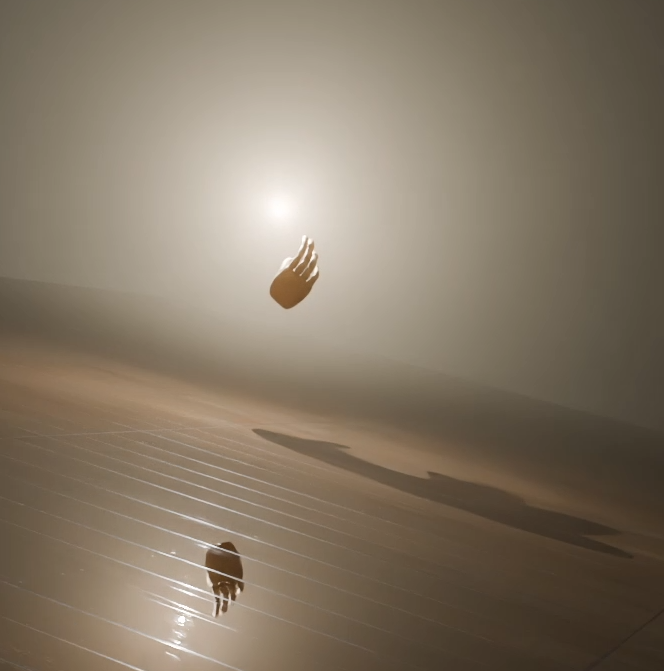
I hurried there and collapsed on the bed. I so wanted to sleep but noticed 4 full-length mirrors near the bathroom, which I found unusual. I was tired but got up to inspect them. They were attached to the bathroom and closet doors, creating infinite reflection. Abruptly, the TV started playing. Astonished, I came around to see how it got turned on. I tried to find buttons and a remote. Soon, I stopped searching and stood glued to the TV. It was not live but on repeat. A 30-second news clip in English about twin sisters missing was playing over and over again.
I didn’t want to process this. I just wanted to get the fuck out of here. I grabbed my bag and left the room. It had been only about 20 minutes, but the family and guide were long gone with the dinner. Deep in my bones I knew this house was empty. I opened the front door and ran out.
A group of young Jewish men in black suits with top hats and tzitzits were huddling around something. One of them turned his head and nodded, inviting me. No, thanks, I was not interested. I was too busy thinking through my shit.
Who closed down these hotels, and how did they know I was going there? No, it wouldn’t be Heidi. Did they tap my phone? Why was I copying down the scratch marks on chairs earlier? I’d never done this before. Did I get drugged?
I was parched but didn’t trust any store there. I was tired but didn’t want to get into any taxi. I decided to walk to the giant grocery store behind the Hebrew University, because that was the only store I knew stocked with a wall of water bottles. I assumed it would be more difficult to spike hundreds of bottles than one.
I estimated it would take 2 hours to walk there. There might have been a shortcut, but I didn’t want to risk it. Trekking up the hill, it dawned on me I might have to do what I’d been dreading all this time—spend the night outside. At least, I was going to the best place to do that. I knew the area around the grocery store very well, and it was well-lit and had benches.
The grocery store was closing in 15 minutes. I beelined to the water bottle wall and studied it. They were in a disarray, with some turned down and others molting the plastic wrap. I looked around but saw no one. I gulped. I picked one further in the back and rushed to the cashier. I watched her every move, but she seemed bored. I came out on the street and sat down on a bench with my treasure.
I took one sip and waited. I didn’t feel anything. I might not have waited long enough, but I couldn’t wait any longer. I downed the bottle in one go. Blood started flowing in my body and woke up my brain. I never felt so alive in my life.
I saw Heidi’s texts. “So many cats! There was nobody at the dorm. Hans thinks it’s empty.” I didn’t respond. I didn’t want to text her anymore. My phone was contaminated. I just wanted to sit here satiated and not be bothered.
No, that was not my fate. Soon, a police car came and stopped right in front of me. I wanted to tell them to fuck off but couldn’t. I didn’t want to go to jail in Israel. Two more police cars appeared from the other side. Six Israeli officers got out of their respective cars at the same time and huddled around me on the bench. Gosh, I became so special overnight.
One officer, in his early 20s, planted his foot on my bench and asked me, “Can I see your ID?” I handed him my passport. He passed it to another officer who was talking on the phone. They nodded. Yes, I was Minyong Cho, and possibly the only Minyong Cho in Jerusalem right now.
Pedestrians on my side crossed the road to go around us. I would’ve done the same. A Palestinian bus passed by, without stopping. Maybe they saw the police cars, too.
The officer who examined my ID blew cigarette smoke and pointed at the Palestinian bus, “Those buses are dangerous. They will take you somewhere, and you will be gone.” He readjusted his ill-fitting uniform that was clearly not his.
The Palestinian bus… It played Ya Rab after the checkpoint. It took me and Muhammad to the Dome of the Rock. It transported me to another world of Silwan one night of ramble. Sitting in the Palestinian bus almost every day for nine months, I saw kids play, goodbye hugs, carts of limes being carried, and Arabic graffiti on the walls. His audacity to lie to my face pricked me like mosquitos. I leaped. I didn’t want to listen to him anymore, though he might have been assigned to speak to me because of his proficiency in English.
The officer who had been on the phone gathered together the other officers, like a timeout in a basketball game. They turned and approached me in a circle. They changed. They were aggressive now and might do anything to me. I stepped back. They kept closing in, within inches of my body, until I hit the ATM. They suddenly pulled back. I didn’t know why. I glimpsed at the ATM screen, while being on guard against 6 young men. Then, it hit me. The ATM might have a camera, and what’s more, I was standing in front of a bank, probably with a decent security system.
I wouldn’t budge from this ATM. The liar tried to coax me a few times, “Do you want to eat? We have food in the car.” I would rather starve to death, tied to this ATM. In less than an hour, they all lost interest and began texting on their phones on benches and in cars. One of them even got on a long, private call with his girlfriend, I presumed. I debated who they were. If they couldn’t risk being filmed by a bank CCTV, they must be lowly existences, maybe even convicts, certainly not police officers.
With each passing minute and hour, I felt more and more invigorated. My legs weren’t even sore. Staying up all night out on the streets was easier than I thought, as long as I was affixed to this ATM.
The sun rose, and the streetlamps went out. The officers groggily shuffled into cars and drove off. I could finally take a step away from my savior ATM. I sat down on a bench in peace and casually watched early morning commuters. My phone rang and jolted me out of the trance. It was Aharon. I didn’t want to but answered.
“You have the Jerusalem syndrome.”
I scoffed. He was not a psychiatrist. Tamar was, and she released me with no diagnosis.
“You need to leave Israel.”
I agreed. I knew now they were willing to deploy a fair amount of resources to silence me, though I did nothing. I didn’t participate in a single protest or sign any petition. Was this all because of what I wrote on my Hebrew exam? I didn’t care. I was done. Thankfully, I was not Palestinian but Korean, so I could go wherever I wanted. And I was going to Ben Gurion airport.
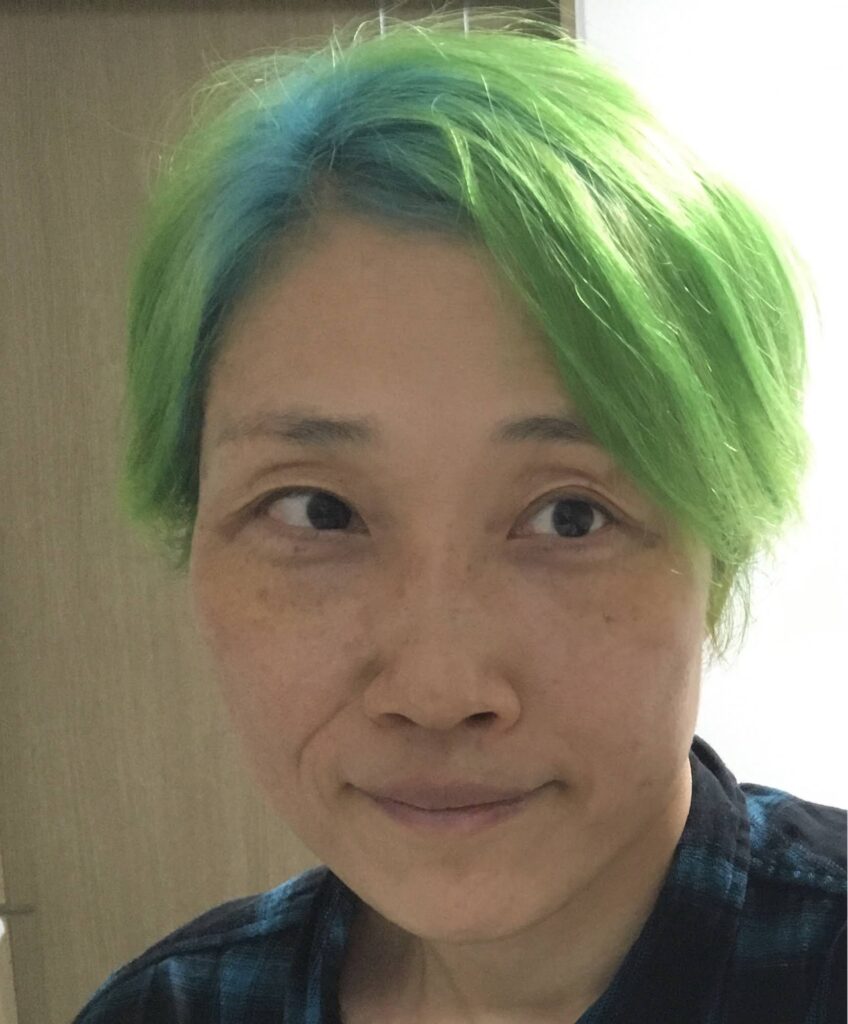
Minyong Cho was born and raised in Seoul, Korea until she was 16, when she immigrated to California with her whole family. She moved to the East Coast to attend MIT and then spent almost six years in the Middle East for her doctoral research in Islamic art history. She is passionate about sharing her multicultural experiences as an adult who was abused as a child. Her story, "Checkpoint," appeared in a literary journal, Ponder Review, in June, 2025. She now lives in New York City, where she enjoys outdoor climbing, winter hiking, aerial dancing, and writing.
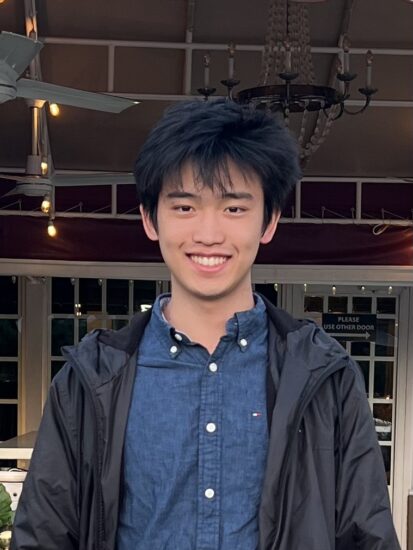
Kevin Wei is a student at the University of Pennsylvania studying Digital Media Design. He likes penguins and likes walking with his dog.