We Continue Holding, A Girl, Ephemeral Nature of Love
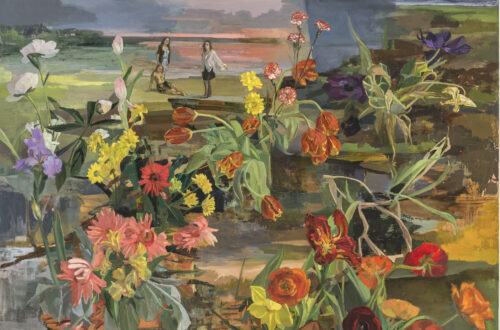
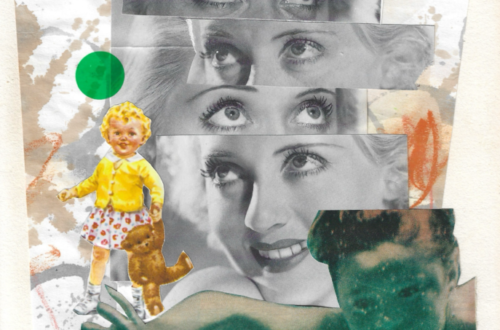
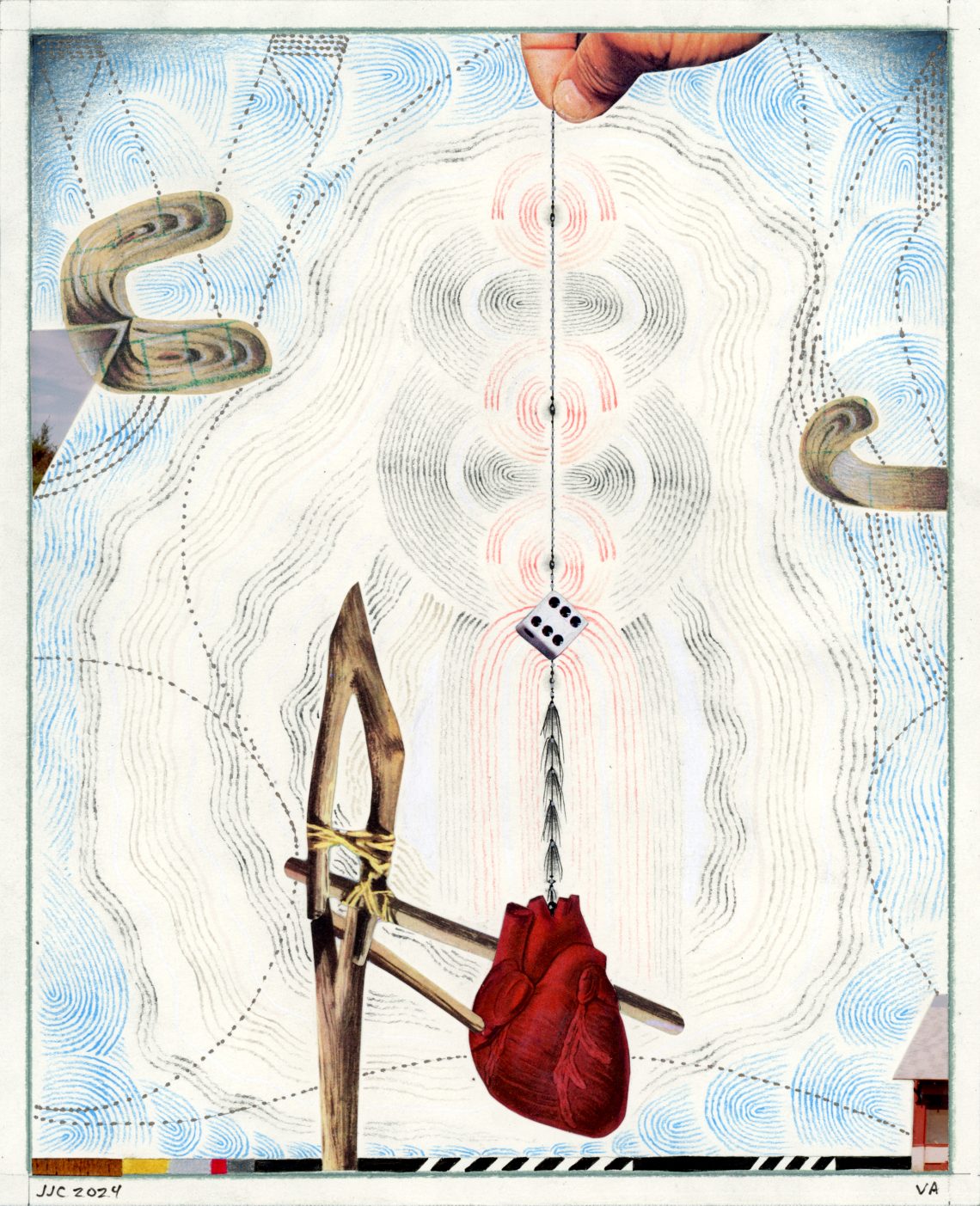
art by JJ Cromer
by Isabel Hoin
We Continue Holding

We bled many years ago and continue to bleed the deepest  red,
our hips tender. We prayed to you, in that first moment  of
womanhood— oh, that joyous moment— but you stayed still, a
face of marble, never answering the calls we sent for comfort.

Red, our hips tender. We prayed to you, in that first moment
without our mothers. It is absence we search for in language, a
face of marble, never answering the calls we sent for comfort.
We want rings of language, a clot to visualize, to spin the mind.

Without our mothers it is absence we search for in language.
How to pass the cycle forward, the confusion of tongues no longer.
We want rings of language, a clot to visualize, to spin the mind.
Barthes wants us to talk about it as though it existed, so we try.

How to pass the cycle forward, the confusion of tongues no longer.  Unravel
shapes of yourself in our minds so we can sleep, heads heavy, as Roland
wants us to talk about it as though it existed, so we try.
We beg you to give us your hand outside this confinement we inhabit.

Unravel shapes of yourself in our minds so we can sleep, head heavy, as we
make our dissent down to this underworld, wooden steps rotten with tears.
We beg you to give us your hand outside this confinement we inhabit,  to join
hands in unity with all the mothers’, cycles ticking forward.

We make our dissent to this underworld, down wooden steps rotten with tears.
Red, our hips tender. We prayed to you, in that first moment, joining hands in
unity with all the mothers’, cycles ticking forward; a face of marble, never
answering the calls we sent for comfort.


A Girl
 	In response to Ron Mueck’s
    	 	sculpture “A Girl”

The naked baby girl enters the world underneath her mother with closed eyes.
The naked baby, unlike other naked babies, lies upon the elevated concrete surface. Eyes

meet her; not from above or below, but around. A spectacle of sorts, as if she is a trapped animal
at a zoo. If she were to come back she would be the Veronica flower so she could use her eyes

to stare back at the onlookers. How freeing it would feel, this opening of her world. To look and
wonder. To sit in front of the blank page, reminiscing. Maybe she has dreams, her eyes

wandering back and forth under eyelids, her dreams confined only to childhood and child
impulses. Freud believed that a child’s impulses still live on in dreams. If she had the many eyes

the Veronica Flower has, she could escape the confinements death gave her. She, too, may have
been named after a flower, as is the Veronica Flower after Saint Veronica, who wiped His eyes,

blood and tear-soaked, on their journey to Mount Calvary for His crucifixion. How eerie,
walking to your death. Willingly placing yourself into an in-between place— the body, the eyes

working until suddenly they don’t. How to reconcile this space of confinement, of purgatory.
The mind feathers black with moments of the past, wondering what death holds. Open your eyes

to the sky full of beginnings. Watch the crows fly above you while feet sink into the wet earth
until they are lifted, floating. Your eyes begin to shut, slower and slower. Breathe. Let eyes

fill with water from the body. Oh, how it provided for you in those times of existence. For
everything that exists, exists through something or through nothing. My love, turn up your eyes.


Ephemeral Nature of Love

I imagine we met in another way, i.e., any other way.

Any other way than we did— on a subway in the streets of
New York, on the cobblestone streets of Italy, or even a
bar— but no, it couldn’t have happened this way.  There is
no tableau of me seeing you, eyes zooming in first on your
face, streaming down to your gentle hands,  as they tend to
do, like the Blood Falls in Antartica; the high  levels of
iron(III) oxide-tainted saltwater flowing from  the tongue of
Taylor Glacier. We, too, embody redness; yours is mine and
mine is yours. It pours from my mouth,  connecting to
yours— our spoken language. Would we still  share our
separate plates of food? My fries taken by your  hands, my
hands taking yours mid-stride. I ponder all  the ways we
“could have,” how these two words wipe  us out, our joint-
ness going by in the flash of imagination.

*

The joint-ness going by in the flash of imagination. All the ways
we “could have,” how these two words wipe yours mid-stride. I
ponder all our shared separate plates  of food; my fries taken by
you, connecting— our spoken  language. Would we still: yours is
mine and mine is yours?  It pours from my mouth, the tongue of
Taylor Glacier. We, too,  embody redness; levels of iron(III)
oxide-tainted saltwater  flowing, as they tend to do, like the
Blood Falls in Antartica; the high, first on your face, streaming
down to your gentle hands,  as there is no tableau of me seeing
you, eyes zooming in.  A bar— but no, it couldn’t have happened
this way.  Or New York, the cobblestone streets of Italy, or even
any other way than we did— on a subway in the streets—

I imagine we met in another way, i.e., any other way.
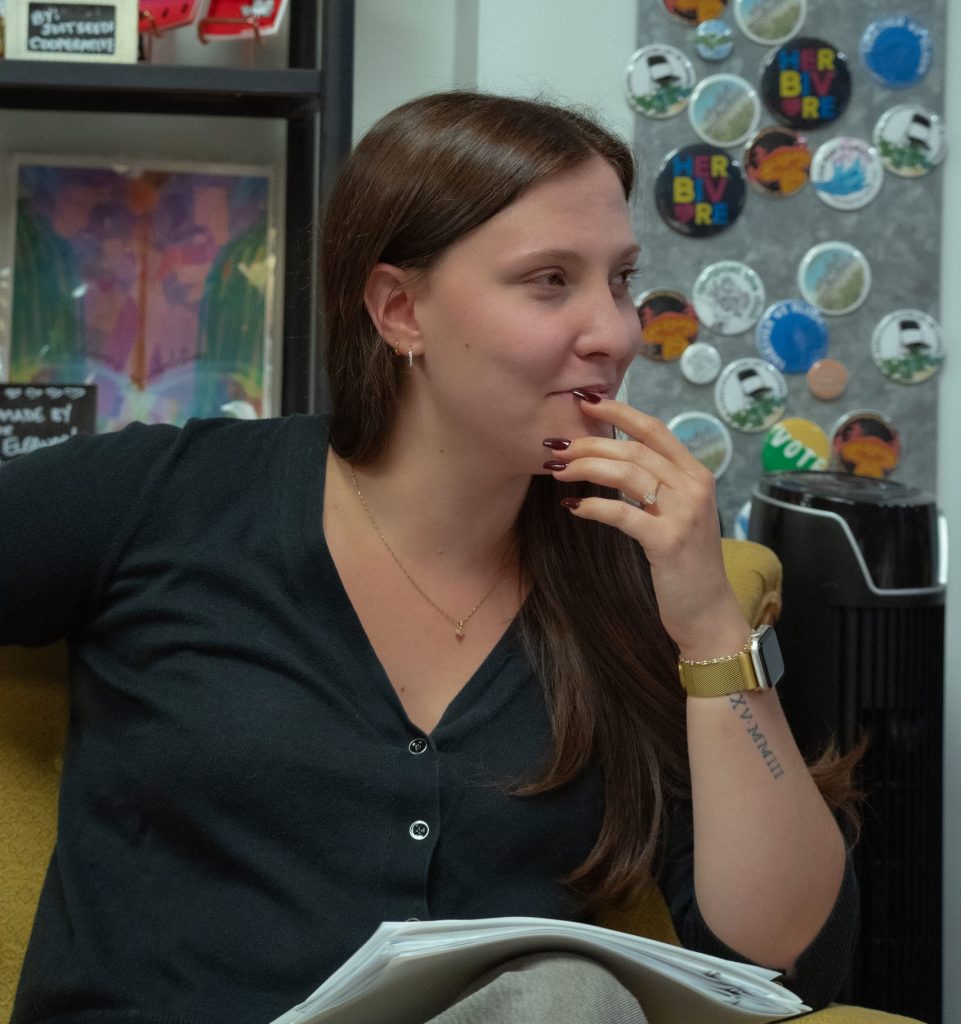
Isabel Hoin (she/her) is a Lancaster, PA native and is a writer of poetry and lyric essays in Old Dominion University's MFA program where she is a Perry Morgan Fellow, Writers in Community (WiC) Coordinator, and Barely South Review Poetry Editor. Her work is already in or is forthcoming in Oroboro Literary Magazine, LIT Magazine, Black Fork Review, Complete Sentence, Vagabond City, Door=Jar Magazine, Blue Press Magazine, Wild Roof Journal, La Picciolėtta Barca Review, and Pensive: A Global Journal of Spirituality & the Arts at Northeastern University, among others. She’s a 2025 Tinker Mountain Merit Scholarship Recipient in Poetry at Hollins University and is a teacher of Poetry at The Muse Writers Center in Norfolk, VA. You can find her at https://isabel-hoin.com/.
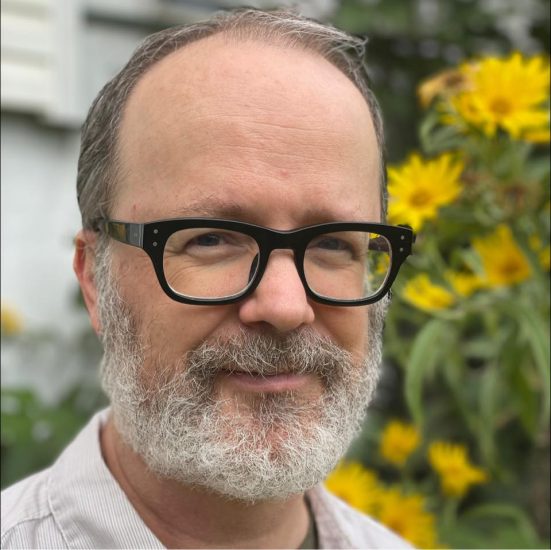
J.J. Cromer and his family live on a small farm in central Appalachia, where they’ve kept bees, geese, ducks, and chickens. Self-taught as an artist, he holds a bachelor's degree in history and two master's degrees — in English and library science. His art is held in the permanent collections of the American Visionary Art Museum, the High Museum of Art, the Taubman Museum of Art, and the American Folk Art Museum, among others.