Time Travel
art by Isabelle Carasso
by Margaret Grundstein
I get lost.
My eyes wander from my screen to my bulletin board, resting on a picture of my father taken over forty years, or half my life time, ago. He is cleaning perch in the sink of my parent’s A-frame cabin in northern Vermont. It is evening. My eldest daughter, age four, watches. She, clad only in her white undies, is standing on a step stool, peering over the linoleum counter, her blond curls dangling down her back. He, in his crumpled fishing cap, the comb-over of his remaining curls tucked underneath, is gutting the fish he caught that morning at the lake.
Tenderness for my daughter rises, along with a longing for my father and deep elation over the bond they are building. Abruptly, I am catapulted one hour forward to the opposite end of the cabin. There my mother is ensconced in her throne, a green Naugahyde chair flanking the floor-to-ceiling fireplace, contentedly playing solitaire on a board balanced across the chair’s overstuffed arms. From this post she regularly issues her stern edicts to my daughter and me: “The kitchen is closed!” or “Take that outside!” Our rowdiness and West Coast hours trigger her anxious need for order.
I watch my mother lay out her cards. Dinner is over, dishes are washed, the kitchen is now clean and tidy. Her day is done. She softens in the embrace of her chair, easing into a haven of queens and kings. I, too, relax, releasing my own vigilance. I miss her. She has been gone now for seventeen-years, her mind absent long before that. Then I remember. That night I have an infant and a young child. It is still light outside. My older daughter will want to play. She will want to eat again, hungry on California time. A familiar ache rises as I feel the bridge to my mother crumble. She wants us to love her, but doesn’t know how to open her door. I, in return, become unable to open mine.
On the other side of the stone hearth in a his own Naugahyde chair, brown, sits my father. He is immersed in a John Le Carre novel. I watch him raise his head from the warm pool of lamp light illuminating his book. “He really understands people,” he says to no one in particular, pausing contemplatively, his eyes focused in middle distance, before lowering his head and resuming his reading, neither expecting, receiving, or even needing a response.
From this scene I zip back six years, still in Vermont, joining my mother on the dock as she fishes from a frayed woven lawn chair in the evening mist. My first husband has recently and unexpectedly walked out on me. In a rare moment of intimacy I open to her. “ I want a baby,” I tell her as she looks out over the lake. “Even on my own.” She listens, casting and re-casting her line, making the slightest of ripples.
The sun lowers and I am thrust fifteen years forward to a moonless night on that same lake. Darkness erases the delineation between sky and water. I am with my daughters, the eldest just barely in her teens, both hosting a friend from home. All five of us are breathing hard at the edge of the lake. We have completed a late evening run. Our sweaty shorts, tees and underwear lay discarded by our feet. We head towards the water. The girls pick their way single file along the bobbing ramp that connects to the floating dock. I follow behind, straining to see them as they dive into the blackness. They whoop and call to each other, gleefully leaping again and again, singly and holding hands.
I too jump. Treading, I scan the darkness, listening for voices, listening for silences. The water is silky on my skin as fear begins to pull. What if I lose one of these girls? My prayer was that the dark womb of the lake, the brightness of their joy might mark a place of rapture to which they too might return, in which they too might get lost. But they are still young.
Panic rises. Quickly I flee to the present, back to the haven of my desk. My daughters and their friends had nothing but joy that night, I reassure myself. Everyone was safe. I begin to breathe easy, comforted also in the knowledge that I am able to negotiate my way back.
Sometimes, I do worry, though. There is so much past in which to lose myself.
A few weeks ago I did have some trouble returning. I started out my elderly self, arms happily immersed elbow deep in warm dish water, and without warning I am nine, in the kitchen of our house in Detroit, fighting with my sister over who will scrape and stack the dinner dishes and who will wash.
No need to linger there. Time to head home. But instead of coming back to my present kitchen, I am in the driveway of my parent’s house in Detroit, parked in the dark, necking with my high school boyfriend. I have no objection to extending this interlude, but am abruptly jolted out of the back seat of his car to a cabin in Connecticut where underneath a draped parachute I share marriage vows with my first husband. We both wear outfits we sewed; mine, a long green dress with tiny white flowers, his, a blue Prince Valiant jacket with white, gauzy sleeves. We are beautiful. It doesn’t protect us.
I look around the rough-hewn room, darkened by a summer storm, and cautiously start to walk the six-year path that led to our end. But instead of picking my way along that thorny route, I am at LAX. My arms reach out to my youngest daughter, ten years old, welcoming her home after her first flight by herself. I am a single mother, the head of my little family, my second marriage having ended as well. My daughter steps back and proudly hands me a gift; a pink tee shirt. On its front is a shiny, heat pressed golden orb with MOMS ARE THE BEST THING UNDER THE SUN printed underneath.
My body relaxes. I fill myself with the pureness between us. We are the innocent child and the good mother, basking in the radiance that binds us together. All seems so simple, so clean, so easily shared. I treasure the clarity of the moment, unmuddied before time complicates the picture.
The instant vanishes. Now I am the child, five-years-old on the grass in front of my parents’ apartment in Arlington, Virginia, determined to master a perfect cart wheel, legs reaching for the sky, body extended in one flat plane. “See, Mom, see,” I call out, confident that my attempt will be successful. Of course I am. I am young. Before me are endless days in which I am certain I will blossom. Optimistically I await the sense of fullness I will feel when my success is reflected back to me from my mother. How wonderful to wear the crown of her glance, her affirmation, both of us sharing pride in what I achieve and the love it quickens between us. She turns to look. I give one last try. A run, a hop and with arms outstretched I throw myself forward, swinging my legs up and hopefully over my head. Instead I fall backwards, collapsing on the grass.
“Another day,” she says in an effort to console, releasing me into an unsettled drift through time.
Yes, another day, I think, lost somewhere between the past and the present; a place where I never will perfect a cartwheel and where “the kitchen is closed” and “another day” will never find their resolution.
Still I struggle to find the path home.
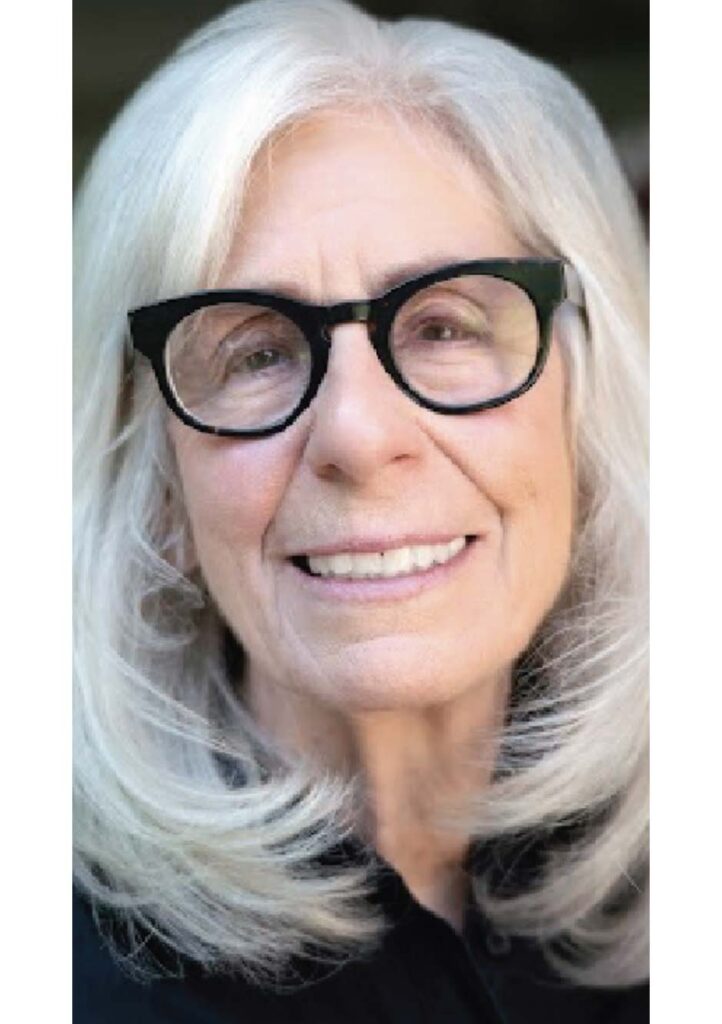
In 1970, Margaret Grundstein, Masters in City Planning from Yale in hand, dropped out to live communally in the woods of Oregon for five years, an adventure she writes about in her memoir, Naked in the Woods; My Unexpected Years in a Hippie Commune, OSU Press, 2015. Her most recent writings include Bargains, A Coming of Aging Memoir, a 61,115-word collection of twelve personal essays, and short pieces on becoming old. Margaret is a psychotherapist and preschool owner in L.A. Her work has been in The New York Times,
L. A. Times, The Washington Post, Hags on Fire, and Trivia.

Isabelle Carasso is a writer based in Los Angeles. She’s worked as writers' support staff in Emmy-winning writers' rooms, had short stories and essays published in The Catalyst and Cusper, and a knock-knock joke published in the LA Times when she was 4. In her free time, she shoots 35mm photos to capture moments that feel like movie stills. Her film photography has been published in Red Wheelbarrow Anthology and Door Is A Jar Magazine.