The Luxury of Poverty
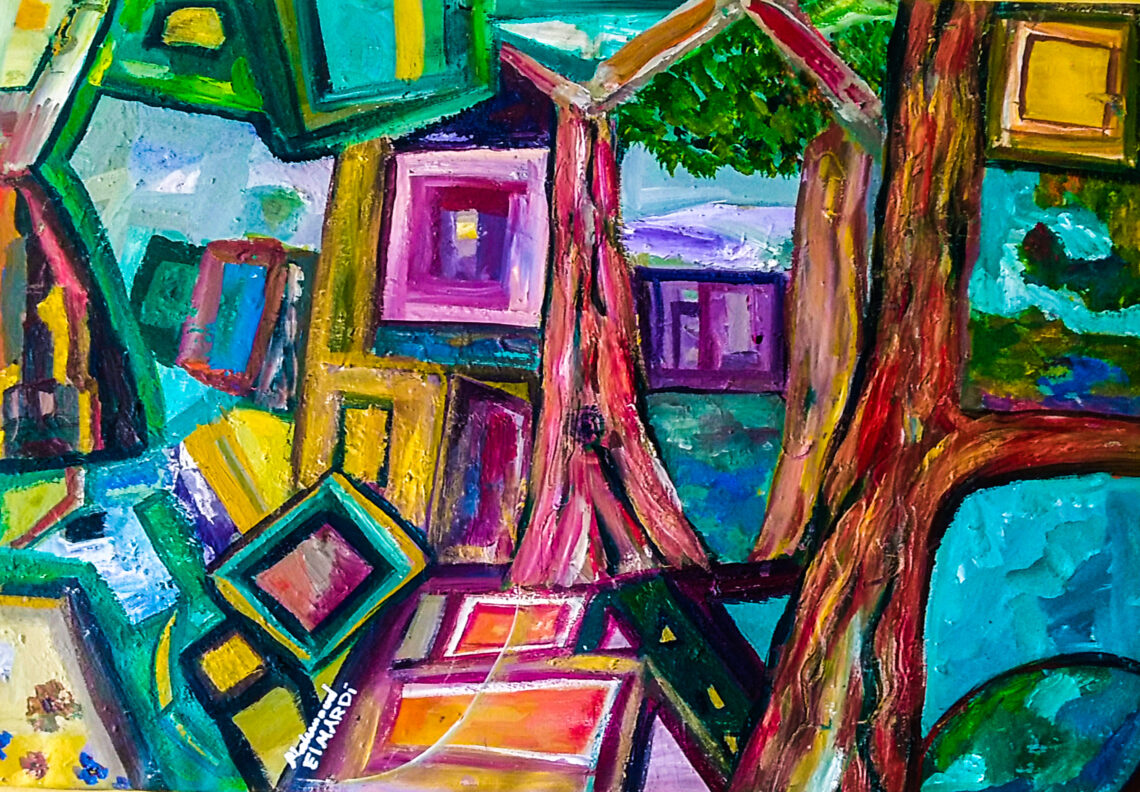
art by Mahmoud Elmardi
by Tulasi Acharya
1987
My father enrolled me in a country school called Kanchanjangha Primary School, a mile away from the house. I was six. He enrolled me directly into the second grade, as he had already taught me the basics of the Nepali 36-letter alphabet, as well as some addition and subtraction. When he enrolled me in school, he increased my age by setting back my date of birth by one year, because I couldn’t be enrolled in the second grade before I turned seven. The school did not ask for my birth certificate. Many illiterate parents from the indigenous community living in the Terai region of Nepal never kept track of their children’s date of birth, and no hospital record existed either. Most of the children were born in the house with the help or no help of Sudeni, midwife. In such contexts, my father’s words were enough to authenticate my age, and so after that no matter where I went, if they asked me, I told people my new date of birth. Later, at times, I would make a joke giving people two dates of my birth before confirming the one even if they had no clue what I was talking about.
I still remember my first day in school. I was filled with anxiety and excitement. At first, I worried about what it would be like, as I had no friends there. The school was made of bamboo and mud walls and a corrugated tin roof. There was a small playground with a big mango tree in the middle. In the corner was a pump well where the students thronged to drink water during breaks. They drank water directly from the spigot, or they cupped their hands and drank while their mates pumped the water, all of them frolicking like young goats.
While the other students chatted together, I remained silent and watched the teacher write on the blackboard with white chalk. He wrote “5+6=?” and asked us to raise our hands to answer. Without realizing it, I was first to raise my hand, and I answered his question correctly. My father had already prepared me with the basic math I needed for second grade. From that moment the teacher took notice of me, and many of my classmates began to approach me, asking me to play. I made many friends, and my anxiety quickly ended. During breaks we played soccer with a ball made of a sock that was stuffed with papers and worn-out clothes and cotton from Simal trees. I made a similar one too because my father couldn’t afford the real one. At home, it was fun kicking the ball in the courtyard, while the father offered chickens some tidbits, mostly corn seeds.
I walked to school barefoot, wearing the used clothes that Amrita Sharma, my grandfather’s sister who was rich, had given us. The clothes were too large for me like Mukhiyacha, a cross-stick figure dressed in clothes, a scarecrow, and my school friends made fun of me. Most of my friends had food for tiffin, snack, but I killed my hunger by swallowing the saliva that filled my mouth while watching them eat. Sometimes my friends offered me some, while other time they threw out food wrappers that contained some chatpate, a Nepali snack of puffed rice, salt, lemon juice, chickpeas, tomato, and potato. I would secretly pick up some of the wrappers and lick the scraps off the paper. Delicious. That made me drink a lot of water, and I was full.
We had no snacks, no dessert, no variety in our diet. Each day we had the same food— dhido and gundruk soup—for breakfast, lunch, and dinner. We could not often afford rice, which was a rich man’s food, except on special occasions like Dashain and Tihar, the greatest festivals of Hindus and Teej, Nepali women’s big day.
***
1989
I was in fourth grade. That year the government offered an opportunity for talented low-income fourth grade students to participate in a highly selective government exam that was offered to a limited number of students from across the country. The nearest location for the exam in my area was in Chandragadi, the capital of the Jhapa District, 40 miles away from my School. My school had six primary teachers, and all of them taught me. I was one of their favorite students. Three students who passed the exam with distinction would get the opportunity to study at the Budhanilkantha High School in Kathmandu, which the children of the Royal family attended. That charm about royal family would soon vanish after the massacre of royal family in 2001 and especially after the end of the Nepali monarchy in 2008 along with the entry of Maoists into the mainstream politics. Anyway, I was the only student selected from my school to participate in the exam. After my parents learned about my selection, they acted as if all tension left the body. Happy tears rolled down and laughter echoed in the courtyard of the house where the branches of mango trees danced to the breeze and the birds perched on the boughs chirped and flew. My mother, who rarely spoke, covered her head with one side of the sari she was wearing and sprinted into the kitchen to make and fetch hot milk tea, my father’s favorite.
“Now our dream will come true. My son will walk amongst royalty and perhaps will become a doctor and will get a high paying job and lift the whole family out of poverty and onto the safe ledge of prosperity” my father said on and on over the slurps of tea, messaging his mustache as he patted me on the back.
“Our bleak days or worry will be a thing of the past, budhi,” my father said to my mother one morning as he sat on the bamboo-made khat, cot outside. My mother smiled, her eyes moist. That day, he didn’t even bother with going out to the farm and ploughing the bullocks. “These oxen also need some rest,” he said, putting a pinch of tobacco inside his mouth and spitting out some chaff.
When the day to take the exam came, I woke up early in the morning and my father and I walked a few miles across the farm and terraces to the bus station so we could catch the public bus. On the way, I smelled the green rice paddy and the types of flowers—bell flowers, Chameli flowers, Makhamali, and Godwari that danced in a shape of waves to the gentle breeze. I smelled fresh air, felt myself in high spirits, without any worries.
We changed a few buses before we reached Chandragadi, where I would take the exam. That was my first time being so far away from home. It was also the first time I had ever ridden on a bus. It was quite exciting! The bus continued to shake on the uneven gravel road. The bus was being thronged with a lot of passengers who held the handrail; a pungent smell from their sweat-soaked armpits lingered as if that was mine. People continued to get off and on the bus at each stop. Or wherever the passenger wanted its driver to stop. Children outside thronged to look at the bus. The scene in the distance was filled with bloomed mustards like the carpets of gold and rows and columns of terraces that circled around giving me the cinematic view of the surroundings. My father’s eyes sparkled with the joy of taking me to the exam; perhaps, he could be daydreaming that I would be the one to take him out of poverty. After the flood swept away all our land when I was four, my parents were turned into squatters, but they continued without complaint. “God’s will,” they always said. They migrated to the South where my grandfather’s sister allowed to cultivate her barren land under one condition—my parents had to share with them whatever they produce. “Fine.” The deal was made. Later, we discovered that no people wanted to cultivate her land because it was so barren that one could hardly grow any crop. On top of that, the place was lonely, without neighbors around as if it was abandoned or accursed. But my parents had nowhere to go when they were in a situation of do or die.
However, later, it was fun to see how my parents made that land cultivable and how we started seeing neighbors. The place was heaven for me. I enjoyed the sound coming from bamboo bushes while in breeze as if Lord Krishna was playing the flute. I swam in Ramchandre rivulet at monsoon time. I cut grass to make fodder for cows, watched goats eating banana leaves. I ate raw radish and mustard leaves right from the farm. I caught flying butterflies in the afternoon and fireflies in the evening. When my parents were not around, I stole eggs from the place where the hen sat to hatch, and I broke and eat them raw, its yolk slithered straight into my mouth.
When I reached the examination building later that morning, all the other students were scattered around, waiting for the bell alerting us to enter the exam hall. It was a little town with some two-three storied buildings. Both boys and girls were in the same uniform I wore: a white shirt and blue pants that were the common uniform for schoolchildren across the country. My father showed me where he would be waiting for me, and I was to come meet him after the exam. I entered the exam hall, and a proctor helped me find my seat number. When the bell for the test distribution rang, I received the test on my desk. It contained math and sociology questions. I studied the questions thoroughly from top to bottom and found all of them very easy. Without any delay, I started at the beginning and answered them one by one. I glanced around at the other students who were busy answering the questions on their answer sheets. I was hopeful I would pass with distinction. Within an hour or so, I finished answering all the questions and left the exam hall, although I still had another hour before the time was up.
When I came out of the exam hall, my father was waiting for me under the shade of a tree on the school playground. As soon as he saw me, his eyes sparkled and gleamed. He massaged his crescent moon like mustache with his fingers. It was noon.
“How was the exam?” he said, scrubbing the dust from my shirt and wiping the bead of sweat on my forehead.
“It was superb, Buwa,” I said. “Khataraa bhayo.”
“Can you remember one question?” he said.
“Of course, Buwa!” I said. “How much would it be if you multiply seven by seven? I also whispered to the boy sitting next to me to write my correct answer, but he didn’t follow me.”
“What did you write?” he asked.
“Forty-six,” I said with my head held high.
“Thukka, Gadha, is it forty-six or forty-nine?” His eyes turned red like an angry bull. The skin on his face seemed to shrivel; his forehead wrinkled into a frown. I realized quite suddenly that I had written the wrong answer, and his dreams of me going to Budhanilkantha High School were shattered. Seeing him, I was shaken. That was the first time I had heard the word “gadha,” jackass, from his mouth, and I never heard it again. My lip trembled, and I felt tears welling up in my eyes. I was deeply ashamed of myself. After a moment, he wiped my tears with his hand and combed my disheveled hair with his fingers.
“Are you hungry? Will you it Singada, Samosa?” He said calmly. “This is not the end of the journey.”
I remember that was the most terrible thing I could ever do to shatter the dream of my father who completely stopped dreaming thereafter. He is in his seventies now; his crescent moon-like moustache is gray, but they are there just like they were there before. He still loves Singada.
A lot of water has flown across the rivers, and I have travelled beyond seas and lands. I have earned a Ph.D. now and become a professor at a college in the U.S. (there is again another story about how I made it to America). My father is still in Nepal and his love for me is the same. I still miss the luxury of poverty—the open sky under which we sat in the courtyard counting the stars in the evening, the courtyard that felt like a spacious living room surrounded by mango trees, its leaves swaying the breeze, and the birds perched on the branches, the mowing cows, bleating goats in the barn, the scenic terraces and the golden mustard fields, the Ramchandre rivulet where I swam, the fragrances coming from the green rice paddy and blooming flowers, the flute like sound coming from the bamboo bushes, the raw yolks, and Dhindo and Gundruk soup, one of the luxurious Nepali dishes which are found at five star Nepali hotels these days. That was the simplest joy, the most luxurious one.
I do not know if I shattered my father’s dream or not, but one thing is sure that I have taken him out of poverty. While doing so, I could have taken him out of the luxury of poverty too.
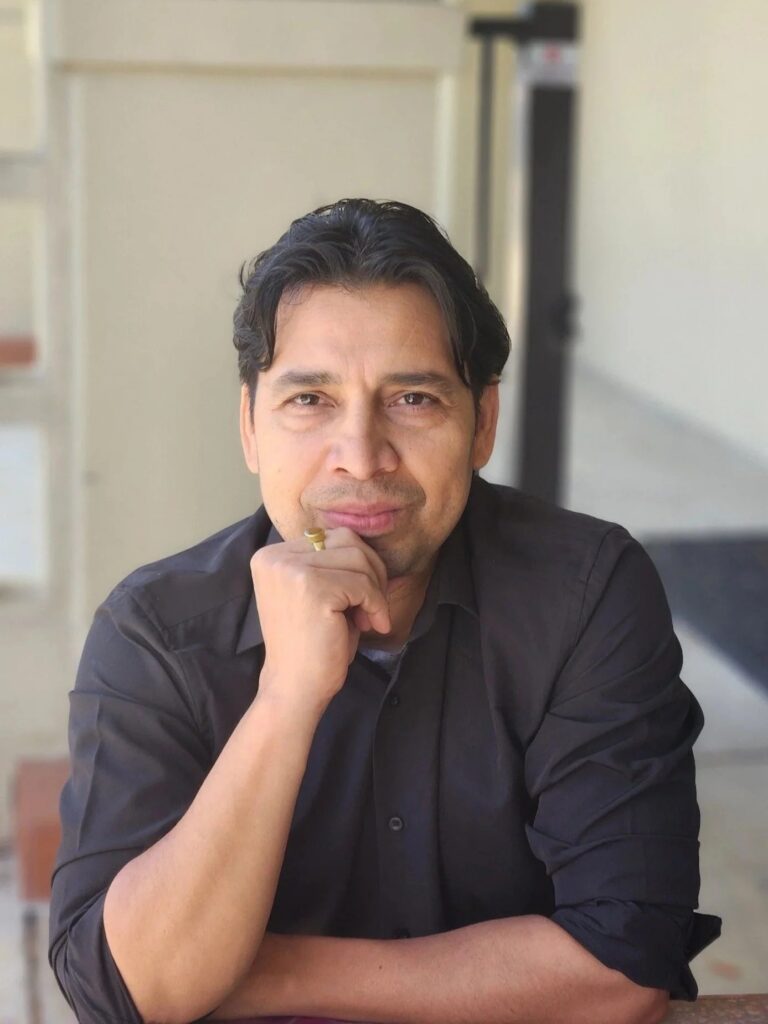
Dr. Tulasi Acharya is a Nepal-born author. He currently teaches English at South Georgia State College. He holds a PhD in Public Administration, an MFA in Creative Writing, and master’s degrees in a few other areas. The author of over a dozen books in English and Nepali, his work explores migration, grief, identity, culture, and the complexities of human relationships. His publications include works from Routledge and Bloomsbury Academic. His essays have been published in newspapers and literary journals, including MSU Roadrunner Review, Changing Skies, and LIT magazine. He received the 2026 Georgia Independent Author Award in Memoir for Like Water on Leaves of Taro, a Himalayan memoir.
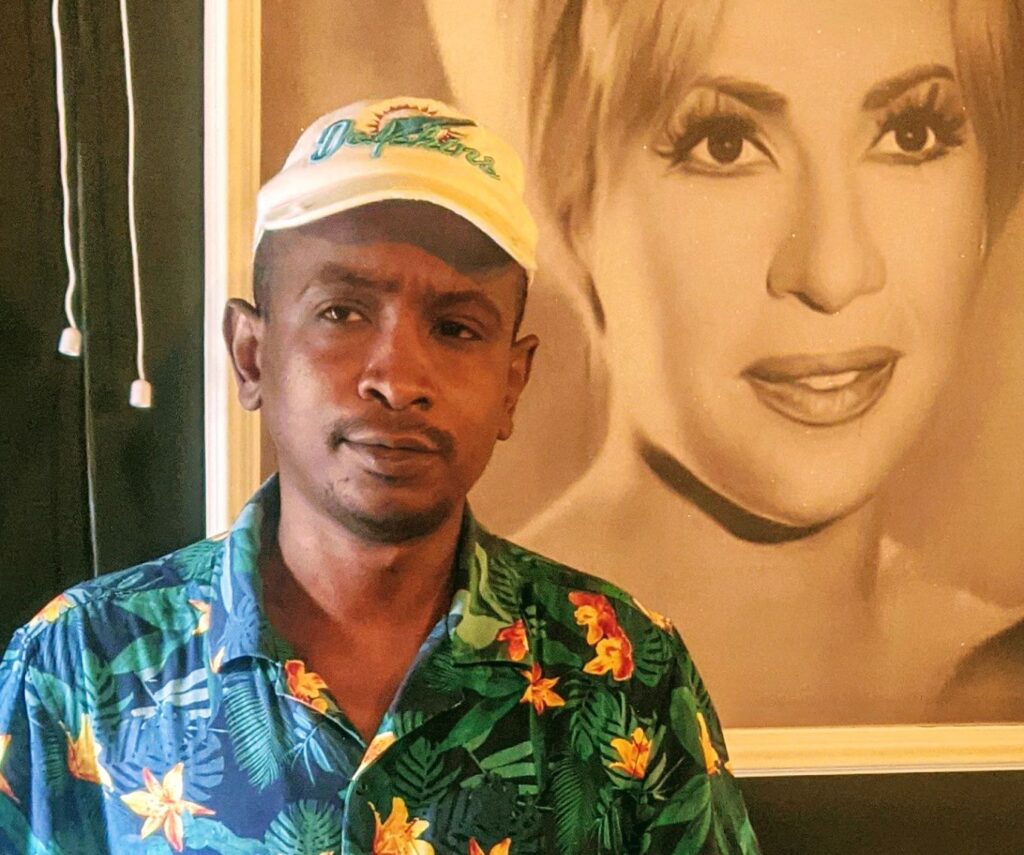
Mahmoud Elmardi is a Sudanese novelist and award-winning visual artist based in Cairo. His multidisciplinary work explores themes of memory, migration, and human conflict, bridging the gap between narrative fiction and abstract expressionism. He is currently developing a large-scale narrative project titled The Walls of Guernica. Read more about the artist here.