Three Poems
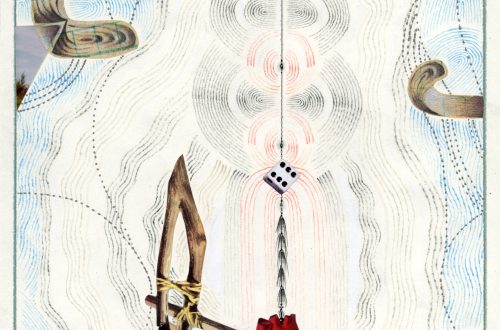
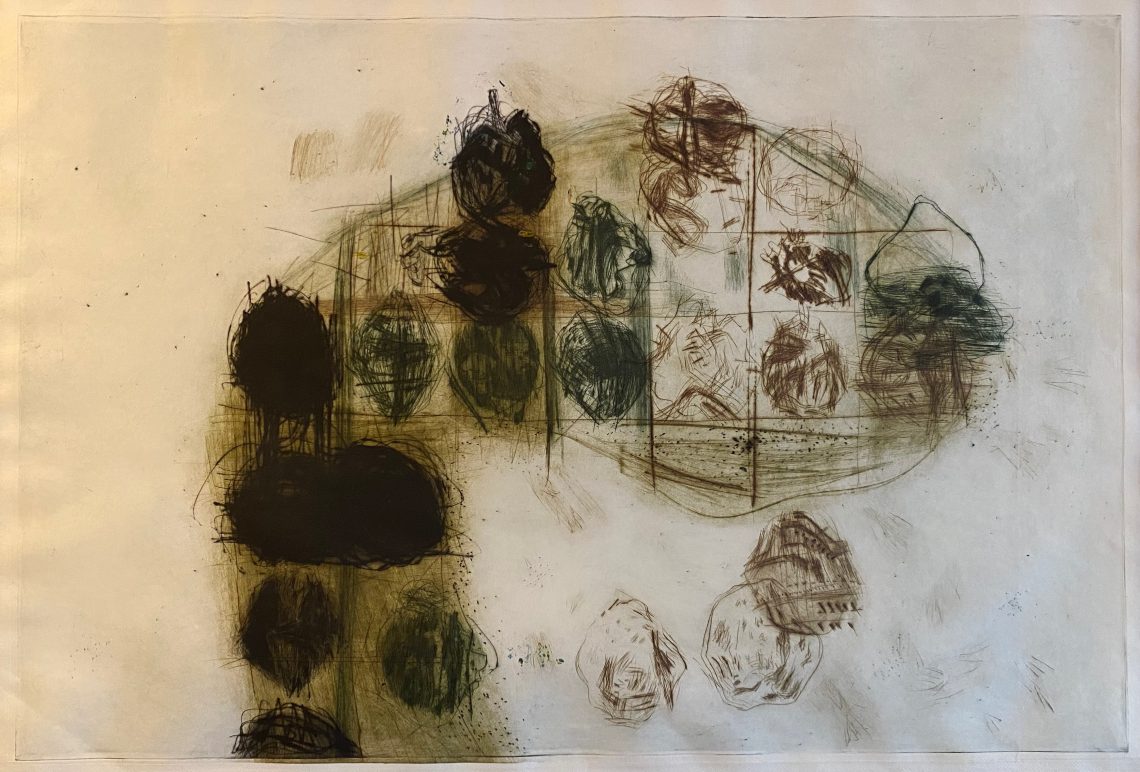
art by Cristina Iorga
by Leonard Tuchilatu
Translated from the Romanian by Romana Iorga
[Back then I came with the shadows]

Back then I came with the shadows, wandering. I conjured up
my ailing firebird
in the glimmers of morning dew and chose to build her nest
in the tallest of trees.
For a long time, I poured my arms into
the blanched air of mornings, attempting to capture
once more her infinite eyes.
I waited for the descent of an immense fire
on our icy land,
in the month of March, at the solar equinox.
Back then we had to die to surprise someone.


[Atunci veneam cu umbre]

Atunci veneam cu umbre hoinărind
închipuindu-mi pasărea de foc bolnavă în sclipirile de rouă
ale dimineții
și-i alegeam cuibul
în cel mai înalt copac. Atunci, de atâta timp, îmi șiroiam brațele
în aerul alb al dimineții, cercând a prinde încă o dată nemărginirea ochilor ei,
și așteptam coborârea unui foc uriaș pe pământul de gheață,
în luna lui martie la echinoxul solar.
Apoi trebuia să murim pentru a mira pe cineva.


Fata Morgana

Brass sounds
shattered the white sky:
– How beautiful you are, Fata Morgana!
They told me to stop
scolding you, urged me to cut you loose – that’s how people are.
I ran to catch up with you,
now I’m fading in sun-drenched rain, barefoot,
bareheaded, writing wounded words on tree bark.
My lips, chapped, my eyes, sad,
I have nothing left, Fata Morgana,
on this leaden morning with large pillowy flakes
and I wouldn’t want someone to blame you, when I, the earthling,
come closer to the great sleep.


Fata Morgana

Sunete de alamă au spart cerul alb:
– Ce frumoasă ești, fată Morgana! Mi-au spus toți să nu te mai cert,
mi-au spus apoi să mă dezleg de tine – așa e lumea.
Am alergat să te ajung, am obosit în ploi de soare, desculț, cu capul gol,
scriindu-ți pe cojile copacilor cuvinte durute.
Mi-s buzele uscate și ochii triști,
nu mai am nimic, fată Morgana a mea,
în dimineața asta înnourată, cu fulgi mari și pufoși
și n-aș vrea să te acuze nimeni, când eu, pământeanul,
m-apropii de marele somn.


 [I will come back home]

I will come back home,
were I to return from the other world, were you to refuse to take me in,
I will come back home.
When memories lose their purpose, we must find shelter
somewhere, under a roof, be it someone else’s.
We must, but I’ll come back
to my home, though I no longer own myself, I’ll come back to hear
from you, parents, from you, pastures,
from you, extinguished pennants of my childhood.


[Am să mă întorc acasă]

Am să mă întorc acasă,
chiar de m-aș ști venit din ceea lume, chiar de nu mă veți primi,
am să mă întorc acasă.
Atunci când nu au rost amintirile, ar trebui să poposim undeva
sub un acoperiș, fie și străin. Ar trebui,
însă am să mă întorc la mine, cu toate că nu mă mai am, am să mă întorc să știu
de voi, părinți, de voi, câmpii,
de voi, flamuri stinse ale copilăriei.
*****
Leonard Tuchilatu’s poetry is closely connected to the history of his homeland and his identity as a Romanian in Moldova in the context of the Soviet Union’s policies of cultural repression in its republics. In his work he focuses on metaphysical questions of home, language, death, war, violence, and existential solitude. Tuchilatu’s poetic self is often wrapped in allegorical language, revolving around the landscapes and nature of his homeland. His style is sparse and discreetly ironic. His use of complex metaphors demands, above all, creativity from his translators, as well as a keen ear for the rhythm of language. This makes the translation of his poems challenging and particularly rewarding.
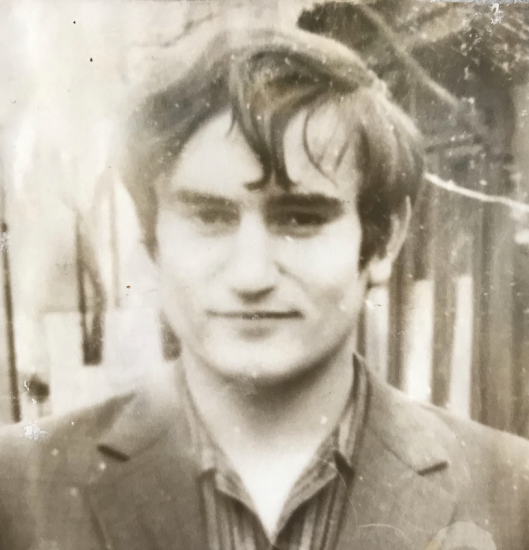
Leonard Tuchilatu (November 10, 1951 – November 4, 1975) was a Romanian poet from Moldova, one of the former Soviet republics. He died of an incurable illness at the age of 24, after being subjected to multiple disciplinary punishments during mandatory army service (the ruthlessness of the Soviet military abuses is infamous in the post-soviet territories). Though virtually unknown outside Moldova, the poet has gathered a following among several generations of Moldovan poets. Many of Tuchilatu's poems were written in the last few years of his short life, when he was keenly aware of his impending death. He never saw his poems in print. Posthumously published collections: Sol / Messenger (1977), Fata Morgana (1989), the anthology Sol. Fata Morgana (1995), Orchestrele dimineții / Morning Orchestras (2021), and the bilingual (Romanian / Russian) collection Rapsodie / Rhapsody (2001).
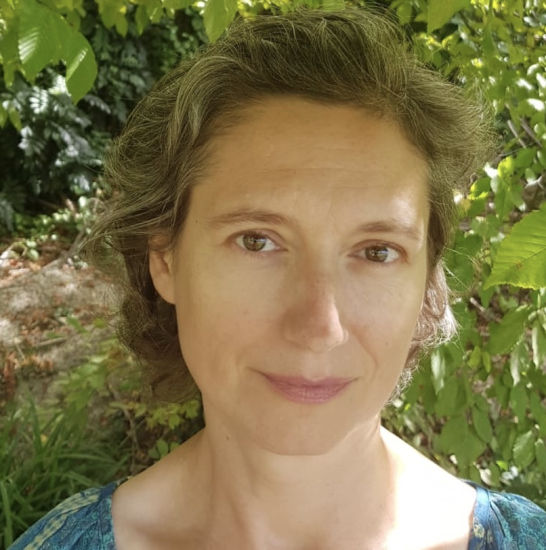
Originally from Chisinau, Moldova, Romana Iorga is the author of Temporary Skin (Glass Lyre Press, 2024), a woman made entirely of air (dancing girl press, 2025), Auz simplu (Semne Press, 2000), and Poemul sosirii (Glasul Press, 1996). Her work has appeared in The Nation, RHINO, New England Review, and elsewhere. Romana’s new poetry collection, Witness Protection, won the Fall 2025 Black River Chapbook Competition and will come out from Black Lawrence Press in 2027.
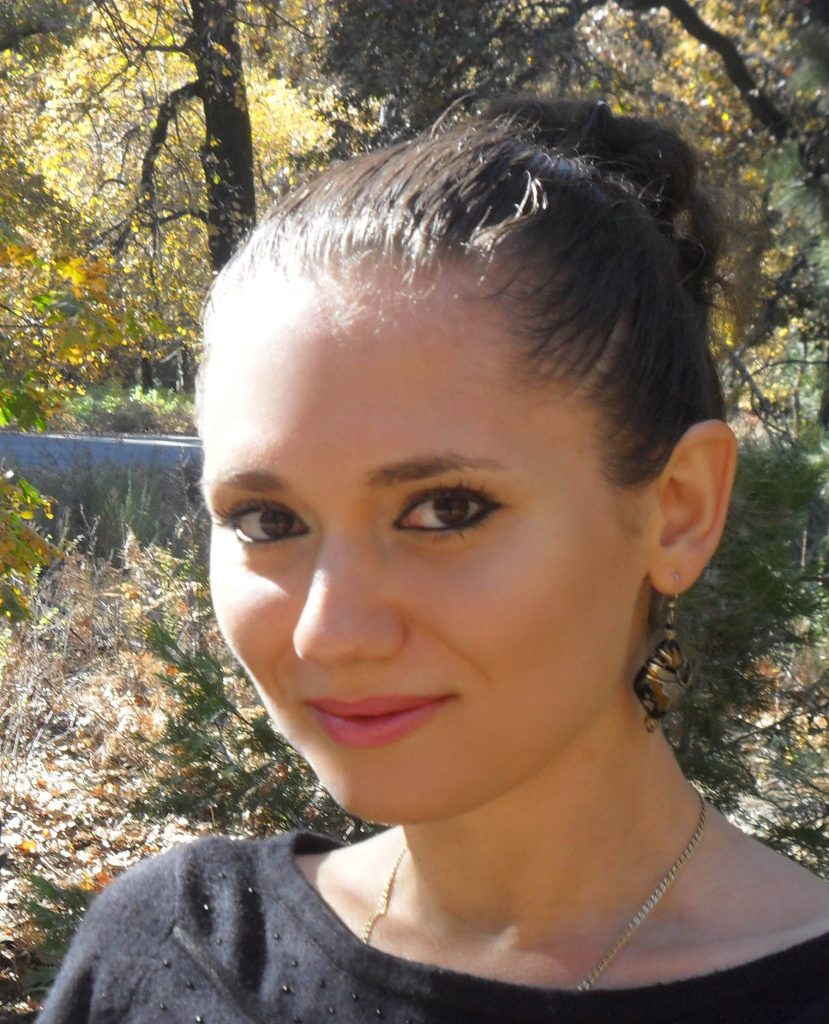
Cristina Iorga is a painter and printmaker. She has an MFA in Printmaking from University of Iowa and a BFA in Drawing and Printmaking from the National University of Arts in Bucharest, Romania. Cristina’s art is a burst of the subconscious, concerned with the expression of both the spiritual and the material. She believes that the expression of pure feeling puts the viewer in touch with an alternative, ultimately spiritual world.