The One I’ve Been Dying To Tell
art by Robert Thurman
by Polly Hansen
Two years ago, I sat on the edge of my mother’s bed and patted her knee, thinking it was my last good-bye. She was ninety-five. I was sixty-seven. We lived over two-thousand miles apart–she in Spokane, Washington, with my older sister, her caretaker, and me in Asheville, North Carolina, with my husband.
“This may be the last time I’ll ever see you,” I said, thinking she might die before I got out there to see her again. She could go any minute. I paused, wondering, what are the last words you say to a mother you love, even admire in many ways, but have felt prickly towards? I looked into her brown, intelligent eyes ringed with cataracts and said, “Thanks for being my mom and giving birth to me.”
She side-eyed me. “Well, it wasn’t my idea. I think it was yours.”
The bluntness of that statement sent me reeling. She’d always made a point of telling me every time I visited about the time she’d begged her obstetrician for an abortion when she was pregnant with me, her fourth child. She’d given the first one up for adoption. The punch line was: “But of course, I adored you the moment you popped out!”
She first told me this story when I was fourteen. We were standing in the kitchen of our old house back in Illinois, she with a gin and tonic in one hand, cigarette in the other. I stood huddled against the cold stove, arms crossed tight against my chest. How did we get onto the subject? Did I in my ratty hippie clothes remind her just how much she resented my appearance, my existence? Were my teenage rebellions causing her that much strife? Is that why she was telling me this story? She didn’t want me? I thought I was her darling Bunchy Bone. But she adores me, right? As a teen I couldn’t admit to myself how much it stung. That was just Mom—outrageous and funny. So I laughed along with her, not knowing what else to do.
That story became part of her repertoire; she repeated it throughout the years, hamming it up and guffawing, and each time I laughed. In my forties, I related it to my therapist. She asked, “Do you really think your mom telling you she didn’t want you is funny?”
Mom didn’t notice when I stopped laughing after that. She trotted it out every time we got together, which was once a year. She even told it during what I thought was to be our last time together, fifty-two years after the original telling. I sat there on the edge of her bed and grimaced, wondering, Should I finally tell her? For years I had considered saying, “That’s not funny, Mom, and never has been.” But it always felt like too much effort, too much explaining. Plus, I’d anticipated her getting all defensive or calling me too sensitive. But now I figured she’d say, “What? What? I can’t hear you.” And then I’d have to shout, and besides, what was the point? She was going to die soon anyway.
But that morning, hearing her say it wasn’t her idea to give birth to me felt like the final slap–my mother didn’t want me and still doesn’t, despite her saying she adored me the moment I popped out. Tears ran down my cheeks. I knew she wouldn’t see them.
“Yes, I guess it was my idea,” I said, glad I had wanted to be born, and that my insistence in coming into this world was the reason for my existence.
During that visit, I had scoured the old family photo albums looking for evidence that my mother adored me. In photo after photo, she hugged me, smiled at me, laughed with me, read to me. She must love me, I thought. But the fact that her resentment was still so alive after all these years was shocking, that my being her daughter all this time had done nothing to assuage her bitterness. When I said good-bye, I thought that was it; I’d never see her again.
A year later she was still alive. My husband and I went out to visit.
My sister, Tiggy, her caretaker, told Mom of our impending visit. Days before we arrived, she reported that Mom kept asking, “Is Polly here yet? Did she get lost?”
Twenty minutes from Spokane I called Tiggy from the road to give her our E-T-A, and heard her say, “No, Mom, she’ll be here soon.”
We stopped at the Safeway floral department first. I didn’t want to arrive empty-handed and felt it was the least I could do. The woman took forever to arrange a small bouquet, which turned out lovely. Tiggy texted me. “Where are you? Did you get lost?”
When we finally arrived at the nursing home, I found Mom in bed where she spent all her days now. She was even more shriveled and frail than the last time.
“Bunchy Bone, is that you?” Mom took my hand and patted it. “I’ve missed you, Bunch.”
I kissed her fragile cheek and presented the bouquet. She poked a gnarled finger at the floppy, pink ribbon tied around the vase and tried to get it off. I knew she’d hate it, but the floral lady insisted. Mom said, “Pretty flowers,” and after that didn’t say much. I tried telling her about our visit with my husband’s family in northern Idaho and our trip to Banff, but she kept saying, “What? I can’t hear you.”
Tiggy was eager to show me around Mom’s new residence. She introduced me to the other boarders: a woman who carried a stuffed toy dog, a man who stared vacantly, mouth agape, the sweet Nigerian nursing staff, petite Lydia and imposing Wynta. We went outside to the patio. A dry fountain filled with dead leaves sat off to one side. Maybe the staff were afraid someone might drown in there, or maybe it was just too costly in both time and money to maintain. It seemed a shame. I imagined the residents would enjoy it, but maybe they were too old to care.
While Tiggy showed me around, my husband visited with my mom. “My favorite son-in-law,” she calls him, meaning her only son-in-law. When Tiggy and I re-entered the house, he appeared wild-eyed in the hallway.
“She’s taking off her clothes!”
Sure enough, Mom had already gotten one arm out of her sleeve, one wrinkled breast exposed. “I’m hot,” she said.
Tiggy helped Mom out of her jersey top. After all this time as Mom’s caretaker, she’s learned it’s no use fighting her. “Okay, but you must cover yourself.” She pulled the sheet up over Mom’s chest.
“That’s much better, thank you,” Mom said.
“Since when is she so polite?” I asked.
Tiggy gave me a sardonic smile. “She’s much nicer these days. Well, at least some of the time. She hit Lydia with her back scratcher last week.”
“Oh, dear.”
“They’re used to it.”
“I’m tired,” Mom announced, then closed her eyes.
Tiggy sighed. Her graying, blond hair had fallen loose from a topknot and cascaded down her neck in long strands. “That’s all Mom does anymore. Eats, sleeps, poops, cracks jokes. The staff love her. They think she’s funny. Thank god.”
Mom’s boney shoulders were exposed above the pulled-up sheet. I kissed her cheek wondering, Is this the last one? Then I hugged my sister goodbye. The next morning, my husband and I caught a flight back to Asheville.
***
It’s been three months. My mother has made it to her ninety-seventh birthday. Tiggy texts me a photo of grocery store flowers dumped into a vase and says, “I’ll arrange them and say they’re from you.”
I used to order flowers until Tiggy said don’t. “The florists here are terrible.” She’s right. One time they delivered pine boughs and a bow. The time before that, droopy roses.
I text back. “Say they’re from both of us.” She doesn’t reply.
I think of my mother two-thousand miles away and wonder, Why is she still alive? Why doesn’t she just go? Is she terrified she’ll be confronted by all her regrets when she dies? Is that what keeps her here? Do I regret the choice I’ve made never to speak up?
My phone rings. It’s my sister.
“Mom wants to talk to you.”
I’m stunned. Mom hasn’t wanted to talk on the phone for years because she can’t hear. It’s something I’ve missed—our long conversations. Just stuff. Politics. Funny stories. Events of the day.
“Hi, Mom!” I yell into the phone. “Happy Birthday!”
I can barely make out a word of her slow, croaky voice. My sister interprets for me. Something about having a good poop. And then I hear them, these words, clear as day: “I love you, Bunchy Bone. I have always loved you.”
My heart feels like it is expanding inside my chest. My eyes sting. It’s as if it suddenly struck her, in the vague wanderings of her mind as she lay there day after day waiting to die, that words have power, that the story she repeated to me year after year might have been misconstrued and she wanted me to know before it was too late–she wanted me. She always wanted me despite what she said. And now it isn’t too late. It will never be too late because the deathbed miracle I have dreamed about and prayed for has happened. My mother loves me, has always loved me. The photos weren’t lying.
And now, I realize I, too, have resentments I’ve carried a long time—hating my mother for what she said and didn’t say. It’s time to lay them down and forgive.
Savoring this final gift, I yell into the phone words I have said before but now mean with all my heart, “I love you, Mom. I love you.”
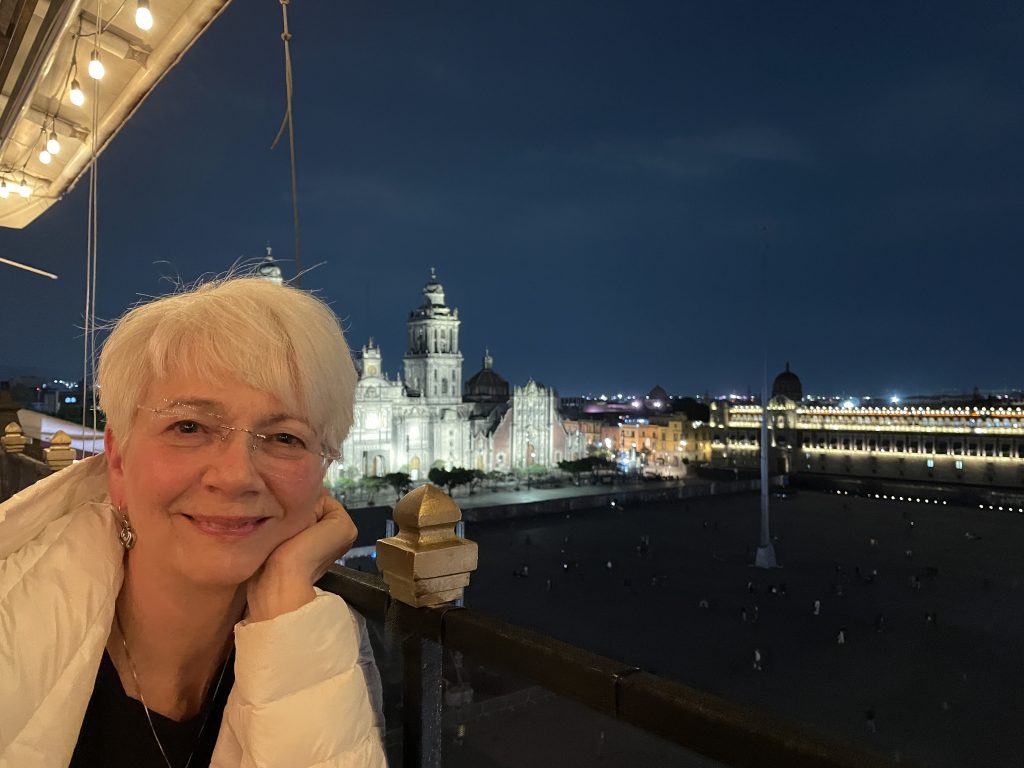
Polly Hansen’s work is published in The Sun, Newsweek, Call Me [Brackets], Grande Dame Literary, Heartland Review, Midwest Review, and many others. She was a finalist in the 2023 Doris Betts Fiction Prize. She produces two nationally syndicated radio programs, Radio Health Journal and Viewpoints Radio, is a retired professional flutist, and lives in Asheville, North Carolina with her husband and two black dogs often mistaken for small black bears on leashes. You can find her at pollyhansen.com and on Threads and Instagram @pollyhansen55.

Robert R. Thurman is an artist, poet, and musician. His work has appeared in The Harvard Advocate, Lana Turner: A Journal of Poetry and Opinion, 3:AM Magazine, and Columbia Journal.