Pacifier and Museum Trips
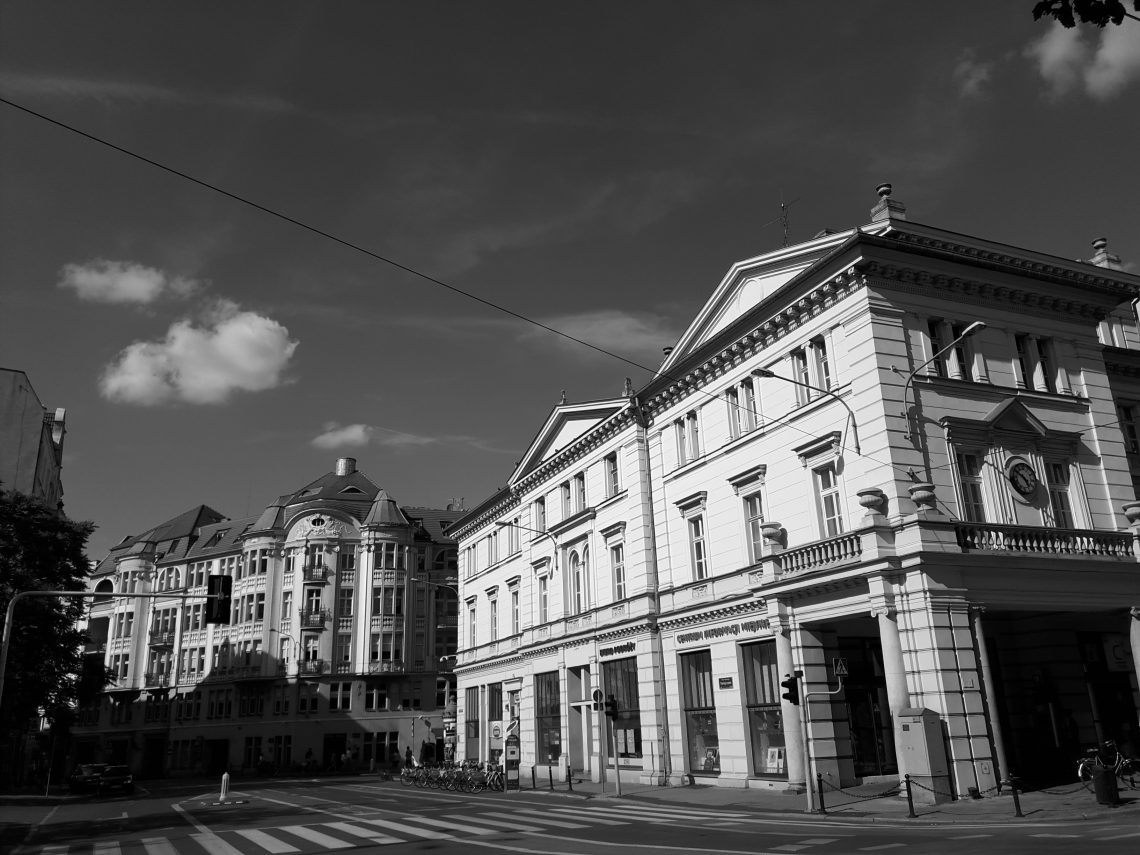
photo curtesy of the author
by Arthur Mandal
Pacifier
I have a memory of my father burning one in front of me as a child. It drips plastic fire between us, onto the ground, and I’m screaming insanely as a ball of burning yellow flame grows bigger and then gradually smaller from the pinched fingers of his hand.
Every so often, the lesson would be recollected and re-articulated, something along the lines of: “We all need to have our metaphorical pacifiers burnt in front of us now and again.” Even when I was fifteen, my father felt the need to remind me of this moment.
He arrives late at our table, looking for my mother. He is so himself: happy because another article of his has just been referenced in the archaeology journal he had edited for God knows how many years. He has always delivered reports of his citations and reviews of his books to us like weather reports, convinced they affect us all. Moreover, my father always has this aura about him, this sense of knowing he has done, more or less, what he set out to do. On his own, too, he sometimes tells waiters, friends, shop assistants; unlike his children, who had a support network he could only have dreamt of as a child. He tells this to anyone who will listen.
“You’re looking very dapper in your suit,” my wife says to my father.
My wife says these things because she is a Nice Person. Now that my father needs Nice People around him, as his body breaks down and his stomach takes longer and longer to dissolve the smallest sandwich, he thanks her and returns the compliment. He has learnt these gestures, once alien to him, over the past ten years out of a need for self-preservation, like an anthropologist in an unfamiliar culture. I sit back and watch him like an exhibit, marveling at his preservation, trying to read the caption beneath him, the small print which will tell me his origins, who discovered him, if he’s on loan, where he really belongs.
“Where’s Alice?”
“We’re waiting for her,” I say. “She’s running late.”
His hands are old now. I watch them fold themselves on the table between us like flaps of pinkish-brown leather. I have so many feelings about those hands, which have slapped me, held me, squeezed me, pushed me. My wife looks at me, as she always does in these meetings, with her forbidding, uneasy face.
“What did you do today?” she asks him. “Did you get up early?”
He doesn’t quite hear the question, so she repeats it. He tells her all the things he read – it amazes me that he can still read people like Levi-Strauss and Marx at his age – whilst I sink a too-blunt knife into the stick of Brie the waitress has placed on my plate. The wedge fattens and bulges slightly to accommodate the so-called knife, before breaking and letting the utensil sink down to the ceramic bottom of the plate.
We meet like this every week. He never wonders why she doesn’t come. I’ve made a promise, and it irritates me to break it, but I don’t know how long it will all go on like this. My wife says we don’t have children, so we can’t possibly understand. But I do know that one day, I’ll deliver to my father his own childhood lesson right back to him; I don’t know when that day will be. Time is running out.
Museum Trips
The museum had six sections, two sections on each floor. Ursula had been in the city three months when she discovered it, scrolling idly on her phone for a place to eat. She had a three-year-old and a husband at home, each of them giving her different kinds of trouble.
Sometimes, she took long walks when the boy was at nursery, meandering through parks she had only seen on the map, surprising herself at the differences between what she saw and what she had imagined.
She liked the idea of visiting a museum using a system, so she decided to see one section every Wednesday morning, starting in the bottom east wing (handicrafts), moving up through metalwork and book manuscripts, shifting across to weaponry, and down through agriculture back to geology. Where she got the idea for visiting a museum like this she could not remember.
At first things proceeded as normal. She got back in time for the little monster, and nobody even noticed she had been out.
The second week, Calvin asked her what was wrong with her voice. He thought it had a certain lilt to it but couldn’t decide whether it was Welsh or Indian. She thought of her life as something hammered out to a pattern she had never chosen. Everybody commented on how different she sounded.
The third week her voice returned to normal, but friends told her that her appearance looked odd. She received these remarks as a compliment from some, a veiled insult from others, but there was uniformity in the observation: everybody thought she was dressing in a different way. Sometimes, the child shrank from her.
She looked at herself in the mirror. After a shower she rubbed a portal of clarity with the edge of her towel into the opaque, misted rectangle she was standing in front of. The clear, precise edges of the circle she had buffeted pleased her for reasons she could not say.
In the fourth week, she saw a sword the length of a bed, and a scimitar with such an expanse of metal behind the blade she could imagine cooking an egg in the middle of it. When she came home, Calvin spoke to her in a voice she didn’t recognize, wearing an after-shave she had never smelled on him before. In the evenings, just before falling asleep, she felt nostalgia for lands she had never visited. She dreamt strange dreams of temple worship filled with bells and told her husband of a teenage shepherd-boy with eyes as big as saucers who pined for her return. Calvin looked at her in silent, baffled awe.
In the fifth week, all she saw was fields, fields full of work. Calvin asked her if she was dyeing her hair. Walking back home across a bridge between two shopping malls, Ursula was filled with a mysterious, absolute fatigue. As though she had been alive for centuries.
In the sixth week, she knew she would never visit the museum again. The night before, they slept in separate beds. The little one slept with him. There were many things she had to say about this, but she was able to articulate none of them in their presence. In the museum, she strolled past slices of marble hundreds of thousands of years old and saw her face in a pane of glass on a cabinet of fossils.
When they eventually separated a year later, Calvin remembered the museum. For a month, he thought about visiting it, as though the act required some special, unusual degree of courage. He found the building – a sad, stained, disappointed monster of nineteenth-century stone – on the corner of two streets he had often walked along without realizing it was at the end of them.
As he wandered around the sections, peering at the dissected squares of yellowing paper, the rows of forgotten coins, the faces of strange gods and maps of unrecognizable continents, he thought of his own wife, and tried to imagine her walking around the exhibits, looking at the things he was looking at now. But although he did his best to focus on each display, even reading the squares of small text which lay like subtitles beneath each piece, none of it made any sense to him whatsoever.
In the museum cafeteria he drank a cup of coffee which he didn’t like, but which he had paid so much for he that felt he had to drink. He tried to steal a napkin-holder as an absurd memento of his visit, but at the last moment one of the guards spotted it and made him give it back.
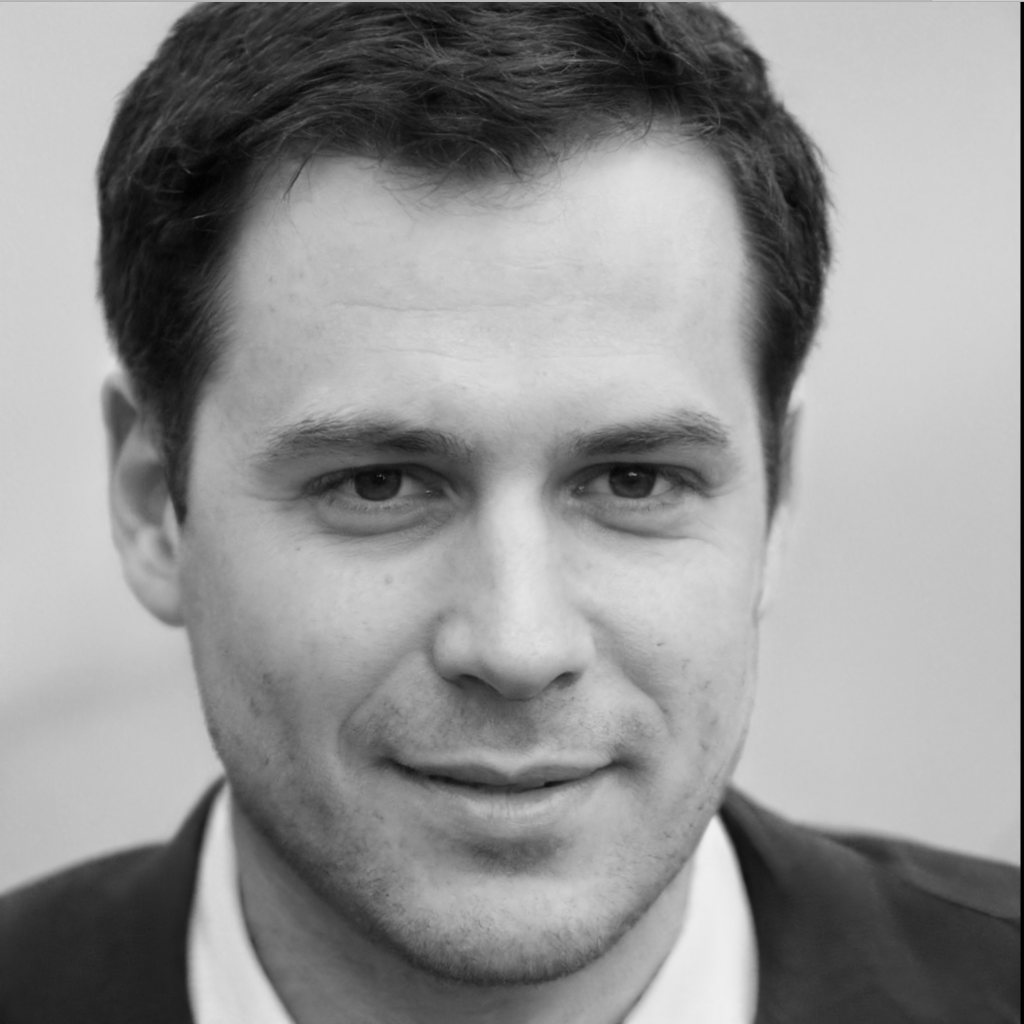
Arthur Mandal is a writer based in Eugene, Oregon (but grew up in the UK). Alongside writing he works as an independent craftsman and photographer. He is a Best Small Fictions Winner 2025, Pushcart nominee. Longlisted for the W.S. Porter Prize and has published over 40 stories in Los Angeles Review, Witness, LitMag, 3:AM, The Forge, Southeast Review, december, LITRO and others.
He also has a chapbook with the acclaimed Nightjar Press. He can be found at @ajmandal15 (twitter) and @arthurmandal.bsky.social