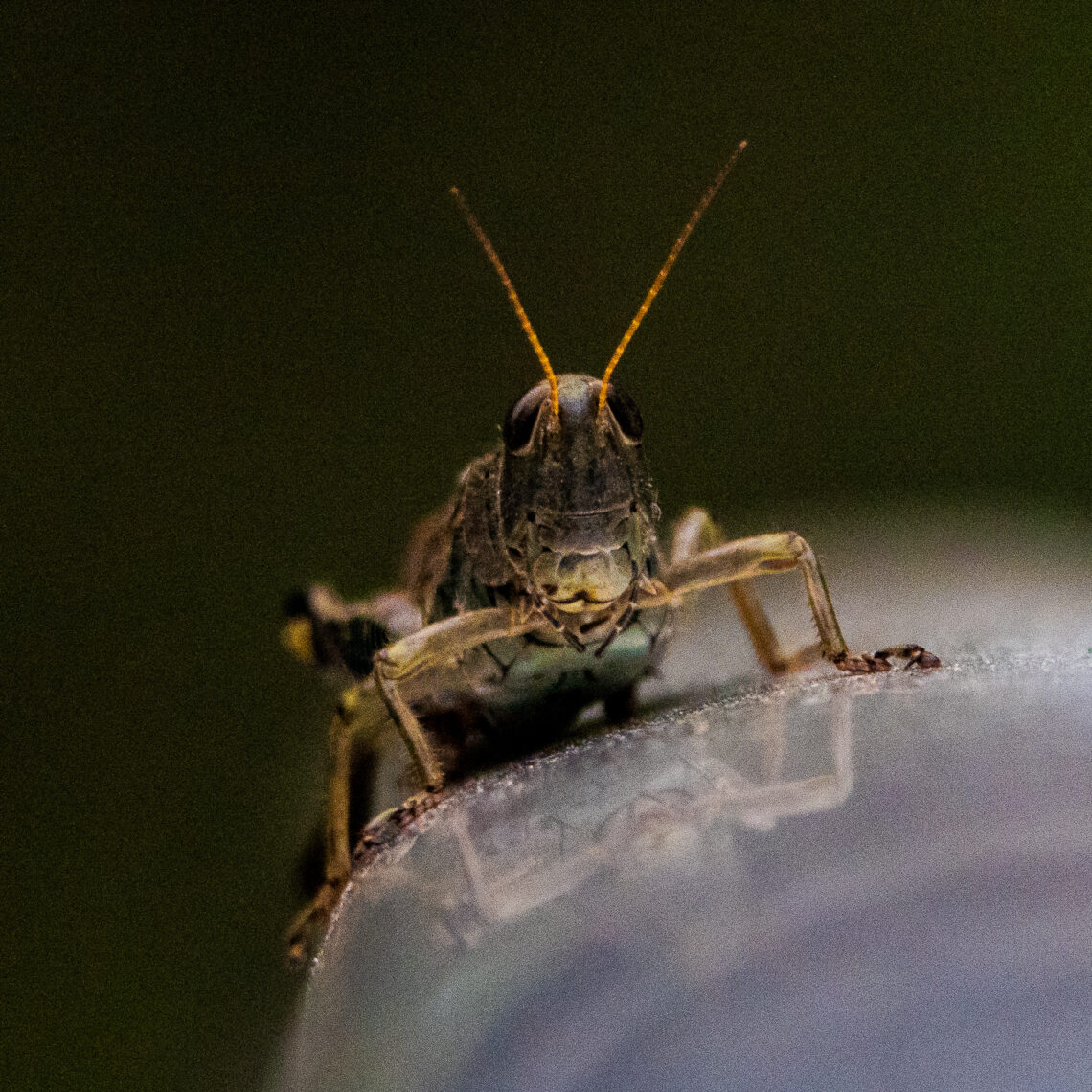
Self-Portraits as Bestiary
art by Ami Watanabe
by Amanda Gaines
One you is a beaver and a flood is coming. All your fellow beavers say Yeah, of course. There’s always one disaster or another on the horizon. But you are convinced this flood will bring an end to everything you’ve built. You are leaving this colony to join another in two months with your beloved in the hopes that together, you will be able to brace the coming storms as a solid front. You will construct a humble dam where the two of you will groom one another and eat cattails until your bellies distend and watch the eastern sky burn with sequined holes that remind you of all your once-lives.
But you worry about the process. How will you move all your sticks from here to there? How will you take care of yourself? What if your beloved leaves you again? You are grown, and grown beavers have responsibilities. You don’t want to owe the grand master beaver more than you already do. You asked him for help when you were younger because your parents weren’t the best beaver savers and he sends you water-lodged letters every month letting you know that debts still remain. You don’t want to owe anyone anything. You are scared. You are tired. So, you save what you can so you can make it there, too. You construct your house from the outside in, pick up extra work around the bank while crafting small trinkets you hope will wow future beavers in your line of work, stashing bits of cypress beneath your riverbed. Your now-fellow beavers tell you, You are building your house wrong. You are a selfish beaver. What about our beaver houses? Our beaver hearts? You tell them you do worry about their beaver hearts and houses and point to the sky, clotted with rain. You do not point to their lodges, the ones you helped decorate and shape, the ones you flopped around in, joyful, sloppy, unaware you were ruining everyone’s nights. You apologize for your broken brain, for your bad behavior, for your inward-lookingness, blubbering. What is the point of having you around? What do you do for us? they ask. You do not have an answer for them. You want to call your mother, who you know will understand and also not. You swim towards your home while it drizzles. You smash your paws into your aspen walls. You consider drowning yourself. But you know instinct, your fin-trigger response to the sound of leaking, the same one that got you here, would kick in. You look at what you’ve made and are proud, then feel guilty for feeling proud. Your darkest thoughts break through the sky with the sound of cracked thunder. You toe the velvet mud of your floor, trachea tight. You admire the muscles along your furred arms–remember all the miracles they’ve produced, all the ways they’ve kept you alive. You retire to your bed, birch branch in hand, and bite until it breaks into something useful.
*
Another you is a squirrel, observing your human from an elm tree. She flits across her black-and-white tiled kitchen. She wags her hips, sips from a red-ringed pony, music blaring. She is graceless but endearing. She plants tomatoes and peppers every spring just for you. You sit on the windowsill and shake your ass in front of her cats to get her attention. Your human notices you–barks and throws back her head, teeth exposed. This should scare you but doesn’t. She presses her face against the glass and taps. You’re fond of this human, this yellow-haired thing. She squeaks at you each time you meet, high-pitched and song-like. You try to tell her she is talking gibberish, but she just hums. Sometimes, you watch her rock in her bed, face red and wet. You put a hand over your eyes when she steps off the silver bike she kicks against every day, going nowhere, and strips her fur to reveal raised, naked skin that you are honestly concerned about. Sometimes, you catch her staring at you skittering along the fencepost behind her house, chin in hand.
You talk to your boyfriend about her a lot. The two of you put your feet up, nestle beneath leaves, and watch her within the silver screen that separates you. I don’t get the appeal, he says. Her face shines plum beneath her stringed mini moons. She stretches out her legs beneath a persimmon quilt, chest covered in crumbs. Her cheeks bulge. She eats and eats and eats. You tell your boyfriend, We’re not so different, her and I. You wonder what kind of winter she is preparing for. You can’t explain it, the way this human makes your heart swell. For some reason, you tell your boyfriend, I think my joy is her’s, too.
*
You are a West Virginia cardinal who flew south to Oklahoma. Not for the winter. But for graduate school. You are studying bird song. You are not the best singer but like to consider yourself a hard worker.
In between reading up on pitch and throat contortions and audience, you scroll through TikTok. You stumble upon a girl with dark hair and a New Zealand accent. I’m convinced, she tells the camera, we all have zoochosis and the world’s not ready to talk about it. She talks about capitalism, the workforce, the education system, says, It’s no wonder. Her video gets 300k likes. You flip to the next video in which another content creator highlights wealth and gender and addiction issues across America. Another video features a young therapist moving through varied symptoms of unresolved trauma, “It’s Tricky” playing in the background. The clips following scream, L-Arginine! Recession! Horoscope! You get off your phone and try getting back to songwriting. All you produce are slurred whistles.
Your friends can’t believe your algorithm. Mine is mostly snowboarding. Comedy bits. Cute animals.
It knows! you say.
Knows what? they ask.
You pick at your feathers, gnaw at your bird feet. What, you tell them, I want to hear.
*
You are a goose wandering the parking lot of Spin City laundromat. It’s pushing eighty, sun high and unusual for March in Oklahoma. You start to wonder how you got here, then look at your beloved in the distance, picking at dumped corn chips in sun-dried grass. He flashes a thumbs up. Brakes screech behind you. A woman in a stained white shirt wields a paper sign outside a Walmart. Anything helps. Your beloved honks, walks towards a glistening Subaru. You want to flap your wings in warning, to bite his ankles, to tell him what is obvious to you: We need to stick together. There is nothing for us here.
He is beautiful. You would follow him anywhere. And so, you wobble towards a building with a billowing chimney behind him, eyeing men with swollen bellies swaying from the front door, toothpicks between their thin lips, the scent of charred flesh filling the air, afraid but hopeful, unaware of how you can and will be gutted.
*
One you has twelve feet and six heads. Hounds fused to your hinds beg for attention. One sister flashes her shark teeth before you swim into the strait, the linen shirtsleeve of a dead fisherman lodged between her incisors, asks, Anything stuck? Another complains about the weather. Still another wants to stay at home and watch the tide come in. Your voices collide in a cacophonous symphony of disagreements. I, me, we. The people who speak of you call you many things, but boring isn’t one of them.
You were once human. You offended the wrong goddess, got yourself stuck in this new body. A thing of terror. Sometimes, when faced with your reflections in glass waters, you freeze, searching for someone you can recognize. Someone you once knew.
But you are never lonely.
*
Another you likes country music and soft pop, so you don’t look up Refused after hearing them featured in a black comedy while avoiding PhD coursework. You never listen to Dennis Lyxzén scream through your computer speakers. His voice does not shake you awake, his growls curdling like milk in your belly. Porcelain toilets aboard a resort yacht explode on your TV screen, spewing brown water, and you are horrified, definitely do not grin involuntarily at such chaos, such tragedy, head thrashing. You don’t mime drums in the air. You feel sorry for these rich folks. You don’t feel like you are in on a secret that you want to share with someone else. You don’t want to spit the sounds of disquiet from your cheeks into another’s mouth. You do not feel powerful in a way you haven’t felt in a long time. The sound of twinned guitars does not cleave you, perform a spell of transmutation on your bent-over body. You do not imagine yourself flung off a capsizing yacht, hearing the reverb of hammered bass, legs twisting into blue-veined fins and coming up for air, algae layered between your fingers like cut guitar strings, the tendons of your hips bruised from new growth.
*
One you is a fashion designer. You specialize in leatherworks. You make blue-dyed fringe vests and corsets composed of scaled skin that B-grade celebrities wear to Bonnaroo. Your customers speculate on who you are; nobody has ever seen you. Your sales are run entirely online. You never have to leave your home.
Some might call your situation a catch-22.
People leave comments on your shop’s Instagram. Show us how the sausage gets made!
You smile and scroll while you tear skin from your calves for a pair of thigh-highs. You dip your hand into the curing solution where sheaths from your arms float.
You can’t explain it–the way you regenerate.
The first time you shed, you were six. You’d fallen on the playground while holding hands with a friend, spinning, and heard your carpals snap. Your teacher told you to hush while you screeched in pain. It’s not that bad. You felt your chest bloom hot and itch. The next day, you woke up, wrist swollen, your skin cracked and wrapped around you like a chrysalis. It scared you–seeing your dimensions from the outside. You threw it out your window. Your mother bristled when she and your father went to the garden a few days later and discovered your shell. We need to find this thing, she said. Put an end to it before it can do real damage. Your father shook his head and said nothing.
You quickly learned your body was a thing not to be trusted. As you aged, you shed more and more often. You considered each transformation evidence of your fragility. And so, you lusted after the uniform bodies of women splayed across magazine covers adorned in beautiful cow-print ponchos and flared linen maxi skirts. You imagined touching the lace edge of a tulle blouse, fingering the stitching of a rough-hewn jumper. You tore these figures out from their paper homes and taped them to your walls. You studied how each material moved and fell against bone. You began cutting your spare hides into patterns, sewing them by hand in the dark of night, folding the finished products in stacks that you kept in the back of your closet.
You told your parents at seventeen about your dream to go to art school. Parsons, Pratt. SCAD. You explained that this was the only way to make yourself into the person you always thought you could be. Who? they asked. They wrung their hands. Your sisters, they told you, would never be able to afford college if you went there. You threw a big fit.
After, you went up to your room and peeled a strip off your Achilles for bootstraps. Some things just work themselves out.
You used to find the adage, Make something of yourself, tasteless.
You used to think nobody could ever love all of you.
You used a hydraulic press to punch out holes in your stretched and wetted finger skins. You get into bed, lay them against your suprasternal notch, and dream of organ-less bodies following you across a yellow field.
*
One you is an armadillo flattened on the side of a residential street. You have never been more relaxed.
*
Another you is a short-horned lizard on the phone with your sister, excitedly informing her that you might move back home to WV. Back to her. She tells you, I don’t know if that’s the best idea. She tells you, You make me anxious. You don’t have a chance to process before your eyes squirt blood onto your bedsheets and she hangs up. A few weeks earlier, a friend told you she and the other’s in your close circle Walk on eggshells around you and you produced so much blood that you thought you might run out and never be safe again in your body again. You are not unfamiliar with the ways in which you are too much. The ways your defense mechanisms startle, overwhelm–send whoever is close running. You try remembering how you learned them. When. What made them stick.
You think about your mother telling you at fourteen that she could never trust you unless you told her everything. You think about God, his omnipotence–a source of comfort that grew into a rock weighed against your chest as you aged out of innocence. About the redheaded rich girl from elementary school, the one with a highway named after her family, holding your head underwater at the local pool birthday party claiming good fun. About the teens in high school who achieved the same effect without hands. About the tabloids you read as a child in line at the Kroger checkout: I can’t stop eating! Stars lose fight with cellulite! Revenge bodies! About the man who fucked you when you couldn’t speak or keep your eyes open. About the peers in graduate school who told your mutual friend that they stopped inviting you around because you cried too much. About your many once-beloveds. The one who, drunk, pushed you down in a parking lot because you’d hooked up with him and decided to return to your ex, streetlamps hung with gnats. The one who made you walk two miles in subzero weather, winter storming, so he could break up with you. The kindest of all of them who held a pillow against your face after you refused to continue an argument. And so much of the one you considered beloved: making fun of you in front of his friends, calling you a bitch, a clown, punching your window while you stood before it. Each–a hand tightening around your neck.
How desperate you are to justify yourself.
What you know: the world is not out to get you.
All you’ve ever wanted: to decide what hurts. To choose who touches you and how. To keep some of yourself to yourself.
But it’s true, what everyone thought of you. Thinks of you.
Everything is true.
*
You’re a therapist performing EMDR on a client who thinks she knows everything except how to get better. You tell her to follow the twin bubbles that bounce from left to right. To hold her core memory in her mind’s eye, the memory of her mother squeezing her face, pulling her close in the front seat of her car for talking back. This incident is not an isolated one. There are, your client has told you, many iterations of the same sentiment–new movements and words attached. She tells you before you start your session that she called her mother on Easter, told her she was going to get evaluated again because she hasn’t been herself. Who is yourself? her mother asked. Your client stammered. Loud, opinionated, silly, I think. Her mother cleared her throat. That’s, she told your client, who you are when you’re drinking. But when you’re not, you’re quiet. Impenetrable. What do I know, though? she sighed. I don’t know you at all. Your client tells you she visited with peers over the weekend and overshared; that she told them she cannot be herself, does not know herself outside of who people tell her she is. That she wants to take pills that will put her on mute. Make her palatable. That she is paralyzed by the fear of being too much and not enough for anyone. You look in your notebook. Fears: being unlovable. Unlikable. Volatile. Progress: Client seems to be growing towards a “wise mind.” Client can consider others’ opinions of her from an emotional and logical standpoint. Client is illustrating some self-respect this week.
You smack the suction cups along your cili in disappointment. Client, you write, continues to pull out her hair. Client backslides; is once again engaging with black and white thinking. You try to explain that C-PTSD and borderline personality disorder have a lot in common. Maybe the fact that she’s working two jobs, doing PhD coursework, dating someone long distance, unsure of where she’ll live in the next few months, and drinking to quiet her nerves, isn’t helping. That maybe being so far away from home, from her people, is hard. Maybe she should give herself more credit. You jot down in your notes: Client says she does not deserve any credit. Client says that others do the same thing and aren’t “fucking monsters.” Your client bites her lip.
I just want to make people feel okay. To be okay.
How badly you want to hug her. You feel your care tentacles curl and retract, saffron-muscled from years of well-intentioned use. You could have these too, you want to say. You observe your client’s own many appendages, shriveled and bruised and shoved beneath her thighs. How many times you have told her, You can have many parts and still be whole. She never hears you.
So instead, you say, Let’s go back.
You watch her eyes sway from left to right. You tell her Breathe in. You ask, Where does it hurt? You ask, Where does this hurt come from?
She breathes. She taps her throat with her tentacle. Her arms slip out from under her as she tells you.
*
You are a Virginia Creeper Sphinx moth being photographed by a blonde woman in sweats. She scuttles around the outdoor patio of her brewery job, broom in hand, when she first spots you. She bends. Hello, she says. You, she tells you, are so beautiful. She takes a step back. She is afraid you will fly away. You might yet.
I’ve never, she admits, seen anything like you.
You are motionless. You are no stranger to endings. Beginnings. Ordinary violences. You know what it means to morph. To hide. What happens when one throws bricks at a brick building. How this blonde woman’s pale complexion would look best in a russet blouse, ruffling at the shoulder blades.
You are the universe speaking.
An omen.
Perhaps, just a moth.
Your dusted wings are fragile, yes. You are a process. Something worth slowing down for.
You are grateful for the brick columns you pose on. You are grateful for this blonde woman, hunched above you in awe. For the many forms you will occupy and could never anticipate.
Amanda Gaines is an Appalachian writer with a Ph.D. in creative writing from Oklahoma State University. Her work has been published in Passages North, Cleaver, Potomac Review, Barrelhouse, Fugue, december, Witness, Southern Humanities Review, Willow Springs, New Orleans Review, Southeast Review, The Southern Review, Pleiades, Ninth Letter, Superstition Review and more. She's currently a postdoctoral fellow and Teaching Assistant Professor at the University of Tennessee.
Ami Watanabe is an artist from Chicago, IL. She won the Scriblarean Best Poem Contest, and was Second Place Winner of the Sigrid Stark Undergraduate Poetry. Her poems and articles have appeared in the Spindrift, Scribblarean, the Pond, The Write City Review, volume 4, Laminator Vol 1, Soul in Space Journal, Yawp, Idiosyncratic Gloss, Storm Cellar, Raven’s Perch, The Calumet Press, and the Southeast Observer. Her photography has appeared in the Chicago Star, Memory House Magazine, spring 2023 edition, and Performance Response Journal. Check her blog out at www.diamondlifeadventures.wordpress.com