I Double Dare You
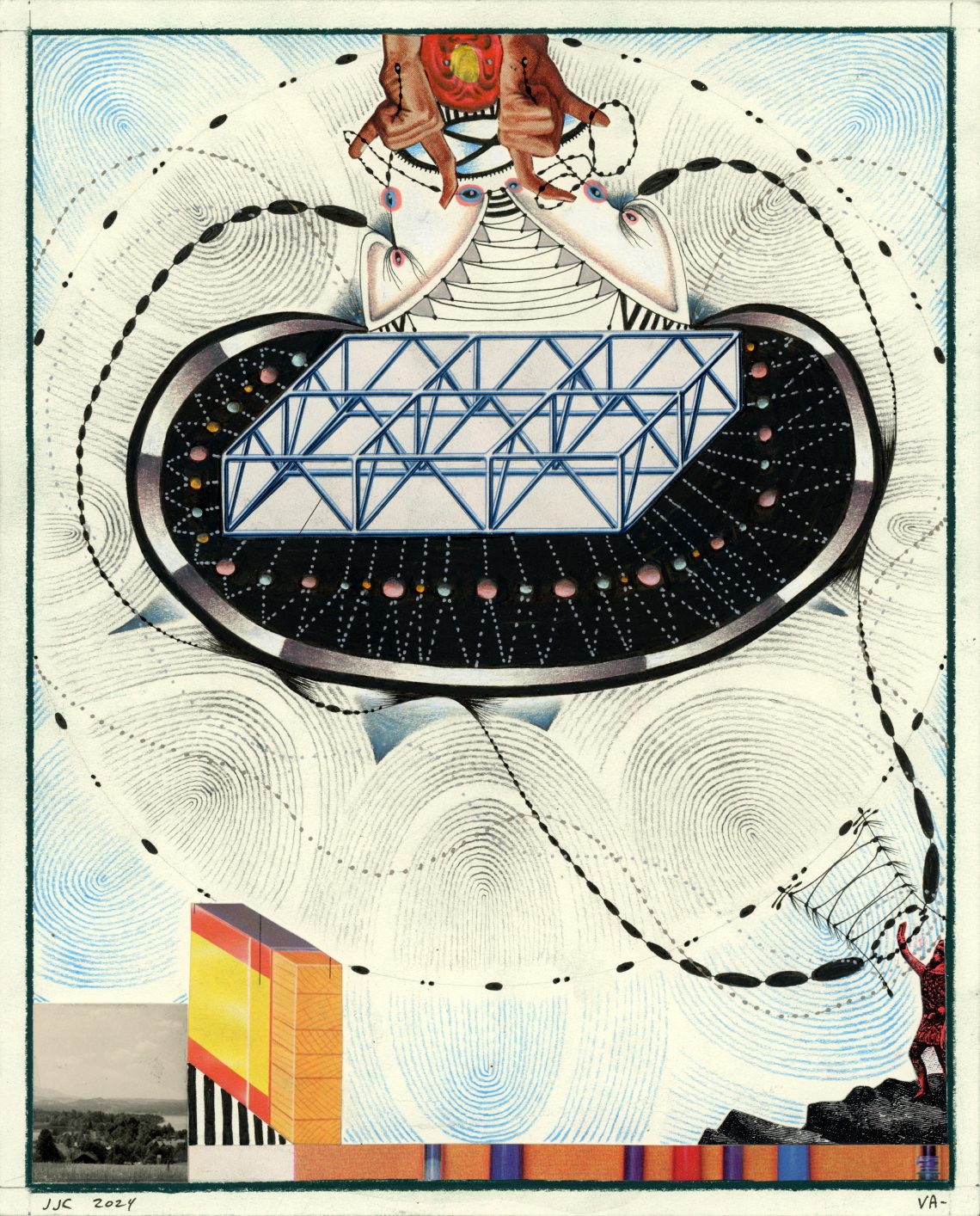
art by JJ Cromer
by Laura Shaine Cunningham
I invested my 8-year-old friend, the wild child of our slum neighborhood, with the power to save me…and perhaps she did
I assumed she had died long ago or, as the awful expression goes, was “as good as dead.” The last time I saw Diana, she was eight years old, sitting on the stoop of her apartment building on the mean streets of the South Bronx. She was smoking and dealing cards to a group of older boys. She looked away as I passed.
Three decades later, I wrote about her in my memoir, Sleeping Arrangements, and she did not surface to comment on the dangerous pleasures we’d shared as children. I thought she must have gone the way of so many street children of the South Bronx, pulled down into a spiral of drugs, disease, and crime; a vortex as lethal as the spyten dyvil (spitting devil) whirlpool that we’d tempted during our illicit swims in the city’s rivers. There had been nothing too terrifying for Diana to try; I was almost certain she had died young.
Thirty years after I’d last seen her, she re-entered my life. One night, as I sat, in the living room of my Manhattan apartment, giving my one-year-old daughter a bedtime bottle, the telephone rang. I picked up and heard her voice, deep and scratched-sounding. I conjured her as I had first known her – the wildest girl in the neighborhood.
Diana was a dirty blonde in every sense. At five, she seldom bathed. Her forearms showed pink streaks, charted by accidental contact with water; these tributaries of cleanliness contrasted with the grime that covered the rest of her skin. The dirt, however, did not detract from her beauty. Filthiness functioned almost as a cosmetic, having the effect of a tan. The darkened skin showed up the eerie lightness of her white-blonde hair and ice blue eyes.
The first time I saw her, Diana was running across the rubble of one of the deserted lots of our South Bronx street. She climbed a semi-collapsed wall and looked down at the drop. Demolition had occurred all around her–there were the fallen walls of the long-gone building, the buckled asphalt of broken paving. Nature had reasserted itself to a degree—high weeds cracked through the concrete; daisies bloomed between bricks.
Diana was poised, atop a hunk of cement, where a single rusted beam poked up like a spear. I snapped a mental Polaroid of her: She was wearing a soiled white dress, her older sister’s discarded communion gown. With its tattered tulle veil, Diana appeared as a dirtied miniature bride. In one hand, she carried a cracked pink plastic purse, in the other, a Spalding ball (pronounced “Spaldeen” in the accents of the neighborhood). She was being pursued by a gang of boys who wanted the ball.
Diana stood, frozen as a deer in mid-flight, before choosing her next route of escape. As I watched, she jumped from the precipice and ran toward me. Behind her, the boys gave chase. As always, Diana outraced them. I felt the draft of her passing; turned on instinct, and ran behind her, the boys fast at our backs. Diana led me, with twists and turns, through an intricate series of alleys, ending at last, in a sewer that opened as a cave. We crouched, and listened as the boys, in their sneakers, thundered past over our heads. She smiled, showing black gaps between her teeth. We needed no further introduction. We were friends.
The neighborhood mothers, on aluminum folding chairs, lined the city street, and served as a jury to condemn Diana. They denounced her as “a gutter brat.” There was no supervision. “Where was the mother? Why was the child allowed to run wild?”
Diana’s mother, Mrs.Duval, fat and faded as her daughter was lean and lovely, sat upstairs in her five-flight walkup, perhaps too heavy to descend to discipline Diana. In Mrs.Duval, defeat had taken the form of relaxation. She sat parked in an easy chair, positioned between the dinette set and the Frigidaire. She seemed to have given up, like the springs of her chair, and slumped into her existence with sedentary good will. I came to love her, for she was soft and never screamed, but I recognized, early, that her good nature owed everything to despair.
At the beginning of this friendship, my mother, Rosie, who was single and worked long hours a rumbling subway ride away in the netherworld of downtown Manhattan, had asked Mrs.Duval to “mind” me after school. Mrs.Duval had agreed; she was always compliant. The arrangement failed in the first minute, when Diana led me past her dozing mother, out the window onto the fire escape and from there to the roof. Diana showed me how to “balance” on the ledges, leap from building to building.
From that first day, Diana and I were inseparable. “Follow me,” she’d whispered and I had. She took me to her hideouts; first, the sewer cave, then an abandoned gas station that became our private fort.
“I dare you; I dare you,” Diana would say. “I double dare you.”
We hung out in the park on a marble fountain that featured carved stone mermaids. We were the sirens of the city, courting death and disaster at every sneakered step. Nice girls were not allowed to play with us. I remember the other mothers leading the good girls away, to play piano or take ballet.
In summer, the fountain rained down upon us. Diana flung off her top. “See I go with no top!” she cried. I can still feel my hand on the cold stone mermaid, as I climbed her marble lap, and grabbed onto to her chipped breast.
During our conversations, I stared at Diana with such concentration that her white skin and ice blue eyes became a human landscape, a Christian country. She was more than a person, she was another world, my first alien culture. With her, I crossed more than one border.
She took me, one sunny afternoon, into the cool gloom of her church, St. Angela Morici. “Here are the saints being murdered,” she introduced them – statues of the martyrs, suffering in their niches. Their white bodies were pierced in unimaginable ways. Diana lit our path, a blood-colored votive candle aglow in her hand. Stained by the carnal light, we toured the church. As we left, she tore a rosary from a statue of the Madonna.
“So now I’ll go to hell,” she said, unconcerned.
“God will punish you!” cried every “yenta” suspended from a windowsill on the street. We ran past; Diana so fast, I had to breathe hard to keep up with her. I followed her, but I also feared her: God would punish her, I believed, in my secret cowering heart. He would punish her and he might get me.
We lived beyond the law. When school started, we skipped it. Truants, we ran across the bridge to Manhattan, straight to The Museum of The American Indian that featured shrunken heads.
Then, one afternoon, a guard spotted us and cried out,” Get them!” He called the police and there followed an N.Y.P.D chase. A squad car picked up our trail, as Diana and I ran along the streets, trying to make it to the bridge back to the Bronx, where we imagined, safety, beyond.
Diana defied capture—she executed mid-air turns, confounded the cops by taking me down one-way streets. As the squad car skidded into reverse, we might have eluded the police, had we not taken an errant detour down to the aptly named Terminal Market, a cement dead end on a Bronx pier. There, amidst the loading docks for vegetables, Diana and I found ourselves with our backs to the wall.
The first officer nabbed me, a literal collar. Diana darted past him and would have made her getaway, had she not stopped, for an instant, to see what had happened to me. In looking back, she missed her window of opportunity. A second officer bounded from the car and seized her, despite some powerful kicking on Diana’s part.
While the other mothers forbid their daughters to play with Diana, my mother Rosie smiled upon our friendship–even the night she returned from work to find us “slain,” covered in grape jelly gore, on the threshold. My mother treated Diana as she treated me: If she bought me a doll or a Little Golden book; she gave Diana the same gift. When I was taken for a haircut, so was Diana, although Diana escaped, her bangs half-scissored.
Then one morning, my life changed. As she prepared to leave for work, my mother seemed hesitant. When she braided my hair, I could feel her fingers pause. “I should have shown you how to do this for yourself,” she said. Then she pinned my keys and a note, to the inside of my coat. She was going to the hospital, she said, but it was just routine. She packed her prettiest nightgown, the pink one.
Later, there were unsatisfying ’explanations”—of exploratory surgery that had revealed she was “riddled” with something too terrifying to mention to a child.
My uncle, her bachelor brother, who had come to “watch” me for a few days, that would now turn into years, told me, “Rosie was very sick last night…She died.” When he said that, I ran past him, out to the street, then up the five flights to Diana’s apartment. I ran right into Mrs.Duval’s soft arms, then could not bear her embrace, ran, ran, back down to the street. Diana, uncharacteristically, ran behind me.
We ran to our best fort, perched high over the expressway. The brick hut was weak, scheduled for demolition. In this uncertain refuge, we passed several silent hours, supporting ourselves by sitting back-to-back. I remember the heat of her skin on my own back.
Within two weeks, I was sent to a summer camp and tried to correspond with Diana. I was scared at that camp, which seemed populated with older, tougher girls who threatened to strip me. I wanted to come home, to my own block, my own apartment, to the world I used to have, and most especially to my best friend who was still there.
“Diana, help me,” I wrote, as if an eight-year-old girl could muster some power to change my situation.
When I finally did return at the end of the summer, it was to find nothing was as it had been. I came home, not to my old apartment but to a new one, on a higher floor, where my uncles had set up the new household. I saw Diana, in her ripped communion dress, still on the street, but it seemed that a shade had fallen behind her pupils. She saw but didn’t ‘see” me. Somehow, we were no longer best friends.
I did not see or hear of Diana for more than thirty years.
Then, one night the phone rang. The deep scratched-sounding voice said, “This is someone you knew a long time ago.” At first, she refused to give her name.
“Give me a clue,” I said, wondering why I had started to tremble.
“My eyes are blue,” she said. And then I knew.
Diana. We arranged to meet, to have dinner in my apartment a few nights later. The phone call had been mysterious and raised more questions than it answered. Her voice had been so unrecognizable, husky; the accent seeming from Brooklyn rather than our native Bronx. She had not offered any quick affection or approval of her portrait in my memoir.
“Yeah,” she said, “I found a review on the floor of my office. I saw the part about the sewer cave, and your name. So I thought –‘Hey, that’s about me.’ ”
She hung up with a flat, “I’ll see you on the seventh, at seven p.m.” I felt almost frightened. Had she come back to attack me? Sue me? as publishers warned. I had never envisioned how she might react to seeing herself or her family described. I had never meant to hurt her, the opposite, but what would it be like to see yourself as “the dirty blonde in every sense,” her mother “in whom despair had taken the form of relaxation”? To recognize herself as the girl who traded sexual touches from a pervert in the park for a dollar? Why did Diana want to see me now after not seeing me for so long?
On the appointed night, the door buzzer rang too precisely at seven. I leaped to the door and peeked through the peephole. Where was Diana? Somehow, I still expected to see a tow-headed little girl with ice blue eyes. In my hallway, there was no sign of this girl, or even the woman she might have become. There appeared to be only a heavyset, gray-haired man.
“It’s me,” he (she?) said.
Diana? Someone resembling Charles Durning or burly Brian Dennehy walked in the door. Diana/Durning tossed off the new gray golf jacket he/she was wearing and threw it on my chintz-covered sofa.
“I came out when I was sixteen,” she said.
Giddy, I spun back into my floral-decorated living room. My baby daughter gurgled, looking up at us from her play quilt. “Oh,” I said, unable to contain my silliness in the moment of surprise. “Some of my best friends are lesbians.”
Diana sat on a flounced armchair and filled me in on her past. Everything, I had feared for her, had happened except death. She had lived on the street, in the bowels of the bus terminal. She had worked clubs where she rifled the coat pockets in the checkroom, taking only drugs not money (a point of pride). So many times, she had almost died, from drugs and mistreatment. She’d been used by men and been beaten; At l6, she’d given birth to a baby in a shelter. Then, in that maternity ward for unwed homeless teenagers, her life had started to change.
A counselor who helped runaway teenagers return to school, found Diana and somehow enlisted her in a program to resume her education. Diana completed high school, then college. Today, she is the person who runs the program that rescues children from the street. She saves others from the fate I had predicted she would suffer.
Why had she looked me up, after so long? She cleared her throat and said that she had a reason. “I came back,” she said “to make sure you were alright. It’s bothered me all these years…”
She looked away. “I couldn’t stand to see you after your mother died. It hurt too much. She was the first woman, on her own, I ever knew. I looked up to her. It hurt to see you without her.” She apologized for leaving me when I needed her most.
“That ‘s why I came back, to see you for myself. Are you alright?”
Was I? On the surface, I was fine, with a new baby, and a long-running marriage, an established career as a writer. But below the surface ran another current, of pain, unhealed, and uneasiness, unexplained. My marriage had lasted more than twenty-five years but had it endured for the wrong reasons? Was I too fearful of losing someone close to me, to acknowledge the marriage was painful?
Before she departed, Diana confessed:”I would not have known you.” She said she would never have recognized me if we had passed on the street. “But now I do recognize you…when you look away when you talk and twist the ends of your hair,” she said. “Then I see the old Laura, telling her stories.”
I admitted the same-–that even staring at her, I could not have ‘placed’ her as that little blonde girl, with the smudged skin and wild light in her eyes. I, too, could have walked by this woman, not knowing that she was ‘my’ Diana, one of the powerful influences in my life.
Diana told me she had liked my memoir, that my memories jived with her own of our childhood adventures. But she said she had been taken by surprise by my admiration of the child she had been –“I couldn’t believe anyone looked up to me; that I could be someone’s inspiration.”
I almost said, “You still are,” but we were still somewhat shy and awkward with one another.
When we said good bye, later, on the street, I walked her to her parked car. There, she flushed and opened the trunk: Inside was a gift-wrapped present for my baby girl
“Here,” she’d said, stuffing the package which had turned out to contain an upscale, hand-painted baby jumper, into my hands. Then, she hugged me and whispered, “Don’t be scared.”
I watched Diana drive toward the next intersection, at the end of my street. There, she stopped for a red light. In its glow, I saw her turn to look back in my direction. Then she headed downtown toward the Brooklyn Bridge and beyond. I stood on the street corner for several minutes, listening to the sounds of the midnight city. And I silently thanked Diana for coming back, for turning around to see what had happened to me, one last time.
….
,
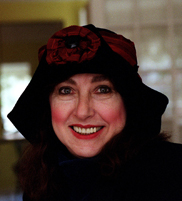
Laura Shaine Cunningham has published nine books: her memoirs, Sleeping Arrangements and A Place in the Country, were excerpted in The New Yorker and the New York Times. Her fiction has appeared in The New Yorker, The Atlantic, and many literary journals. Her plays have been produced at Steppenwolf and many regional theatres and published in many anthologies. She has been awarded: two NEA two NYFA Fellowships, both in Literature and Theatre and a Yaddo Fellowship. Her stories have been performed and recorded at Selected Shorts. Her new memoir, Forbidden Russia, an American Playwright in Moscow, Ukraine, Belarus and Beyond will be published next year.
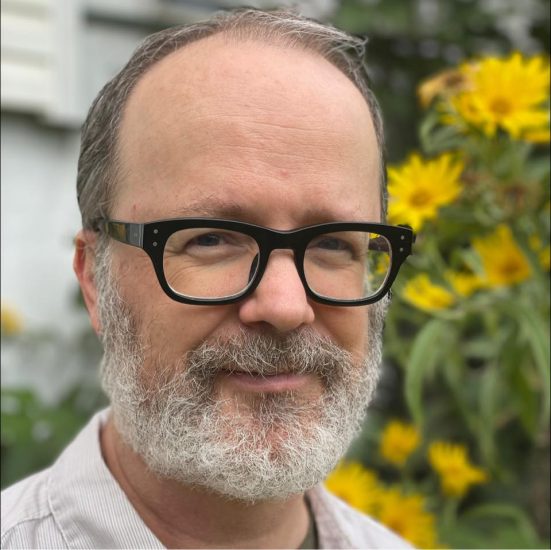
J.J. Cromer and his family live on a small farm in central Appalachia, where they’ve kept bees, geese, ducks, and chickens. Self-taught as an artist, he holds a bachelor's degree in history and two master's degrees — in English and library science. His art is held in the permanent collections of the American Visionary Art Museum, the High Museum of Art, the Taubman Museum of Art, and the American Folk Art Museum, among others.