Johnny Appleseed
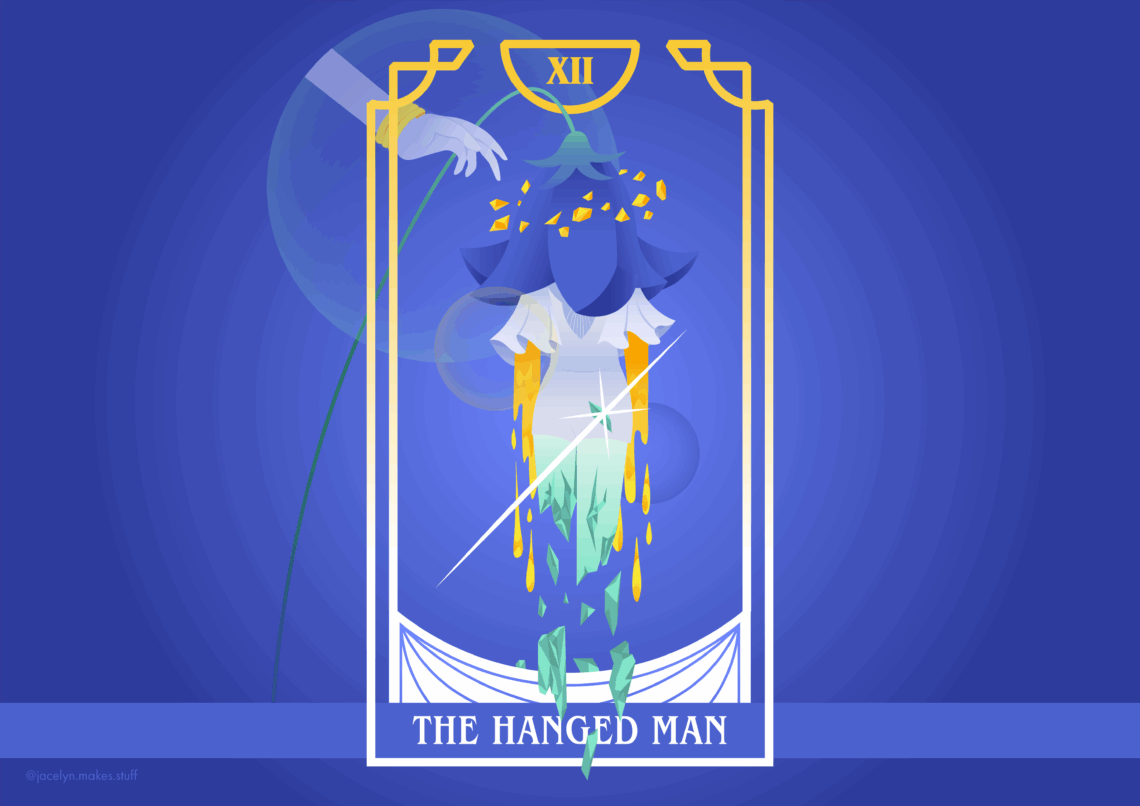
art by Jacelyn Yap
by Katie Harms
Johnny grew up in a tin can trailer with a father who wasn’t a preacher. But his father still preached, and he drove a van hand-painted with God’s Greatest Miracle, the unborn fetus. Johnny was tall and wiry, and his skin was bad—red all over in these great rough patches that peeled away from themselves as if the skin itself didn’t belong on his tired and stretched-out body. And maybe it didn’t; it itched and broke and across his cheeks beneath his eyes were pustules that should’ve been freckles. Then there were his eyes, too—blank and flat as though they had never once witnessed a thought.
Johnny’s eyes were flat in a way that erased longing, their emptiness so complete they could not be filled. Most eyes like Johnny’s seemed desperate in the way people are desperate to witness God, but Johnny’s were not like this. Johnny’s father had his own thoughts on God, and Johnny’s father’s eyes were less like eyes and more like holes that showed people straight through to his brain. Johnny’s father told his son not to worry much about his unfortunate appearance, about his skin or his eyes; he said that if no earthly soulmate appeared to him in his time then surely she would in heaven.
Johnny drove with his father in their hand-painted van and the people in their town didn’t stare. They had at first but then they didn’t, God’s Greatest Miracle now as mundane and expected as weather. They drove to new towns and Johnny’s father proselytized, a wooden apple crate downturned beneath his feet, white papers with black ink held close between his hands. The papers said things, Johnny knew—the papers said things Johnny should know but did not. He had never made heads or tails of the Bible. He thought of the people, gathered around their van gazing upon the unborn fetus, its disproportionate head and fishtailed body, its red skin as bad as his, stretched and waiting, the cord that attached to nothing. The people gathered in church too and there they listened to the same words said by his father but said by another man and in a different way. That was the thing about the Bible, Johnny thought, the words were so thorny and unyielding and untransmutable someone else always had to give them meaning.
Johnny sat in the front seat and looked out the windshield. A storm was coming or had just left, the sky the soft color of a sick person’s elbow crook, where the veins blot the skin blue or green or something like it. Johnny’s father reached a pitch and the sky did nothing. Later, as Johnny continued to wait, a congregation of starlings left a tree and flew low to the ground through the sagging power lines, their bodies cast black on the pavement of the parking lot. The gathered people looked up, away from God’s Greatest Miracle, and their faces were stained with shadow.
Johnny’s father had always driven the van. When he was younger, Johnny would bike around their neighborhood on the weedy sidewalks and streets past one-story brick houses with crumbling shingles. One day, Paul and his friends—seventeen-year-olds loose as ghosts and just as present—gathered around Johnny at the foot of Paul’s driveway, encircling Johnny again and again until Johnny stopped riding, his toes planted on the cement, the pedals on his bike still spinning.
“Hey Coat Hanger,” Paul had said while he laughed. It was the nickname he’d given Johnny. “Come fight my little brother.”
Paul’s little brother was Johnny’s best friend. They were eight-years-old and Johnny’s skin had yet to become bad and no one had, at that point, thought to pay any attention to Johnny’s eyes. Johnny set his bike down in the driveway, and Paul’s laugh became everyone’s laugh, him and his friends and Johnny drifting as one to the backyard on the heels of that sound, vacuous and hard, echoing hollow against the clear blue sky and the windless trees. The backyard was small and green and contained by a chain-link fence. A walnut tree in the neighbor’s yard was losing its leaves, and they fell silently across the lawn, golden as the setting sun.
“Dick-ass, take off your shirt and fight,” Paul said to William, who was outside playing with a paper airplane. William paused, the airplane pinched between two fingers. His small body reflected behind him in the sliding glass doors to the kitchen.
Johnny and William fought while Paul and his friends hollered and laughed and made bets and thought, somewhere in the back of their empty heads, about the jobs they would soon have when they graduated, the polite young women they would soon marry, the children that would soon follow, fat and blonde and wet with spit-up. When they disbanded to drive and smoke and drink—whatever older brothers do—Johnny and William sat with their cuts and blood and burning lungs and ringing ears and they sifted their hands through the fallen walnut leaves. When the feelings dulled and everything became less blue, either from nightfall or their own emptiness, William lay on his back and watched the trees as they greeted the night.
After a great long pause, one longer than the sky, William spoke.
“I’d like to plant trees,” William had said, and, after giving the sky another chance to reply, Johnny had nodded.
Johnny’s father returned to the driver’s seat of the van.
“A lot of them took the pamphlets,” he said.
Johnny looked at the remaining papers that were now in his lap. As his father spoke the van filled with the soured smell of rot, his father’s fervor lingering on his skin and breath, the ferment that naturally follows a fit of might and belief. It was familiar, the sharp sweetness of fruit crawling with wasps in a grass field, the sun turning the bruised, split flesh to unpotable liquor. One day, when Johnny and William were twelve, William had taken Johnny on a walk along a hard dirt path. William hadn’t been wearing shoes, and when Johnny asked why, William simply said he wanted to make the skin on his feet so thick even a rattlesnake couldn’t bite through.
“There are no rattlesnakes here,” Johnny said.
“There will be, where I’m going,” William had replied. He didn’t look at Johnny, just at the clouds and the sky, the cornfields drying brown. The crickets never stopped, not even at high noon, and they filled the silence between them. Johnny took off his shoes too, and as they walked the dirt was as dry and soft as baby powder beneath his feet.
“You’re leaving?” Johnny asked.
William nodded then stopped. They stood at the foot of an apple tree, one that stretched tall and wide and was hung with red apples. It was as big as any regular tree you’d find in a wood, not at all like the trees in an orchard. “Isn’t it magnificent?” William asked.
Johnny looked up, shielding his eyes from the sun with his hand. He let out a low whistle lost to the crickets and to William’s hope and wonder. “Are they any good?”
William nodded again. “The best apples you’ll ever have, I’d say.”
With his toe Johnny nudged an apple on the ground, and unseen beetles and flies and bees suddenly flit from its core as if they had just been born of it, or maybe they had been there all along, hovering around it and not in it, close to it but never of it. The tree’s trunk was thicker than William and Johnny together and it reached beyond them too before finally and eventually splitting off into branches.
“How do you get them?” Johnny asked. He didn’t see a way to climb the tree.
William smiled and approached the tree, and briefly—so briefly Johnny wasn’t sure he saw it—William set a hand on the tree’s bark and closed his eyes as if in greeting. Then William wrapped his arms and legs around the wide trunk and shimmied himself up until he reached the first branch, the soles of his feet and palms of his hands, the skin of his thighs and shins and calves, the thinner skin of his forearms, all scraped white then red. There were apples on those low branches and William paused there but did not pick them.
“I’m going to walk,” William said. “I don’t need much. And I can find trees like these, and eat until I’m so full I can’t stand it. And I’ll walk and my feet will get so thick I won’t feel a bee sting or a snake bite. I’ll sleep outside with the moon and wake up with the sun. I’ll walk West, maybe all the way to California, and when I stop I’ll look for work in an orchard. I’ll be strong and tough by then and they’ll see it on me, in the way my skin looks after all the walking through all the weather. And I’ll grow apple trees, just like this one.”
William continued to climb then, higher and higher into the tree until Johnny could no longer see him.
“The ones near the top are the sweetest because they’re closest to the sky,” William said, his voice loud, as if he weren’t up there at all but standing all around Johnny. It was as if his voice was the voice of God, bellowing down from above but so close Johnny felt it could just be his own thoughts. The leaves near the top of the apple tree rustled, either with William or with the wind, and a few apples fell and smashed against the grass, the hard dirt of the path.
“Be careful,” Johnny called up, but, before Johnny’s voice could reach William, William fell too, bringing leaves and a thunder of apples with him. As the apples hit the ground Johnny was caught in a storm cloud of sweetness, and William was caught by a fork in a branch. Johnny ran then, faster than he ever had before, barefoot and frantic down the dirt path. When he returned, with help and paramedics and a hope so heavy it made him cry, William was still in the tree. His neck was broken but his brain wasn’t, and after a stay in the hospital he was outfitted with a wheelchair he would never leave.
“Did you see the crowd today?” Johnny’s father said in the van as he turned the key in the ignition. The ferment hung heavy between them.
Johnny nodded and looked not at his father but at the sky that held either a storm that already passed or one that was yet to come. “It was bigger than most,” Johnny replied, and Johnny’s father pulled out of the parking lot.
“That’s right, because the people want to hear it. They think they don’t, but they do.”
Johnny straightened the pamphlets in his lap and breathed in the smell of his father’s belief, the tangy black smell of fallen split apples. Next they would drive to the town’s bar despite it being early afternoon. Johnny’s father would bring in the remaining pamphlets, stand shoulder-to- shoulder at the bar top with the drunks and derelicts, and he’d tell them the things they wanted to hear but didn’t. They’re the ones, according to Johnny’s father, who needed to hear the word most, who needed to be filled with the knowledge that they too were once God’s Greatest Miracle.
At the bar Johnny left the van and walked beneath the white sky until he found a field. He walked barefoot, because his skin was bad already, and having soles so thick they could be shoes fit with the rest of his body. In the field he crouched, weaseled a finger into the dirt of the earth. A beetle scuttled away and the wind blew as it always does, and Johnny reached into his front pocket in search of a small brown seed. As he pushed the seed into the soil he felt it, the knowledge of everything he didn’t want to know, and it rooted him in the field until it was time to go.

Katie Harms was shortlisted for The Malahat Review's 2024 Open Season Award, Writer's Digest's 93rd Annual Literary Writing Competition, the 2024 Novel Slices Contest, the 2024 Lorian Hemingway Short Story Competition, and was a finalist for the New Millennium Writing Awards 58. Her work can be found in Creation Magazine, Every Day Fiction, Qu Magazine, The Ilanot Review, The Other Journal, and Action, Spectacle. She has work forthcoming in Southwest Review (Summer 2025). She received her MFA in Creative Writing from Ohio State University.
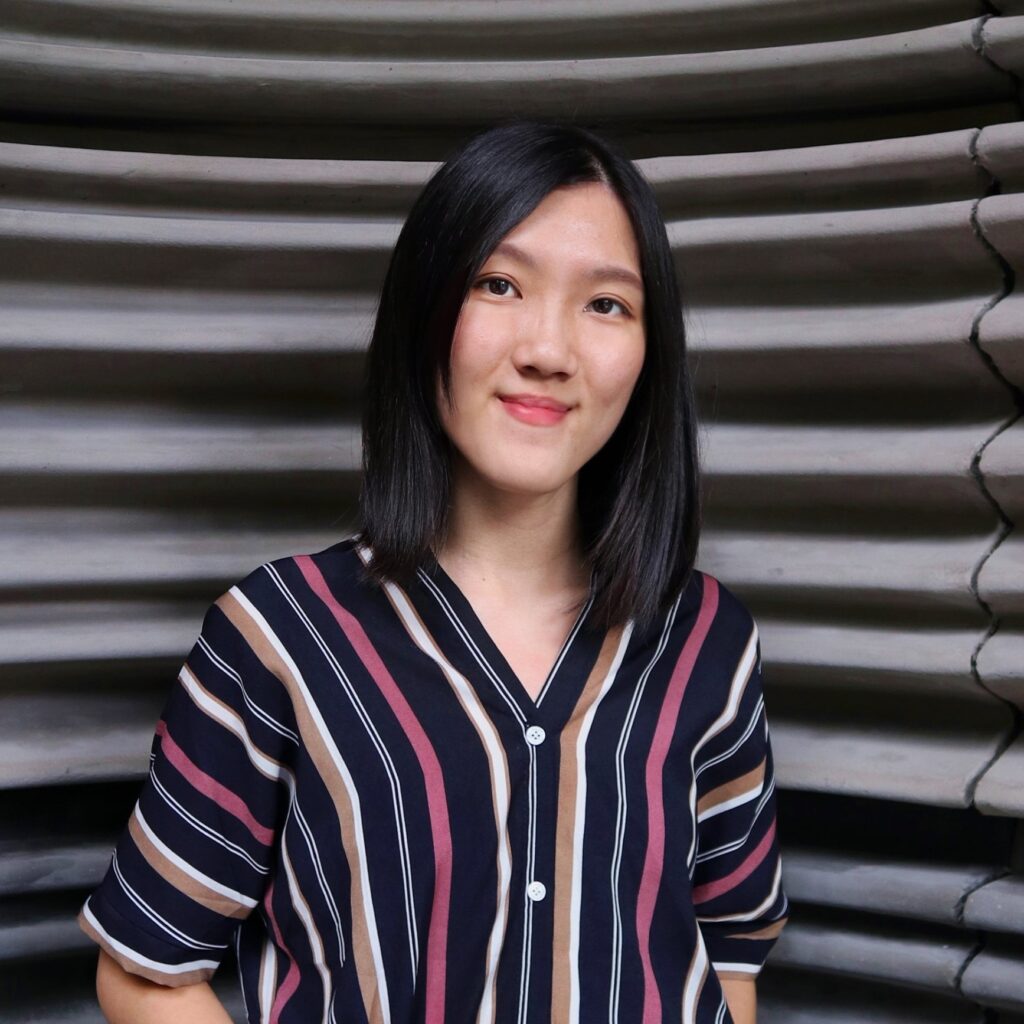
Jacelyn (she/her) is a self-taught visual artist who ditched engineering to make art because of a comic she read. Her artworks and photography have been published by the Commonwealth Foundation's adda, Chestnut Review, The Lumiere Review, and more. She can be found at https://jacelyn.myportfolio.com/ and on Instagram at @jacelyn.makes.stuff