Dialogue Between Authors and Translators: an interview with Peruvian poet Roxana Crisólogo and translator Kim Jensen
by LIT Translation Editor John P. Apruzzese
Noise, in poetry, is rarely only noise. It is the residue of migration, the pressure of history, the friction between languages that refuse to settle into a single meaning. In this LIT Global Voices conversation, Peruvian–Finnish poet Roxana Crisólogo and United States poet and translator Kim Jensen meet in that charged space where poetry, politics, and translation converge, not as separate practices, but as forms of attention. We were honored to publish Jensen’s translations of Crisólogo’s poems from her collection Kauneus (Beauty) in LIT 41 (Fall 2025).
Crisólogo’s work grows out of displacement: from her childhood in Lima as the daughter of migrants from Cajamarca to her life in Helsinki, where languages and geographies accumulate within her poems. Rather than treating language as stable, her writing exposes it as contested terrain: shaped by labor, bureaucracy, migration, and the daily negotiations of survival. In collections such as Kauneus (Beauty) and Where to Leave All This Noise, she asks what poetry can do when language itself feels strained or compromised. As she reflects here, “When language feels overheated or exhausted, a poem should create friction rather than clarity – interrupting the fluency that serves power instead of reproducing it.”
Jensen approaches this work as both translator and poet, bringing her own transnational trajectory—from the American West to Palestine and beyond—into the act of translation. For her, the process becomes less a transfer than a form of listening, an attempt to carry the density and restlessness of Crisólogo’s Spanish into English without smoothing its tensions. Describing the strange recognition between their lives, Jensen imagines their paths moving, “in opposite directions—like ants moving back and forth in formation—[whose] spirits must have bumped into each other along the way.”
What unfolds between them is not simply a dialogue about craft but an inquiry into how poetry travels: through bodies, memory, political struggle, and the stubborn survival of words that refuse correction. Moving between Peru, Finland, Palestine, and the United States, their exchange reveals translation as a meeting point between lives lived in different directions yet animated by a shared question: how can poetry remain attentive to the world’s violence without surrendering its capacity for celebration, tenderness, and defiance? As Crisólogo suggests, poems do not resolve the crisis of language, they inhabit it.
********
Welcome, Roxana and Kim—thank you for joining us. It’s a pleasure to bring you together for this conversation, which moves between Roxana’s recent collections, Kauneus (Beauty) and Dónde dejar tanto ruido (Where to Leave All This Noise), and between writing and translation as deeply entangled practices.
JPA: Let’s begin with Roxana. Your life and work move across Peru, Finland, and many literary and political communities—from early books like Animal del camino to Where to Leave This Much Noise, and most recently your time at the International Writing Program in Iowa. Looking back, where do you feel your poetry began—not geographically, but emotionally or politically? Was there an early experience of pressure, displacement, or contradiction that later crystallized into lines like “there is nowhere to leave this much noise”?
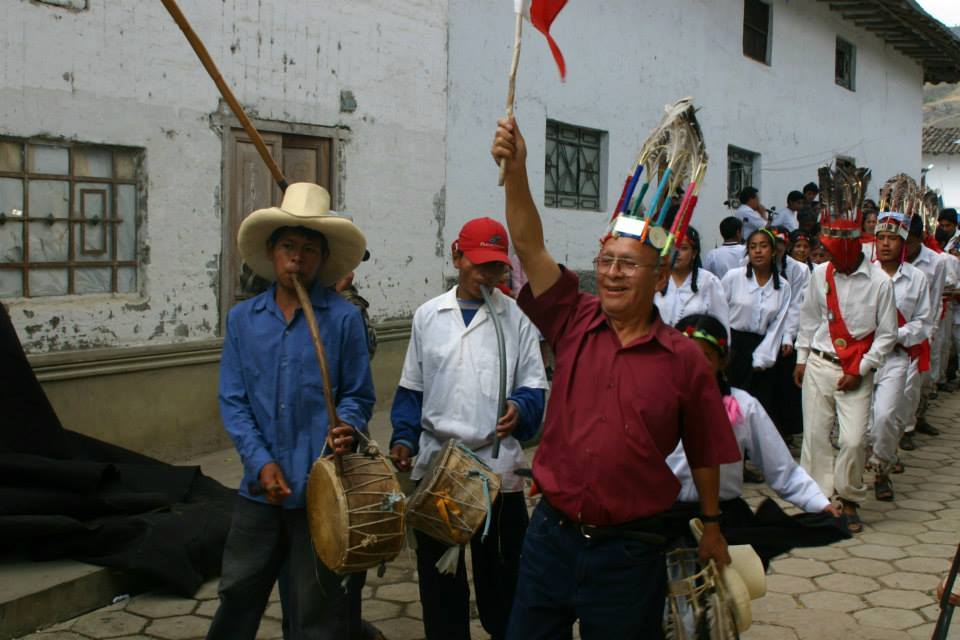
Roxana Crisólogo (RC): Since I began writing poetry, I have often asked myself where poetry lives. This question led me back to my childhood, which I think of as a living reservoir of memories, sensations, and smells that continue to give meaning to my work. I was a curious child, eager to understand the world and my place within a profoundly unequal society. I wanted to know why some people were given more than others, why certain Peruvians were treated better than others, why some bodies and ways of speaking were considered beautiful and others not. I learned early on that ugliness was projected onto migrants who like me arrived in Lima with our accents, our Indigenous languages, our music, our aesthetics and multiple identities.
At that time, being a migrant in Lima was often a source of shame. Yet I felt proud to belong to what was “considered to be” invading and transforming the city. My migrant family from Cajamarca, in northern Peru, was rooted in generations of peasant farmers from the Indigenous community of San Juan de Yanac. My parents left their land and moved to Lima in search of better living conditions and a future. I grew up with my five sisters in the house they slowly built in San Juan de Miraflores, on a harsh desert south of the city. Before concrete took over, there were dunes and even an oasis. Many passages of my poetry return to that time of wonder.
I loved going to the large market near my home, watching fruit and vegetable vendors, porters, and workers who left before dawn. That is where my fascination with labor comes from. It was also where I discovered that people speak languages other than Spanish, and where I first heard Amazonian cumbia. At home there were few books, but there was a great deal of music. There was also an enormous amount of noise, which would later become a vital source of my poetry. During those years, I learned to find poetry in small details, in everyday life, and in its anonymous heroes. I learned to listen and to look differently from my schoolteachers, who insisted that my Spanish should be “pure” and that poetry should speak only of beautiful things. Years later, when I moved to Finland, I used to joke that I arrived in Europe already prepared to be an immigrant—because in my own country, I had learned how to be one.
“During those years, I learned to find poetry in small details, in everyday life, and in its anonymous heroes.”
– Roxana Crisólogo
JPA: Turning to you, Kim. Your own path has taken you through California, France, Palestine, and long-term engagement in transnational justice and peace movements. When you first encountered Roxana’s poems—poems that move between kitchens, protests, borders, and classrooms—did they feel familiar to your lived history, or did Where to Leave All This Noise require a different kind of listening from you as a reader and translator?
Kim Jensen (KJ): First, I want to clarify that I translated both books with two different collaborators who brought expertise and native fluency to the projects. I worked on the latest manuscript Dónde dejar tanto ruido—Where to Leave All this Noise—with the Mexican poet and translator José Luis Rico who has a strong knowledge of Roxana’s work and its literary lineage.
To your question, I have yet to visit Peru or Finland, yet Roxana’s work feels utterly familiar and close to my concerns and sensibilities. Despite our obvious cultural differences, we have a lot in common in terms of our personal, political, and poetic trajectories. We were both born in 1966 on opposite sides of the Americas. Roxana uprooted herself from the Global South, from a context of economic precarity and political turmoil toward an exilic existence in the Deep North. I was born and raised in the heart of the Deep North and its white supremacy, but moved in the opposite direction toward cultures, histories, and languages that had been systematically devalued, stigmatized, and erased in the sheltered spaces of my suburban childhood. She is a woman of color who married a Finnish man. I am a white woman who married a Palestinian man. My journey has been away from the literal and metaphorical North toward Palestine, Latin America, socialist, feminist and transnational thinking. Roxana’s has been a journey from those spaces toward an encounter with “whiteness” and Western institutions. I suspect that as we were moving in opposite directions—like ants moving back and forth in formation—our spirits must have bumped into each other along the way, transmitting vital information about how to find sustenance and how to find home.
JPA: Do both of you remember your first substantive conversation about working together—not just about translation logistics, but about tone, trust, and responsibility? At what point did it become clear what these poems—especially ones that insist “there is nowhere to leave this much noise”—might demand in English?
RC: I met Kim through a Mexican poet who suggested translating some poems from Kauneus, (Beauty). From there, Kim became deeply interested in my work, so they decided to keep working on the whole book together. From our earliest conversations, it was clear that my work with Kim would be more than a technical collaboration: we spoke about trust, political responsibility, and what it means to translate poems shaped by displacement and noise.
I was glad to work with a translator whose activism and political awareness resonated with the ethical demands of the work. Communication between us flowed easily, and because I am also a translator, I shared visual and historical references to help contextualize passages that might seem opaque in English.
When we began Where to Leave All This Noise, the tone and responsibility the poems required were already understood. Kim worked closely with José Luis Rico, a longtime collaborator who knows my writing well, and the translation moved quickly, guided by a shared sense of the demands of the poems rather than by negotiation.
KJ: Roxana and I had been communicating via WhatsApp and email since around 2022. I recall a significant exchange that happened when I had just completed a strong draft of Beauty. I was suddenly thunderstruck—a coup de foudre—by the overwhelming gorgeousness of Roxana’s work and the intelligence, focus, and personal sacrifice it had required for her to create such texts. I felt humbled and grateful that I had been granted access to approach such a masterful work. I conveyed these thoughts to Roxana that same day, reassuring her that I’d be very careful with her work and had taken on the responsibility of doing her book justice in English. She responded with generosity, trust, gratitude, and even joy. For me, that was the moment our connection surpassed a collaboration between strangers toward a meeting between two women-mother-poet-leftists who share a transcendent vision of what poetry should strive to do.
“A poem does not resolve the crisis of language—it stays inside it, without surrendering to its violence.”
– Roxana Crisólogo
JPA: Let’s talk a bit about language and translation. Roxana, you’ve written and translated across Spanish, Finnish, and other languages, and you’ve built spaces for multilingual exchange through Sivuvalo in Helsinki. In Where to Leave All This Noise, language often strains under accumulation— “to turn up the volume the voice / to quell the fury of form.” How has living inside multiple languages shaped your sense of what a poem can—or should—do when language itself feels insufficient, overheated, or exhausted?
RC: I believe language is in crisis. When I write, I often feel that words no longer say what they need to say. They circulate carrying domination, hate, and silence, and then it seems that only poetry can save them.
Poetry is one of the few spaces where language can still be pushed against itself. When language feels overheated or exhausted, a poem should create friction rather than clarity—interrupting the fluency that serves power instead of reproducing it. Excess and strain become ways of paying attention and refusing what is imposed.
This became concrete for me while volunteering at a refugee detention center in Helsinki. I was repeatedly told that everyone spoke English, even though that was clearly not true. Very few people did. I arrived with the same preconceived idea and had to accept that my Finnish was, in practice, more useful than my English. It made no sense to place me in the position of an English speaker, or to expect everyone else to adapt to that language. Communicating with people who spoke languages I did not know taught me that there is no neutral or universal language—only languages that are imposed and languages that are negotiated.
That experience confirmed my commitment to writing in my mother tongue and to translation as a political practice. Living inside multiple languages has shaped how I write: my Spanish carries other languages within it, unresolved. For me, a poem does not resolve the crisis of language—it stays inside it, without surrendering to its violence.
JPA: Kim, as someone whose writing and translation work often emerges from politically charged contexts, how do you approach translating poetry that already carries multiple histories, migrations, and pressures? When a poem insists on overload rather than clarity, how do you decide what must remain dense, noisy, or unresolved in English?
KJ: This decision begins with the fact that I relate to many of the characteristics and themes of her work. Not unlike Roxana’s, my life has been filled with movement and migration, never really knowing where I would land. My childhood was marked by feelings of alienation and displacement. My father grew up on a small family farm in Colorado. My mother was from a more affluent family in Wisconsin. After moving around for my father’s graduate education, my parents settled in Delaware, only because that is where he found a well-paying job, but no family whatsoever. I eventually came to feel that the imperatives of a capitalist economy and an ideology of upward mobility had cheated me out of the comfort of family, love, safety, and home. I came to realize that, as members of a settler-colonial society, my family never had an ancestral connection to the land.
I carried that original feeling of not belonging as I moved between California, France, Boston, San Diego, San Francisco, Oakland, Palestine, back to California, Baltimore, and back to Palestine on countless trips—all replicating the original sense of uprootedness.
The restlessness in Roxana’s work especially resonates with the nearly 30 years I spent with my ex-husband, Palestinian visual artist Zahi Khamis. He woke up almost every day saying some version of: “We need to get the fuck out of this place,” whether we were in the United States, Palestine, or elsewhere.
Dineh scholar Lou Cornum writes about the idea of anagnorisis in Greek theatre—the moment when a person’s true identity is revealed. Cornum discusses this concept in relation to why Indigenous Americans feel a strong identification with Palestinians. Ever since I started translating Roxana’s poetry, my aim has been to create poems in English that drop a pin at the precise moment of anagnorisis, the “dense, noisy, and unresolved” place that we both inhabit: a place that is barely legible, epistemologically bewildering, pathologically anti-establishment, and restless to the core.
“I came to realize that, as members of a settler-colonial society, my family never had an ancestral connection to the land.”
– Kim Jensen
JPA: It’s true that survival is a central theme in your work, Roxana. Across Where to Leave All This Noise, for example, labor appears insistently—buses full of boxes, markets, kitchens, recycling, cooking. In one poem you write, “Every day I become Peruvian / I cook convinced that devoting myself / to gastronomy is salvation.” How do you understand labor here—as survival, as cultural performance, as critique? And where does poetry sit among these everyday economies of work?
RC: Work is a topic that has always interested me because it opens territories at the heart of the economic structure as it is organized within the world-system we know: a global historical network that includes workers from different countries who sell their labor power. In my poetry, every migrant is one more worker in this network, moving through buses, markets, kitchens, and informal economies, carrying a history and a language that must be given materiality. This is a community that speaks—and that is what I seek with my poetry: a rebellion of words whose meanings I rescue from oblivion.
I do not know whether I will be able to dismantle the system that takes my words away from me by turning them into commodities. What poetry can do, however, is to undermine the language on which I walk, to inhabit its fractures, until I reach the tensions produced by the relationships of inequality and oppression on which we move and live: a system based on the exploitation and depredation of certain parts of the world over others.
In the poem you mention, “Everyday I Become Peruvian,” I am not a human being, not a citizen, but rather a labor force offered up to the market as part of the gastronomic boom promoted by Peru. I have been highly critical of the concept of nation branding, which dehumanizes the natural and human resources it claims to promote. The State sells these resources without an ethics of care, without respect for workers’ or peasants’ rights. They launch forms of knowledge and labor power into the global market as if they were gold bars—commodities to be acquired by millionaires or absorbed into the image of transnational brands.
“Ever since I started translating Roxana’s poetry, my aim has been to create poems in English that drop a pin at the precise moment of anagnorisis—the dense, noisy, and unresolved place that we both inhabit.”
– Kim Jensen
JPA: Kim, many of Roxana’s poems accumulate through lists—tasks, materials, bodily states, bureaucratic repetitions. How do you translate these accumulations so they carry the exhaustion and urgency embedded in lines like “life is filling out / forms that are used for filling out other forms”?
KJ: Roxana’s work engages in a fascinating way with the tradition of list-making in protest poetry. She harnesses the impulse toward naming—naming the grievances, naming the perpetrators, naming the devastating inequalities and injustices. But then the naming shatters toward a fierce and deliberate un-naming—toward fracture, discordance, and the unintelligible. The accumulations are palpable in her work, but just as palpable are the places where she short circuits the possibility of any predictable resolution.
One of her habits of language is to disrupt conventional habits of language. In her most socially engaged poems, she often deploys long, syntactically complicated lines that deliberately defer meaning-making. They serve as the satirical corollary of stunted capitalist bureaucracies and their jargons that operate under the pretense of logic even though their primary function is to postpone justice. Unlike experimental poetry (think, language poetry) that may jettison ordinary semantics in favor of a kind of word tableau, Roxana’s poetry strategically clings to legibility to undercut it and deliver a devastating blow to sexist, hegemonic, and racist regimes of truth.
I also want to add something on your question to Roxana about labor. As her translator, I have been fascinated by the way she defines her poetry as an act of everyday menial labor. Repeatedly, we see lines that describe poetry performing labor: trundling a wheelbarrow, walking all day long pushing a knife sharpening machine, polishing dishes, or doing some other grunt work. All this exhausting drudgery in a world where a poem doesn’t even earn the minimum wage!
JPA: There’s a line that feels like a shared ethic for both of you: “we’ve lost everything and that’s why we’re going to celebrate. “How does celebration function in your work—not as denial of loss, but as a mode of resistance, insistence, or collective survival?
RC: In that text, I speak about those small expressions of life—cells, particles, remnants, what is in the air or underground, in the water and much deeper, unseen. What we think has no value, what seems insignificant, but is not, because that is where life persists: a life that, despite everything, does not go out. Celebration, for me, begins there, in the recognition of what survives.
I did not read this in any book. I grew up listening to my father’s stories about his work in the fields and about his father’s work before him. His relationship with the land, with trees and animals, became a source of hope even in hard times—times of scarcity, lack of water, lack of rain. His concern for water was passed on to me; water is always present in my poetry.
My father, who was a peasant child, and whom I saw grow plants even in places where it seemed nothing would grow, taught me to draw water from where there was none. That gesture—shared, learned, and passed on—is what hope is, and what allows celebration to exist even after loss.
KJ: Roxana’s poetry is always pushing past exhaustion and the extremities of loss to portray the necessity of resistance. When I first read the line you selected, “we’ve lost everything and that’s why we’re going to celebrate,” I immediately thought of an outrageously funny video clip that a Palestinian friend sent me in 2024, during the ongoing genocide in Gaza. Iran had just fired a small barrage of missiles toward Israel that were promptly shot down by the US-proxy regime in Jordan. The video clip showed a working-class guy casually lighting his cigarette on the flaming rocket debris. That video was everything. This happened while watching thousands of unbearable videos and photographs of children, babies, families being massacred, burnt alive by US and Israeli missiles. That video and Roxana’s line of poetry point to the vital “fuck you” kind of celebration that affirms resistance and a commitment to life and survival here on the ground.
“These judgments taught me early on how beauty is used as a form of discipline: to rank places, bodies, and lives—and to deny dignity to those who do not fit the mold.“
– Roxana Crisólogo
JPA: The need for resistance leads to my next question. Your collection Beauty opens with blunt imperatives: “Close your book / Close your mouth / Close your legs.” These commands immediately establish beauty as a form of discipline rather than pleasure. After years of writing and organizing across different cultural contexts, where does this voice come from for you, and why did it feel urgent to confront beauty as coercion so directly in this book?
RC: The voice comes from a rejection of the demand to fit into a beauty ideal that has nothing to do with my cultural values, history, or what I consider beautiful. I wanted to rebel against what felt like a straitjacket—orders that did not allow me to look at what lay beneath that paradigm. When I liberated myself from those ways of measuring and judging people, things, and the world, I began to admire other worlds in their essence, and to discover what beauty meant to me.
The poetry collection Beauty emerged after a conversation I had with a young driver in Palestine who was taking me from Damascus Gate in Jerusalem to Ramallah. As he drove, with the Apartheid Wall looming over us, he asked me if I thought there was beauty in Brazil, whether in South America the sun was bigger than anywhere else in the world. He wanted to be happy; he did not want to go to war; he wanted to see the world. It was my first time going to Ramallah to visit the Mahmoud Darwish Museum, dedicated to the great Palestinian poet, and the driver told me it was beautiful I knew of Darwish—another reason, he said, to escape to South America.
That journey was one of the most desolate I have experienced. Navigating Israeli security checkpoints is traumatic; the Wall feels like something lodged in your throat, something that does not let you speak. And yet, we were talking about a beautiful world—especially because of the people who still want to live. That, for me, was beauty.
During that trip, I remembered the neighborhood where I grew up in Lima. At school, they called it ugly because it was built in a desert, under gray skies, and looked poor. Ramallah appeared the same—gray, impoverished, controlled. When I left Peru, I later met people who told me that Lima was the ugliest capital they had ever visited. These judgments taught me early on how beauty is used as a form of discipline: to rank places, bodies, and lives—and to deny dignity to those who do not fit the mold.
JPA: Throughout Beauty, correction returns relentlessly. You write, “while I write this poem someone corrects my spelling.” As you worked together on these poems, how did you think about correction—not only as language policing, but as a force that shapes who is allowed to speak, how they are heard, and under what conditions?
RC: In that poem, the schoolteacher harshly instructs the girl to write in perfect Spanish. She does not tolerate the words that we were accustomed to using in my family home, words that come from Indigenous languages once spoken in Cajamarca, the region my family is from. She corrects what she considers poorly written, even though I consider it well written, because in the end it is not a matter of spelling but of content. That teacher did not like what I was saying, nor the world from which those words came.
In that sense correction was never neutral: it functioned as a way of deciding what could be said, and who was allowed to say it. Language was not being improved; it was being disciplined. Poetry is not about writing beautifully—at least, that’s not what I seek. As she worked on Beauty, Kim understood this spirit well. The editing and correction process was carried out with care, without dulling or damaging the text, and without reproducing the violence that correction can so often impose on language and on those who speak from its margins.
KJ: Translating poetry is a prismatic process in which the translator serves as the refractive prism, charged with breaking up the “white light” or surface of the original poem into its constituent colors, through a methodical exegesis. The colors in the spectrum (orange red, violet, etc.) may correspond to aspects of language like denotation, connotation, reference, context, prosody and phonology—sound patterns like alliteration or rhyme. The translator examines them separately then tries to merge them back together as a kind of “white light”—with a heightened awareness that the new poem will also inevitably emanate its own spectrum in the target language. In this context, an analytical or corrective framework is critical. Correction is the opposite of erasure; it’s the capacity for rigorous discernment in delivering equilateral speeds and energies.
JPA: Kim, your English translations preserve sharp tonal shifts—from irony to rage to tenderness. Were there moments where English resisted those shifts, especially in poems that move quickly from command to vulnerability, and you had to decide whether to smooth them or let the discomfort remain?
KJ: My father was a PhD chemist who instilled in my siblings and me an unwavering respect for Western science and the notion of history as chronology of progress. I’ve spent a lifetime decolonizing my mind from those inviolable axioms and other imperialist frameworks. Even so, it took me more than a minute to reckon with Roxana’s poetic assemblages that throw a big fat monkey wrench into that logic. Once I had breathed in the seeming chaos of her poems, I did my utmost to replicate the ruptures, leaps, and incongruencies. It was a balancing act. Sometimes the shifts proved too awkward in English due to syntactical or lexical impossibilities. In the rare cases where I had to subdue an element of strangeness for the sake of legibility, I made sure to counter-balance it in other areas where I more than made up for lost weirdness.
In many of her poems, Roxana deliberately withholds context, place names, and even the subject matter of the poem until its end or near to its end. Her poem This is a Forced Trip is about the illegal Israeli occupation of Palestine, the reader only knows it’s about Palestine at the last line. Or, for example, she’ll have a poem that mentions a whole bunch of stuff and then only one oblique reference to mining, and then you realize the whole damn poem is about mining. The poems steadfastly refuse to explain themselves or even paraphrase themselves. Yet when I introduced them to my creative writing students last fall, they got it. They really did.
JPA: Roxana, when you write, “I’m afraid a nose job won’t be enough,” beauty appears as something endlessly deferred—always promising belonging, never delivering it. Do you see as refusing beauty altogether, or as attempting to dismantle and rebuild it on your own terms?
RC: I seek to ridicule the prevailing concept of beauty and expose the trivial criteria that uphold this way of valuing the world. I question the standards that attempt to discipline my taste and my body. As the book’s poetic voice moves forward, I begin to articulate what I find precious and meaningful, peeling away—layer by layer—a structure that classifies, segments, and excludes.
I am not sure the word beauty is necessary. For me, it is enough to say that something brings me happiness, makes me smile, or appears as an epiphany—like that long car journey from Jerusalem to Ramallah, sad and constrained, yet deeply moving, and therefore beautiful.
When I think about what I find beautiful, its opposite immediately appears. I have spent years trying to understand why certain things are labeled ugly, what ugliness is, and who decides it. That exhaustion is part of what Kauneus resists: a system in which beauty is endlessly deferred, always promised as belonging, and never fully granted.
JPA: These poems hold a deep sense for what we’re given, what we inherit. Names carry enormous weight in: “It would’ve been better to call you Jennifer instead of Juana,” followed by “There is no language for your name.” How does naming connect, for you Roxana, to Peru’s history, to migration, and to the forces that determine who gets remembered, corrected, or erased?
RC: In the history of Peru, there are many missing names. Having a name—and full citizenship rights—was a privilege reserved for very few in the young republic that emerged from the Viceroyalty of Peru. Independence from Spanish rule was led by the criollos, who also shaped the republic that followed.
Large Indigenous populations—mostly illiterate at the time—the Afro-Peruvian population, still enslaved, and women were excluded from political life for more than a century. Illiterate citizens and Indigenous people were only granted the right to vote with the Constitution of 1979, while literate women gained that right in 1956. Without access to education, and without the ability to sign their names, vast segments of the population did not exist politically.
My grandparents never had the right to vote, and my mother was only able to vote starting in 1979. Thinking about this makes me feel very angry. In the past, my mother was ashamed to talk about this, and I felt the same way. But not anymore. I am no longer ashamed—those who should feel ashamed are the ones who turned Peru into a viceregal society.
This history helps explain why naming carries such weight. To have a name—to write it, to register it—was to exist within a system that systematically denied existence to many. Education was, and continues to be, a privilege not equally available.
In 2021, during the bicentennial of independence, Peru reopened the question of who is remembered and who is erased. The recovery of forgotten figures—many of them women—made visible how selective historical memory has been. My decision to name certain characters in my poems responds to that political stance: they are everyday heroes—workers, women—whom I watched as a child building a country under conditions of adversity.
“The main thing [Roxana] has been trying to do all along is to get to the root of things, to get to the truth, to see what goes on behind the smokescreen.”
– Kim Jensen
JPA: In both books, Kim, bureaucratic and administrative language appears in stark forms—documents, pills, certificates, formulas. How do you translate this flatness—seen in lines like “CO₂ = apathy x indifference”—without losing the emotional and political violence embedded in it?
KJ: Roxana studied law in university and often draws attention to the opaque legalese and pseudo-technical jargon used to accommodate and/or justify all sorts of injustices, thefts, and atrocities. The prominent contexts in which you see Roxana’s pessimistic use of these kinds of absurdist “formulas” are in poems that address environmental and human rights abuses—strip mining, extreme poverty, wars of aggression, femicide, forced migration, and climate catastrophe. The flatness, the deadness of these expressions is the point, but she never leaves them by themselves.
A deliberately flat line like “In the complaint log/write: fences” will almost always be accompanied with lyrical lines like:
a long bureaucratic process
isn’t enough to explain why
we can only see without touching without wanting without having
we cut down a forest and the smoke
will fit on the postcard
we also have to take care of those who will pay
with their lives for this land
I’ve heard Roxana say on more than one occasion that the main thing she’s been trying to do all along is to get to the root of things, to get to the truth, to see what goes on behind the smokescreen. Part of the reason she inserts these dead-end phrases is to establish the surface, so that she can proceed to look beneath it.
JPA: In these poems, mothers are intensely physical and overwhelming— “My mother: I occupied all of her chest / and part of her liver.” How do you write and translate inheritance when it lives in the body—through breath, illness, labor—rather than being passed down cleanly as narrative or tradition?
RC: In Beauty, yes, mothers are intensely physical and overwhelming figures. In a patriarchal society like ours, the demand to make them perfect or divine strikes me as deeply unsettling, and I wanted to resist that idealization.
Rather than ideal figures, these mothers provoke contradictory feelings: they make you want to escape from them, and at the same time they inspire admiration for their courage and intelligence. They struggled—often alone—to raise us and move us forward. Presenting them with a disenchanted love, as vulnerable and complex beings, is my way of humanizing them and reaffirming them as historical figures.
That is why their legacy is not transmitted cleanly as story or tradition, but through the body—through labor, illness, breath. It is shaped by the inheritance that all women receive from a patriarchal order, both local and transnational. The best tribute I can pay to the lineage of mother-women in my family is not to idealize them or turn them into saints, as if they did not belong to this world.
They have belonged—and still belong—to this part of the world called Peru: a country that keeps them illiterate, normalizes their suffering, forces them to carry buckets of water to bathe their daughters, to live in a desert, in uncertainty, not knowing how they will build a new life. And yet they do. They persist.
KJ: Roxana’s answer above is precisely how I understood her depictions of mother-daughter relationships in Beauty.What she says above reminds me of one of my favorite poems in the book: Mugre/Dirt. This poem slays me, especially this section and others like it.
I write poetry for you Mother
out of the complicated engineering of water
out of scarcity
I brush away the cobwebs to see everything more clearly
I inherited your inability to connect with reality
and now look
I’ve got this black dust in my lungs
and this is what burns
In terms of the poem you cite above — “My mother: I occupied all of her chest / and part of her liver—the most difficult aspect of translating it was deciphering conclusively who was the mother figure and who was the daughter figure. The perplexity arises from the fact that the poem is about the saturated, overdetermined nature of the mother-daughter bond.
When I was doing some healing work a few years ago, a truth was revealed to me that came straight from my body. I had been holding the grief and trauma of my maternal lineage (my great grandmother, my grandmother, aunt, mother). I realized too that I had transmitted this pain to my daughter. At the moment of revelation, I began shaking and weeping uncontrollably because I saw clearly, I was the vessel, but also a conduit. I was young when I gave birth to my daughter and hadn’t stopped the cycle. Among many other things, I was holding my mother’s grief from the death of my baby brother. Unbeknownst to me, she had entrusted that sorrow to me. Only great poetry can reach in and tackle these dynamics as Roxana has.
JPA: Both of what you’re saying evokes a sense of the sacred. Your poems, Roxana, often evoke ritual—lighting candles, naming the dead, burying saints for protection. In Where to Leave All This Noise, history feels like something that must be tended to, even when it overwhelms. How do ritual and spirituality shape your writing, and do you see poetry itself as a form of ritual or caretaking?
RC: I grew up surrounded by ritual practices; they are part of my everyday life and therefore part of my writing. I was raised in a home where my mother kept vigil over the skull of an ancestor, a practice still present in the northern region of Peru. The skull my mother watched over was a guardian meant to protect her and her six daughters. It accompanied us for many years, despite the mockery of people who thought we were crazy for tolerating such a thing.
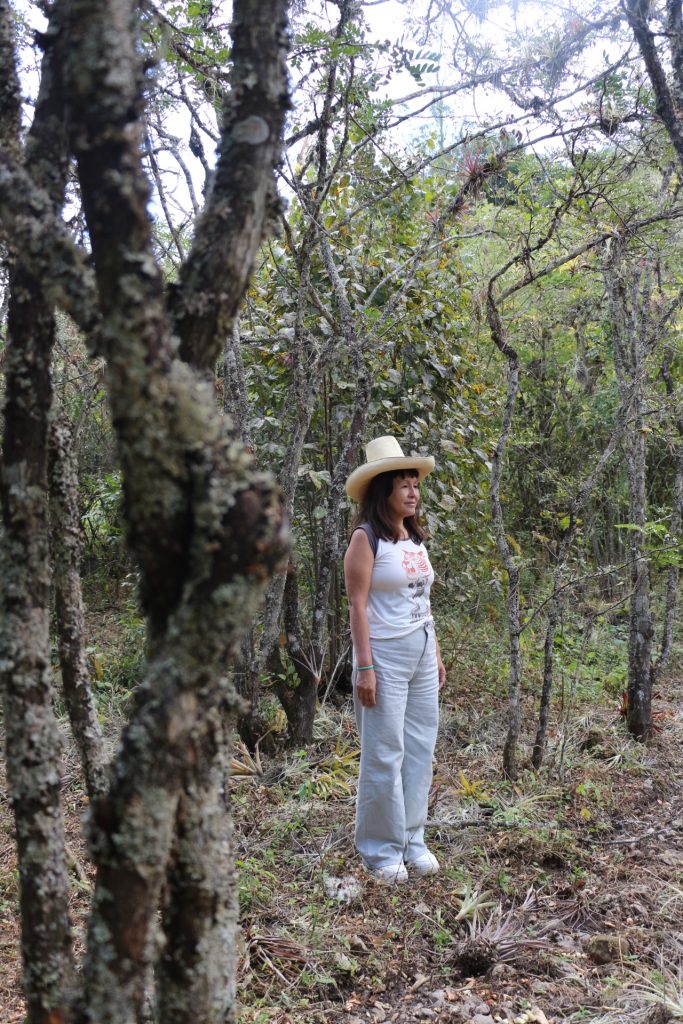
That ritual became the center from which we learned how to relate to life; it was a way of speaking to and relating with nature and with the dead. Years later, when I spent a period working with ayahuasca, the master plant reactivated in me a very strong connection with other plants and with living beings—a connection that, despite the passage of time, had not been lost. It reopened paths toward reconciling myself with the environment, at a time when both it and humanity are facing an ecological crisis.
For me, writing is a ritual of searching for answers, one that leads me into a dark forest. I move through it alert, with the hope of unraveling and lifting layer after layer of what I wish to understand. That is why history is so important within this ritual: knowing what lies at the bottom is a form of protection.
JPA: Many of Roxana’s poems hold reverence and devastation side by side— “we cut down a forest and the smoke / will fit on a postcard.” Kim, how do you translate this coexistence of awe and violence into English without aestheticizing destruction or flattening its impact?
KJ: Roxana’s indelible images lead the way. This is her gift. Her poetry is dense, three-dimensional, and layered to the max. Luckily, English is well suited to these kinds of juxtapositions. It obviously can’t do everything Spanish can, but it is supremely capable of producing a well distilled irony. Translating this coexistence is made easier by the fact that Roxana is well-versed in North American poetry, and early on she was influenced by Beat poetry among other twentieth century movements. Those pulses are still palpable and just need to be coaxed out of the Spanish and into the English. I couldn’t have flattened the impact of these images even if I tried.
“I spent a long time listening for the heartbeat beneath the heartbeat that echoes from the pages.”
– Kim Jensen
JPA: Let’s turn to your working relationship. Roxana, your work has been translated into many languages; Kim, translation is central to your own creative practice. What distinguishes this collaboration from others you’ve experienced? How did listening—to each other, to the poems, to what resisted translation—shape the work?
RC: I have translated poetry from languages like Finnish, which many consider very difficult to translate, so I am familiar with the idea of untranslatability. That experience taught me that translation is not always about finding an exact word, but about staying with what resists and finding a form that can carry it. What made this collaboration different was the patience and trust with which we worked. Kim listened carefully—not only to the poems, but to their silences and tensions—and our conversations shaped the translation as much as the words themselves. Because of that sustained listening, the process felt attentive and generous, and working together became a real pleasure.
KJ: I was fortunate to translate a poet whose books I believe should be known and read widely. This has not been a paid, professional project; it’s a mission born of enthusiasm and love, and that love is what engendered the deep listening. Our collaboration is not too different from others in the past because I typically only make long-term commitments to endeavors—whether amorous, political, literary, or pedagogical—that I am passionate about. In short, I’m either lazy or fanatical. Either way, I spent a long time LISTENING for the heartbeat beneath the heartbeat that echoes from the pages. I listened and looked for the terrible crystal—the hard and even harrowing essence that is so pure, so radiant, so unyielding, and that’s godlike and can only be described in terms of awe. As Rilke writes, “beauty is nothing but the beginning of terror.”
JPA: Kim, as a poet yourself, attentive to line breaks, breath, and silence, how does your own writing practice shape the way you translate Roxana’s poems, particularly in moments where breath is constricted or language feels overloaded?
KJ: Since age 18, I’ve lived and written in multilingual spaces fraught with the kind of power dynamics that Roxana describes in her work with refugees in Finland. When I lived in France, my roommate and many friends and classmates were Arab North African. They’d say things I didn’t fully understand until years later when I was in Palestine: paradoxically, since Palestinians speak Levantine not Maghrebi Arabic. When I was teaching English in a Palestinian high school in the Galilee, the students made it clear I was the uneducated one because of my terrible Arabic. They couldn’t take me seriously. I loved that they had yet to be programmed to believe in the ascendancy of English—until I realized it was because they had already been programmed to believe in the ascendancy of Hebrew.
The point I’m making is this: my thinking, writing, teaching, and speaking practices are always inflected with shards of multiple languages, even dialects within those languages, that reflect hyper-local histories. In my family—that includes my two adult children, Ahlam and Besan, and Zahi, who is still family—we are all inveterate punsters and neologists. We have vocabularies no one else understands—and that’s just one of my linguistic communities. Words and phrases from these multiple languages are always ricocheting through the ever-loquacious self that narrates my life. Like erratic glittering fireworks—dense, noisy, visceral—they explode, scatter, but only find a place to land in writing and poetry.
So, I think it may be less about how my writing practice shapes the translation and more about the stuff I find in my brain, which is alive with all kinds of scraps of utterances that lend themselves to Englishifying the unresolved, migratory linguistic vectors that are so characteristic of Roxana’s work. I draw on them and have fun playing around until something works.
JPA: What does it mean to entrust your poems to another person’s ear and language, especially when those poems are bound up with vulnerability, anger, and survival? Are there places where you hope the translation might strain or even fail productively?
RC: Entrusting my poems to another person’s ear and language always involves a form of yielding. I have encountered this challenge in other translation projects, where I had to accept that a literal translation does not exist, and that what matters most is preserving the spirit and tension of the poem rather than its surface exactness. I have taken that same risk myself when translating Finnish women poets into Spanish.
This is a delicate process, because the places where vulnerability, anger, and survival appear are also the most exposed. They can easily slide into melodrama or complaint. Or they can demand silence—as a form of resistance to language itself. Kim approached those fragile zones with great care. Together, we allowed the translation to strain, when necessary, without forcing resolution, trusting that not everything needs to be fully explained in order to remain alive.
JPA: Near the end of Where to Leave All This Noise, you write, “the last resort: survival,” while the poem “I looked into her eyes” from Beauty leaves us with a body “trapped in a light.” After everything you’ve written, translated, organized, and carried across borders, Roxana, what does survival through poetry look like for you now?
RC: Writing poetry in the current international order—marked by the normalization of violence, intervention, and authoritarian populism—demands a constant state of attention. I remember saying goodbye to my university friends in Lima in the 1980s with the phrase, “The struggle continues.” Survival was not a metaphor; it was a way of life.
Years later, living in Helsinki, I began to understand that the rise of populism and the presence of neo-Nazi movements could not be dismissed as marginal or ironic. I asked myself what writing should look like in such a context. Through the Sivuvalo Platform, which I founded in 2013, we chose not to write from despair or complaint, but to confront what was happening through language itself—through translation and poetry as forms of resistance.
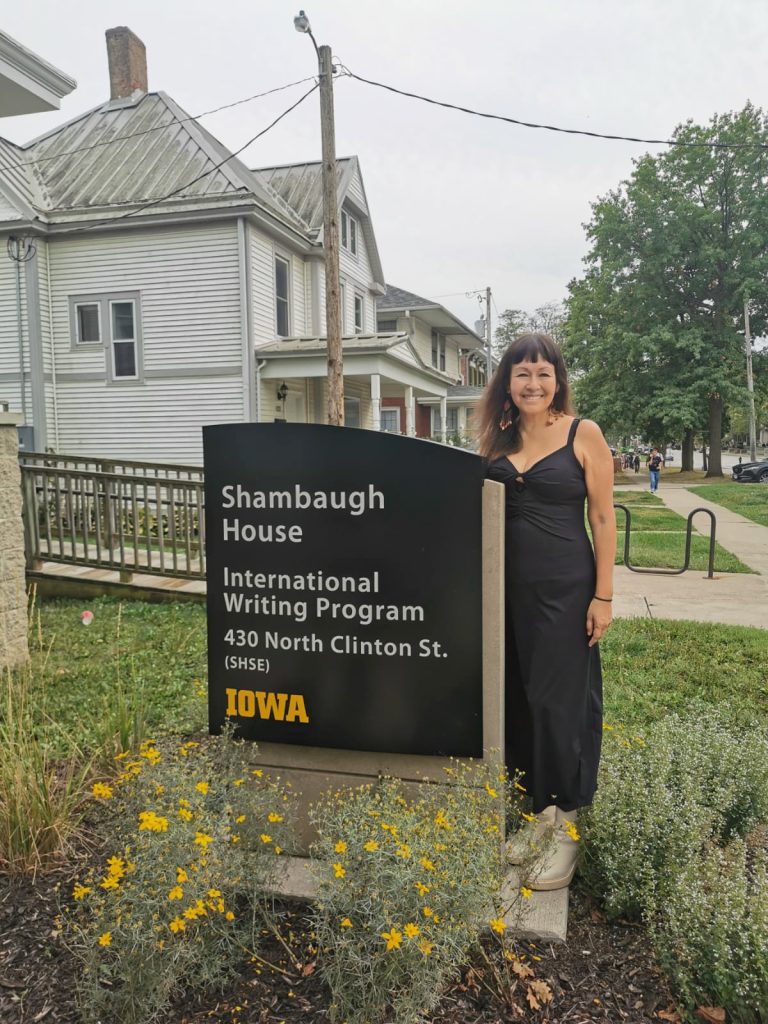
That question became unavoidable during my time at the International Writing Program, when I witnessed the violent arrest of a young immigrant from Colombia. An ICE agent beat him while shouting, “Speak to me in English.” None of us intervened; fear paralyzed us. That scene—and others I later witnessed—made it clear to me that I cannot take up a weapon. What I can do is write. For me, survival through poetry means remaining present in a world that seeks to erase certain lives and languages. Words endure; they leave marks. Writing allows me to peel away the layers of fear and violence, until I reach a place where I can still speak freely—and insist on that freedom as a form of survival.
“For me, survival through poetry means remaining present in a world that seeks to erase certain lives and languages.“
– Roxana Crisólogo
JPA: After working together across languages, histories, and geographies, how has this collaboration changed the way you listen—to poems, to politics, or to one another?
RC: I have learned that it is important to listen first before passing judgment. I do not accept what I am told at face value; I look for sources and cross-check information. I care deeply about what my translator tells me regarding the connotations of certain things I have written. Her perspective matters to me, as does her cultural translation, beyond the translation of language itself
KJ: This project has been transformational. I learned so much from this process. I had only translated individual poems before or sets of poems. Translating two full collections, back-to-back, in collaboration with other poets has been a crash course in the dos and don’ts, the ups and downs of the translation world. Going forward I’ll be better equipped with the hard-earned knowledge of how and when to listen to outside voices and how and when to sit alone and listen to the noises and the silences of the poem.
JPA: Looking ahead, what are your plans for new work? Do you imagine continuing this collaboration, and if so, what questions or urgencies are guiding what comes next?
RC: I am currently preparing a book of documentary poetry that engages with the archives surrounding the founding of the Indigenous peasant community of San Juan de Yanac, in Cajamarca, northern Peru, where my paternal ancestors were born and lived. The project moves through the community’s history and its struggles against large, landed estates, including those of the Gildemeister family and the Las Monjas hacienda.
All the strength I have, I owe to my paternal grandparents and my father. Their struggle for land, education, and recognition as citizens is something that has always accompanied me. They did not wear shoes. I wear shoes for them, as I wrote in the final poem in Beauty.
What feels urgent to me now is finding a language capable of holding those histories without domesticating them. As in my previous work, the book will be shaped by questions of unequal wealth distribution, ecological devastation, and the hierarchies that govern whose knowledge is considered legitimate. I am working with words from my childhood—words that are not Spanish—and that search is still unfolding.
For that reason, I would very much like to continue this collaboration with Kim. Translation will be central to this project, not as a final step, but as a space of listening and negotiation. Whether the book remains focused on Peru or opens toward another geography where similar struggles have taken place is still uncertain. What I do know is that this new work asks for the same trust, patience, and shared attention that shaped our collaboration—and I hope that journey can continue together.
KJ: It’s hard for me to gaze too far into the future. I have my hands full right now. I work full-time teaching academic writing and creative writing, and I am actively looking for a publisher for these two collections of Roxana’s: Beauty and Where to Leave All this Noise. I’m also sending groups of poems from the latter collection out to journals and magazines. It’s an arduous, time-consuming process. I also recently finished my own poetry manuscript called The Palestinian Moonthat has been a finalist for several poetry awards but has yet to find its publishing home. So, I am out here hustling. I wrote a novel called Forget Jerusalem that has been sitting on the back burner for far longer than I care to mention, but I haven’t abandoned it. I also recently wrote a chapbook-length protest poem that I’ll start to circulate as well. In my one quiet hour of the morning, I’ve been drafting little surrealist poems about my parents who have both passed away. I think these poems are trying to fill the void of their absence with symbolic excavations of truths that I felt but never named.
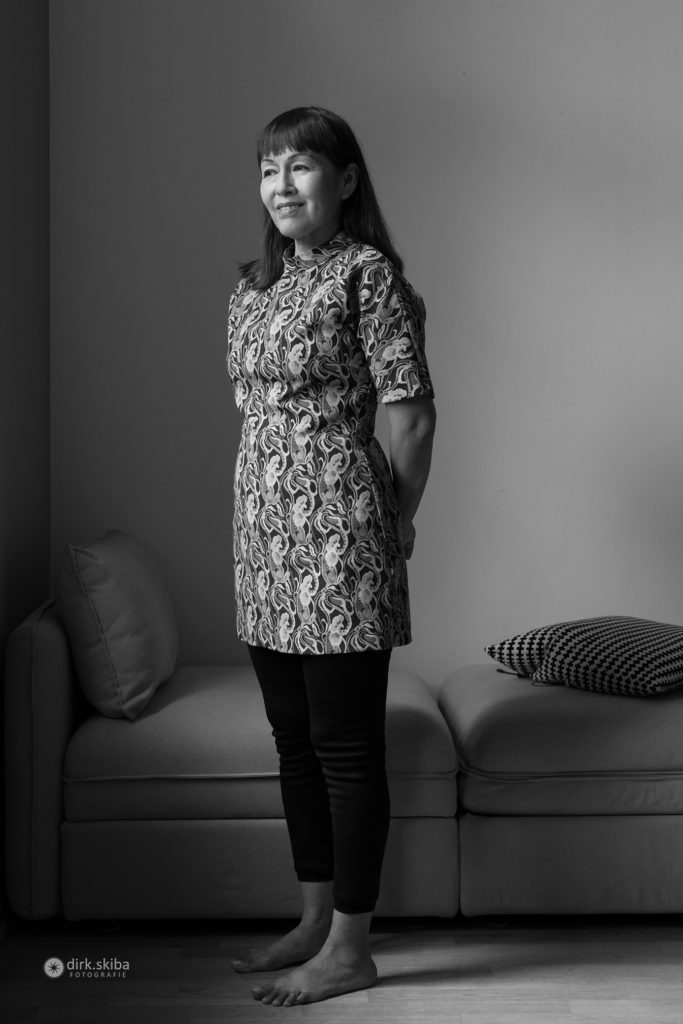
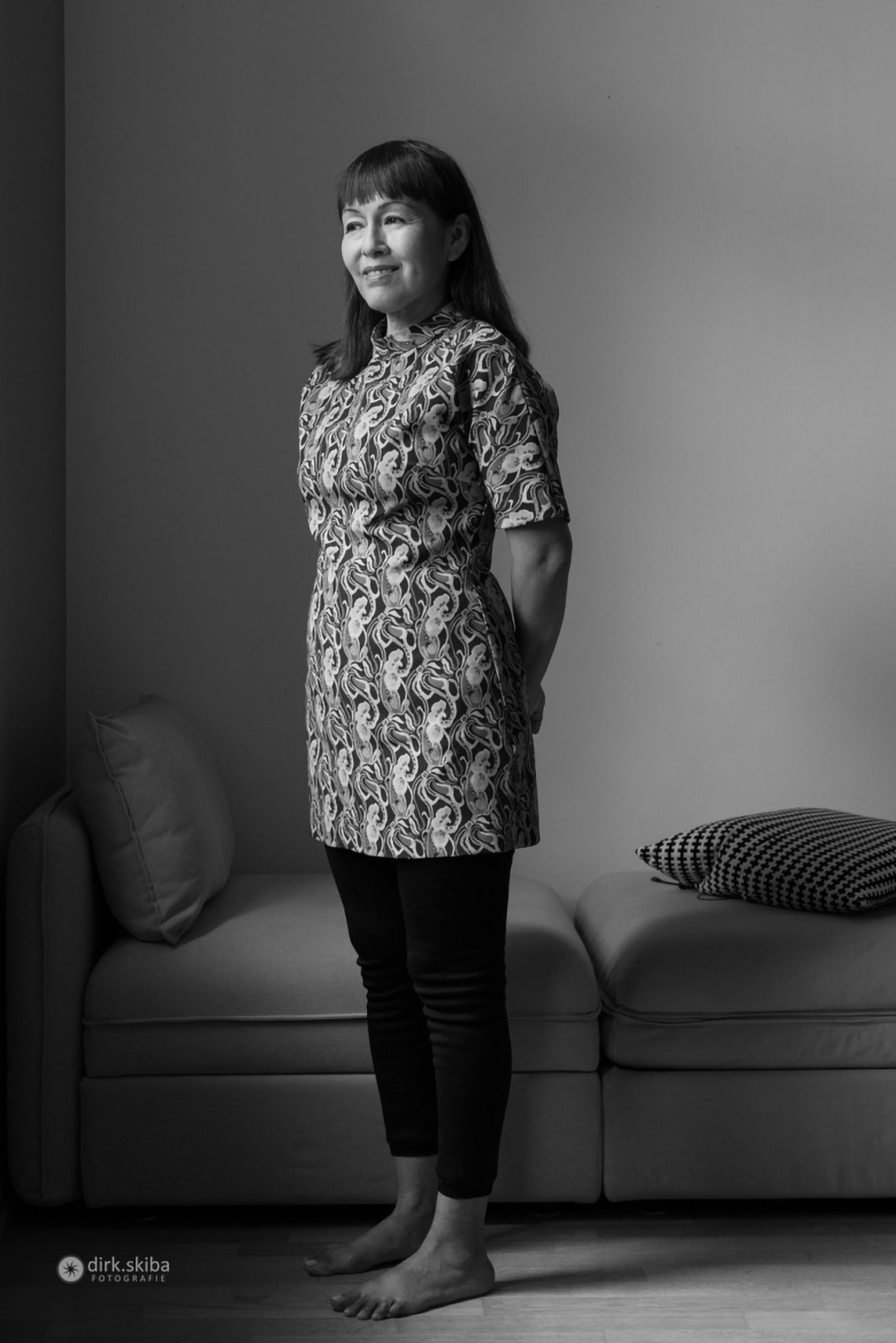
Roxana Crisólogo is a Peruvian poet, translator, and cultural worker who was recently selected to participate in the University of Iowa’s International Writing Program. She has published many poetry collections, including Animal del camino, Ludy D, Abajo sobre el cielo, whose Finnish translation was published by Kääntöpiiri in Helsinki in 2001; Trenes, republished by Ediciones Libros del Cardo, Chile in 2019; and Eisbrecher (Icebreaker). Her collection Kauneus: la belleza was republished by Ediciones Nebliplateada, Buenos Aires in 2023. Dónde Dejar Tanto Ruido (2023) was reissued by Gog y Magog Ediciones in 2025. Esta canción no termina de salir de mi boca is her latest collection, published in 2025. A selected works collection of her poems will appear in 2026, published by the highly acclaimed Fondo de Cultura Económica. Crisólogo is the founder of Sivuvalo Platform, a multilingual literature association based in Helsinki. She was president of the association of Finnish left-wing artists and writers, Kiila. Crisólogo’s literary work and projects have been supported by the Kone Foundation, Finnish Literature Exchange, Arts Promotion Centre Finland, Kari Mattila Säätiö and the Finnish Cultural Foundation. Crisólogo’s poetry has been translated into English Italian, German, Finnish, French and Swedish.
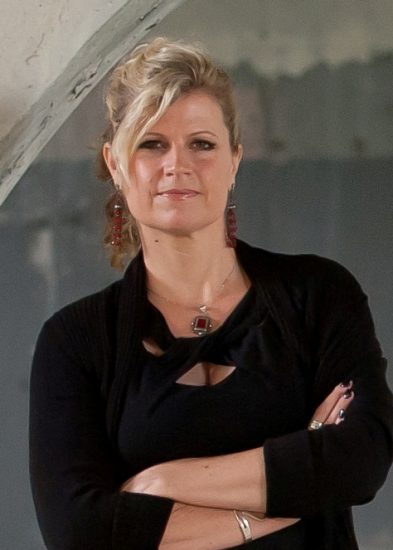
Dr. Kim Jensen is a Baltimore-based writer, activist, professor, and translator who has lived in California, France, and Palestine. Her books include an experimental novel, The Woman I Left Behind, and two collections of poems, Bread Alone and The Only Thing that Matters. She was recently a finalist for the Jean Feldman Poetry Prize, the New American Poetry Prize, Richard-Gabriel Rummonds Poetry Prize, the 2025 Washington Prize, and was a recent awardee for the Gulf Coast Prize in Translation. Active in transnational social justice movements for decades, Kim is most recently the co-founder of Baltimore-2-Palestine, a local grassroots organization. Kim’s poems, articles, and translations have been featured in many publications including, including, Gulf Coast, MQR, Boulevard, Words Without Borders, Modern Poetry in Translation, Black Warrior Review, Arkansas International, Transition: The Magazine of Africa and the Diaspora, Extraordinary Rendition: Writers Speak Out on Palestine, Gaza Unsilenced, Bomb Magazine, Another Chicago Magazine, Electronic Intifada, and many others. In 2001, she won the Raymond Carver Award for short fiction.