A Review of Tony Koji Wallin-Sato’s Poetry collection “Okaerinasai”
by LIT Managing and Poetry Editor, Richard Berwind
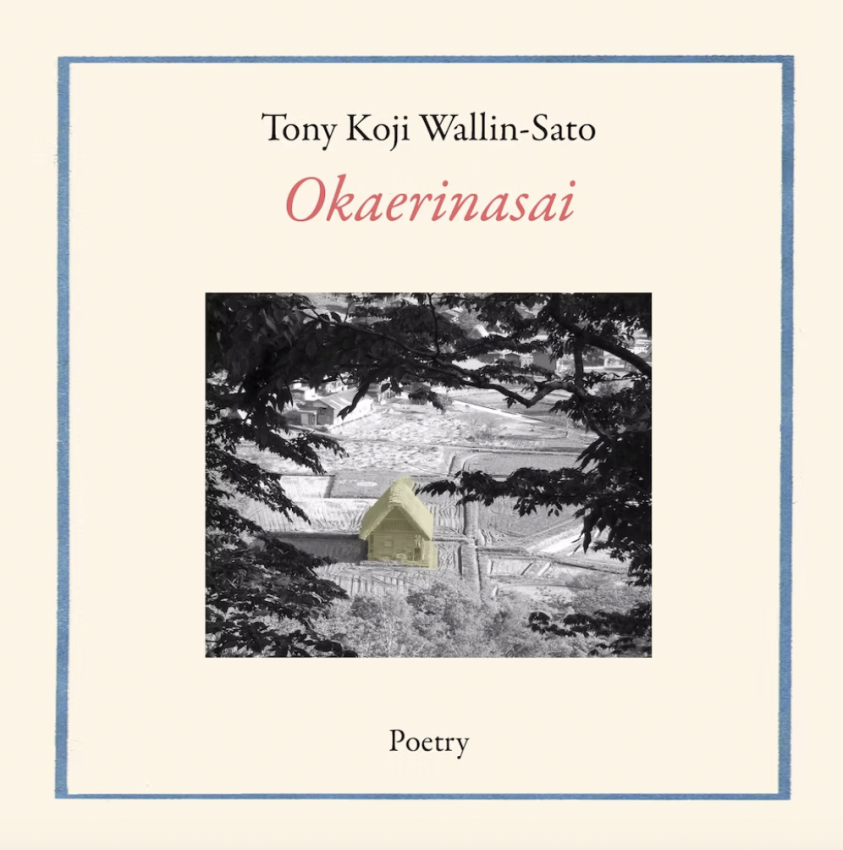
The cover of Tony Koji Wallin-Sato’s Okaerinasai depicts a black and white photo of an isolated farm recolored in an off-white ivory and surrounded by the encroaching black limbs of a tree. The square photo sits in a matte white frame with a larger blue border: a piece of art hung up on the wall of a gallery, or perhaps a home. The rest of the collection takes a reader on a journey of the singular, a journey of the collective, and the intricate relationship between both as Wallin-Sato asks us what even constitutes a home through the opening definition of his title.
The collection opens up on the lines, part prose, part poetry:
“I awoke on a plot of land that was a dream of that plot of land, born beneath incarceration and alcoholic tendencies, delirium tremors, genocide and overdoses, outlaw counterculture and a curtain drawn” (11)
There is a sense of epic narrative in these lines; there’s a dreamlike quality that one questions whether or not the poems are structurally paragraphs or just one long line broken up only by the limitations of the page. Either way, it feels as if we are one sitting around an oral storyteller ready to take us on a grand journey. Much like that of The Odyssey or the Inferno, we are guided through Western America as the narrator recounts their story at the physical and social borders of a colonialist nation, meeting friends and foes, guided by the relationships forged through difficult times and circumstances. The narrative is driven by two major structures: the Humboldt County sequence and the Gate Pick Up sequence.
The Humboldt County poems, primarily narrative, dictate the story between the writer and his experiences within the prison industrial complex and within homeless communities. It’s in these poems that we see the run-on lines/paragraphs primarily used, giving the reader a sense of running interior dialogue and the physical movement of the narrator across the county and through life. This is mirrored in the Gate Pick Up poems, where instead of a running dialogue, we pause to take in precise moments of stillness. These poems take the form of the Haibun, a hybrid form of poetry that’s part prose and part haiku. Sometimes the prose portions of these poems run uninterrupted outside of punctuation, asking the reader to begin to string together the narrative of loss and beauty, community and hardship; sometimes the prose portions are interrupted by back-slashes, forcing the reader to confront the more sharp and painful aspects of the narrator’s journey. These are followed by a series of haikus that sometimes takes a step back from the narrator and looks at the situation from a higher vantage point and other times feels so hyper-internalized that it merges with one’s own thoughts.
A major aspect of this collection deals with the writer’s relationship with Buddhism; often we disrupt the story to discuss these ancient philosophies and their impact on the narrator’s current status in incarceration or through homelessness. In the remaining poems that dot the book and break up the other two sequences, we see the narrator discuss ceremonies, rites, the cycle of all things, and loneliness. In A Felon’s Reflections on Ethics, the narrator remembers those whose lives are often forgotten or ignored by our polite society, lifting their memories out of the past and reflecting on their whole lives and not just their tragedies. It’s an incredibly tender poem, one that brought me to tears on the subway—there’s a sorrow in memory, a collection of moments that comes rushing in all at once. This poem in particular, I feel, bridges the largest gap between the reader and the writer, and acts almost like the final thesis of the poem: ethically, everyone deserves to be remembered.
The collection ends with a final Gate Pick Up Haibun, a cap to close out this journey. The writer creates the longest prose poem and shortest Haiku sequence of all the Haibuns and ends with the line “Lost are words“, concluding without any punctuation, as if drifting away into the white page. The limitations of language have perplexed society and culture for as long as we have been writing things down, unable to fully express our inner dialogues, our inner worlds, and the world around us. Poetry comes the closest, but still, we are imperfect beings, and that is what we are left with at the end of the collection. This statement acts as a release to the reader, asking us to carry on feeling, learning, relating, connecting.
*****
Okaerinasai by Tony Koji Wallin-Sato is published by Wet Cement Press, October 2024
*Read Tony’s nonfiction personal essay, My Life in Three Train Rides: Powder, Rails, Arrests, in LIT 36 here
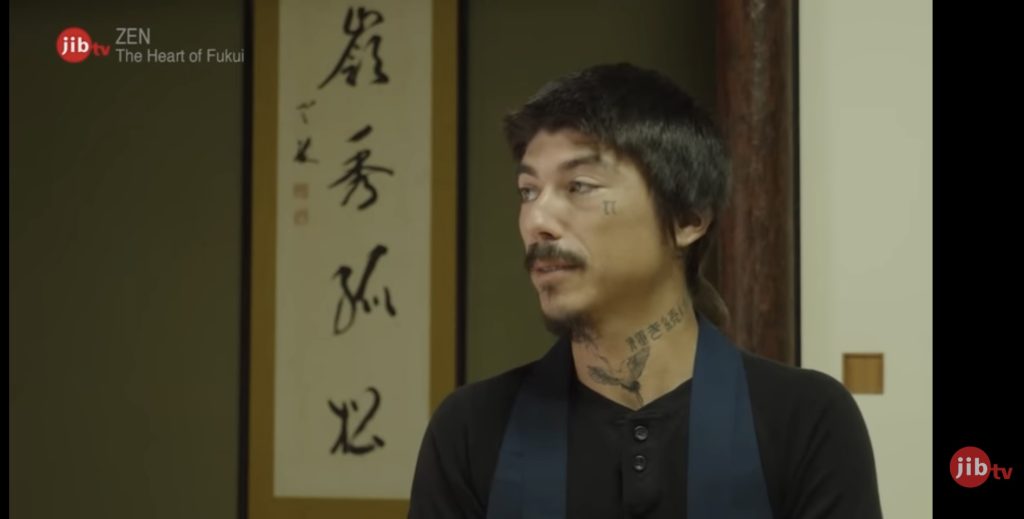
Tony Koji Wallin-Sato (he/him/they) is a multi-cultural Nisei and justice-impacted poet, scholar, and abolitionist. He is the author of the chapbook Hyouhakusha: Desolate Travels of a Junkie on the Road (Cold River Press 2021), and his first book of poems, Bamboo on the Tracks: Sakura Snow and Colt Peacemaker (Finishing Line Press 2024), was selected by John Yau for the 2022 Robert Creeley Memorial Award. His second book of poems, Okaerinasai, was published in October 2024 through Wet Cement Press and his forthcoming book, Dead End Road No Turnaround, will be published through Kaya Press 2026. He is currently a PhD student in the Communication program at the University of Washington and co-facilitator for Zen In Prisons (ZIP). His work is published various print and online sources, including Haymarket Press’s Asian American and Pacific Islander Anthology: We the Gathered Heat (2024).