A Review of Lara Chamoun’s debut chapbook “Bleeding Ghosts”
by Rebecca Endres
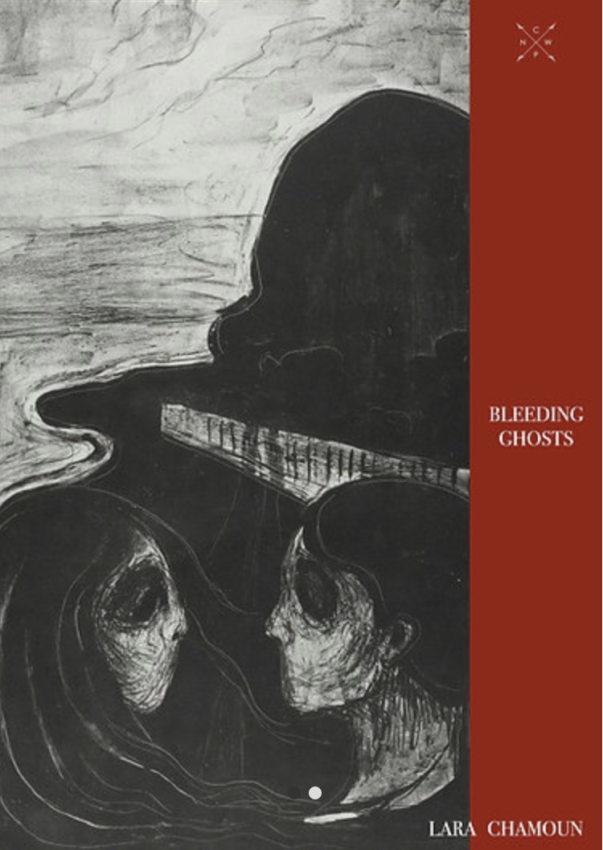
Lara Chamoun’s Bleeding Ghosts opens with the image of a scar, and thus begins one of the themes that will haunt the reader for the rest of the book. “It faded to a whisper after your first words squeezed through your throat, slimy and strangled” Chamoun writes.
Slimy and strangled indeed: the collection, written primarily in second person and featuring characters who would feel at home in an Edgar Allen Poe short story, displays again and again the difficulty of voicing things: hurt, elation, loneliness. And as the very first prose poem suggests, even when a speaker finds their voice, it is no guarantee that they will be heard. All too often in this melancholy book, cries for help go unanswered.
That said, the book doesn’t drag and there is no self-pity here. Chamoun infuses humor and tireless fantastical imagery to keep each poem alive. Almost entirely composed of short prose poems, each page is a small vignette contributing to a larger story with several characters, including a mannequin, a mysterious robotic “Watcher,” and an omnipresent mirror. Over the course of the collection, they will collide with one another, sometimes acting as companions to create a respite from loneliness.
Buoying all these characters and their interactions is the primary “you,” a character most defined by their wounds, as is illustrated early on in “The Taste of Metal:”
“You bit your tongue and a coppery taste flooded you. You were five, maybe six, and you paused with the pain, clamped your mouth shut, and remained in your confusion as the metallic tang lingered and the ache spread into it You pressed your tongue to the roof of your mouth, ran it over the uneven gaps of emerging teeth and the gaps where some had fallen out, from when you tripped in the grass or knocked your head on an easel. The scar bristled because it remembered too.”
We are constantly voyeurs to the emotional turmoil tied up in this character, who feels young but still constantly looks back on their childhood, wanting to reclaim the child they were. For protection? To escape the violence of adulthood? It’s never quite clear. All we know is that pain follows this character and shapes them.
Another poem that lays bare many of the tropes and traumas of the collection is titled “The Funhouse,” in which our character wanders through a metaphorical house of mirrors, past and present selves reflected and distorted:
“Before the scar there was a bit of wonder and a bandage covering a tiny open wound, there was the tear-streaked face of someone who hadn’t learned the art of crying silently or collecting bones or kissing ghosts […] you’re angry because you can’t seem to pull the child from the frame. There’s nothing you can do except move forward and devour it.”
Is it a threat or an enticement to say that this little bit of auto-cannibalism comes only about halfway through the book? Those with weaker stomachs need not worry; there are moments of tenderness too: dressing up a mannequin each day and painting her nails different colors, riding a pink bicycle, kisses shared between living beings and ghosts.
Calling to mind everything from Alice in Wonderland to cyberpunk dystopias where people take AI machines as lovers, Bleeding Ghosts bears the angst that every teen has felt (preferably while screaming along to My Chemical Romance or Good Charlotte) and revels in it. These are not acne scars that Chamoun invokes over and over: they are the deep holes dug into our chests when we free-fall from childhood into adolescence, the stretch marks that we bare like tiger stripes through adulthood. They are the fears and intrusive thoughts we see behind our eyelids when we lie in bed, trying to fall asleep.
Or, summed up in “Knocking” with the dry irreverence that balances the book’s morbid tone and wry humor perfectly, our character introduces themself:
“I’m your new neighbor. I’m wondering if you’d like to discuss the peculiarities of living next to someone who is struggling to understand their own existence.”
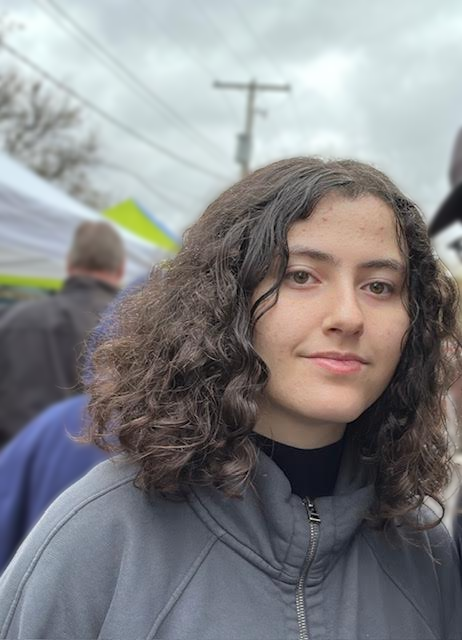
Lara Chamoun is a student from Toronto, Canada. She is the author of the poetry collection Bleeding Ghosts (Cathexis Northwest Press) and her work has appeared or is forthcoming in the Denver Quarterly, LIT Magazine, PRISM International, Queen's Quarterly and elsewhere. She was a 2024 Adroit Summer Mentorship mentee in fiction and reads for Eucalyptus Lit.
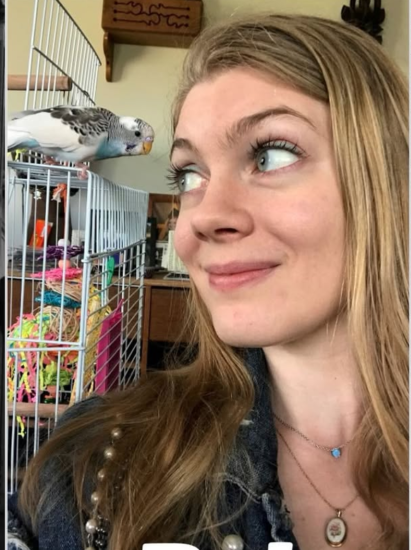
Rebecca Endres is co poetry editor for LIT Magazine and a Brooklyn-based writer. She was the 2018 recipient of the MFA Poetry Chapbook contest at The New School, and her writing has been published in Thin Air, In Parentheses, The Best American Poetry blog, and others. When she’s not reading, she can be found wandering the city in search of friendly bodega cats.