Global Voices: A conversation with Iranian poet Ali Asadollahi
by LIT Translation Editor J.P. Apruzzese
Introduction
For more than two decades, Iranian poet, translator, and editor Ali Asadollahi has been quietly expanding the possibilities of contemporary Persian poetry. The author of six poetry collections, he has written across free verse, haiku, visual poetry, and other experimental forms, guided by a restless commitment to exploration rather than any single aesthetic program. Alongside his own work, he has devoted himself to translation, introducing contemporary world poetry to Persian readers while helping bring Persian literature into conversation with audiences beyond Iran. In LIT 43, we’re pleased to publish his translations of poems by Hamed Soleiman Tabar alongside this interview—a pairing that reflects both his own remarkable literary practice and his enduring commitment to carrying voices across languages and borders.
We spoke with Asadollahi at a particularly fraught moment. Much of the world has come to know his name through news of his recent imprisonment in Iran, and the PEN open letter urging his release. Yet one of the most compelling aspects of this conversation is his resistance to being defined by that experience alone. Again and again, he returns to poetry itself: to questions of form, perception, memory, and the strange ways language continues to work under pressure. Rather than seeing art as a vehicle for political messaging, Asadollahi argues that its deepest responsibility is to transform experience—to create forms that allow us to encounter reality differently, rather than simply describing it.
Our conversation ranges widely, from the legacy of classical Persian poetry to the challenges facing contemporary writers under censorship, from the painstaking craft of literary translation to the role of experimental writing in renewing poetic language. Throughout, Asadollahi speaks with remarkable clarity about the relationship between aesthetics and ethics, insisting that formal innovation is not a retreat from the world but another way of engaging it. His reflections on composing poems from memory while held in solitary confinement, on translating poetry line by line, and on sustaining independent literary communities in Iran reveal a writer whose commitment to art has remained unwavering even under extraordinary circumstances.
The result is a conversation that moves well beyond the headlines. It offers readers not only an intimate portrait of one of today’s most thoughtful Persian poets, but also a window into the richness, complexity, and ongoing evolution of contemporary Iranian literature. Above all, Asadollahi reminds us that poetry is not simply a record of history—it is one of the ways we learn to perceive it anew.
John P. Apruzzese (JPA): Many readers will encounter this interview in the context of your recent imprisonment. Can you tell us about the circumstances surrounding it, and how confinement has altered your relationship to language, memory, and the act of writing itself?
Ali Asadollahi (AA): I’ve always shied away from the label of “activist.” There is a significant difference between being a political activist and being politically active. I have tried to define myself, and to be defined, not as a political prisoner who happens to be a poet, but as a poet who has also been a political prisoner.
That distinction matters because my primary commitment is to aesthetics rather than expression. For me, how to say has always mattered more than what to say. The task of art is not merely to spread awareness; documents, reports, and testimonies already do that. Art deepens awareness. It allows us to grasp a truth rather than simply receive information about it. Through repetition, eyes and ears become numb. People are reduced to statistics, and words lose their weight. Poetry and metaphor can elevate a tragedy from a headline into an aesthetic experience capable of shaking an audience. A successful work of art often lasts much longer, and on a much deeper level, than the daily news. Political experiences and concerns, for me, are not an end in themselves but raw material. The challenge has always been how to reshape that experience through art.
Seen through an aesthetic and social lens, the boundary between being inside prison and outside it becomes less distinct than people imagine. In Iran, when an imprisoned person is released, we often say, “Welcome to the larger prison.” For years, while struggling within this larger prison, my mind kept returning to the same question: how can these realities be transformed into poetry?
When I was arrested, placed in detention, and subjected to interrogations and intense pressure, that preoccupation only became stronger. The mental act of writing turned into a way of maintaining focus and enduring the viciously slow passage of time. Once, an interrogator asked me, “Aren’t you tired of solitary confinement? Don’t you want to stop being stubborn?” I told him that I was genuinely grateful to be a poet because I could carry my primary tools of creation anywhere: words. Had I been a painter or a filmmaker, the inability to create would have driven me insane.
Prolonged confinement alters your most fundamental mental concepts. When all your worldly possessions have been reduced to a towel, a mug, a toothbrush, two blankets, and enforced solitude, you begin to question and redefine the nature of poetry itself. In recent years, I have become deeply engaged with experimental, concrete, and visual forms of writing. I had grown accustomed to an aesthetics that depended heavily on seeing words on a page. Yet confinement forced me to discover what remained of poetry when the page itself disappeared.
“I have tried to define myself not as a political prisoner who happens to be a poet, but as a poet who has also been a political prisoner.” —AA
Inside a cell, writing ceases to be merely a literary process and becomes an abstract, architectural one. In Iranian security wards, prisoners are deliberately cut off from the outside world, often for weeks or months at a time, denied paper, pens, and any meaningful means of communication. This isolation is intended to exert intense psychological pressure. Under these conditions, language loses its immediate communicative functions and becomes raw material for metaphorical thought. Memory changes its function as well: it becomes the only available medium.
You begin arranging words on a page that does not exist. In that suspended time, a poem is composed line by line in the mind and repeated like a spell so it will not disappear. This endless repetition serves as a rigorous form of editing. Less essential words naturally fall away. Only what is strong enough to be engraved in memory remains. Before a poem can narrate anything, it constructs an inner structure, a space within which you can take shelter.
Later, this discipline was subjected to an even darker test. The days following the assassination of the Supreme Leader this February brought a sudden transformation in the atmosphere of the cells. Threats of execution became commonplace. Blindfolded and handcuffed, we were loaded onto a bus whose windows had been completely blacked out with plastic. We were driven to a remote detention center in the desert outside Tehran.
For days, we lived with the agonizing conviction that we had been brought there to disappear. I was in a state of profound shock. In those days, as my circumstances were reduced to almost nothing, I found myself moving naturally toward the shortest poetic forms. I returned to my earlier experience of translating Death Haikus into Persian and began composing them in my head. As even the mental structure of longer poems became difficult to sustain, I gravitated toward forms that could survive in memory with the fewest possible words. Paradoxically, these shortest poems demanded the greatest patience; the completion of a single haiku-like or Tanka piece often took hours or days.
I did not know whether I would ever be able to pass them to anyone else, or whether anyone would ever read them. Yet I held onto them. I composed them simply to endure. For me, even this act remained inseparable from the search for form.
All I have: patience
What I lack, too
A sycamore
(March wind)
JPA: Thank you for sharing this harrowing experience with us. We’ll touch more on the situation for writers and artists in Iran later in this conversation. For the moment, let’s talk about your creative work. You have published six books of poetry over the course of more than two decades. Looking back across that body of work, what concerns or questions have remained constant, and where do you see the greatest shifts in your poetic practice?
AA: The one thing that has remained constant across the six poetry books I have published over the past twenty years is not a particular form or style, but a commitment to exploration.
In Iran, creative writing has never developed as a significant institutional tradition. While universities offer extensive literary education, poets often find themselves working either within established aesthetic models or in reaction against them. From the beginning, I was wary of settling too quickly into any single approach. There is a strong emphasis in Persian literary circles on developing a poet’s “personal language,” and while I understand the value of that idea, I have often felt that it can encourage writers to mistake early certainty for artistic maturity.
Early on, I realized that there was no workshop for learning poetry through contemporary creative writing practices and pedagogy. Rather than waiting for one to exist, I built my own: a one-person workshop, a private laboratory for literary experimentation. It became the foundation of my poetic explorations. Rather than treating experimentation as a temporary stage on the way to a stable style, I came to see it as a way of keeping poetry intellectually alive and resistant to habit.
Across these six books, I have worked in classical and contemporary registers, long and short forms, free verse, haiku, visual poetry, and various hybrid experiments. Yet I have never thought of authenticity as loyalty to a single style. What creates continuity in a body of work is not a stable poetics but a set of recurring concerns, images, and questions that reappear in different contexts. Those elements allow readers to recognize a deeper coherence even when the modes of expression themselves change.
The greatest shift in my practice has been my understanding of what formal exploration makes possible. When I was younger, it was driven largely by curiosity. Today, I see it as a necessity. Different poetic ideas generate different formal demands. Form does not merely organize experience; it alters what becomes visible within it.
JPA: Persian poetry carries a remarkably rich inheritance, from classical traditions to modernist experimentation. How do you position your own work in relation to that lineage?
AA: It is true that Persian poetry offers one of the richest and longest continuous literary traditions in the world, and I believe that Persian poets have much to gain from knowing that tradition. For years, I devoted myself to studying classical Persian poetry: its prosody, rhetoric, formal structures, and technical resources. Many fellow poets advised me against it. Since my primary work was in free verse and experimental poetry, they saw little value in devoting so much time to forms they regarded as historically exhausted.
I never accepted that argument. A literary tradition and rhetoric spanning more than a thousand years cannot be fully internalized through reading alone. I turned to writing not merely to imitate its forms but to inhabit them from within, to discover the range of poetic resources embedded in the Persian language and the creative horizons they open. Persian classical poetry possesses an extraordinarily intricate musical system of meter, rhyme, and formal conventions. Engaging these traditions through writing allowed me to develop a richer sense of the music of Persian: how to shape it, control it, and make it more resonant in the act of creation.
This conviction was strong enough to shape my academic choices. For graduate study, I chose Persian Language and Literature at the University of Tehran, one of the principal centers for the study of the Persian classical tradition. I did so not because I wished to become a literary scholar or essayist, but because I believed that contemporary poetry becomes richer when it remains in dialogue with the traditions from which it emerges.
By the way, there is something crucial: Publication and practice are not the same thing. A poet is defined not only by what they write, but by what they choose not to present. There is a difference between leaving something behind and never having engaged with it. A decision to move beyond something carries greater weight when it comes from familiarity rather than ignorance. Not every path needs to become part of a public body of work. Some works exist simply to deepen one’s relationship with language and to cultivate resources that later find expression elsewhere in a poet’s work.
“You begin arranging words on a page that does not exist. A poem is composed line by line in the mind and repeated like a spell so it will not disappear.” —AA
JPA: Persian poetry has long been shaped by spiritual, mystical, and philosophical traditions, whether through direct engagement or creative departure from them. What role, if any, does spirituality play in your own poetic imagination?
AA: Mysticism has profoundly shaped Persian poetry. Its influence extends beyond themes and imagery into the very structure of poetic expression. For centuries, Persian poems have often been organized around an act of address directed toward a figure whose identity remains concealed. This presence may be human or divine, earthly or transcendent, and much of the poem’s resonance emerges from that indeterminacy. The beloved often appears without a clear history, setting, or independent perspective. Even in modern Persian poetry, where the addressee has become more tangible and worldly, an aura of distance and idealization frequently continues to surround the person being invoked.
My own poetic imagination developed in response to different questions. While reading Persian poetry, I became curious about elements that seemed less prominent within the tradition: descriptive poems, sustained attention to places and objects, and perspectives not centered on a speaking “I.” I was particularly struck by the prevalence of poems structured around a lyrical voice oriented almost entirely toward an often undefined beloved, a perspective through which the world was perceived chiefly in relation to desire and union rather than in its own material and historical specificity.
I became increasingly interested in how a poem might generate meaning through attention rather than yearning, through depiction instead of direct address. Instead of orienting the poem around an unattainable presence, I found myself drawn to the observable world that itself became a source of fascination, not merely as a vehicle for symbolism.
For that reason, spirituality has never occupied a central place in my poetry. This is not because I dismiss spiritual experience, but because my imagination has generally been drawn elsewhere.
From the beginning, I felt that Persian love and mystical poetry had already achieved some of their highest accomplishments in the hands of extraordinary poets. Instead of entering a territory so thoroughly explored, I found myself drawn to paths that seemed less traveled. My distance from that tradition is less a rejection than a reorientation of attention: away from idealized figures and toward the world that stands before the poet’s eyes.
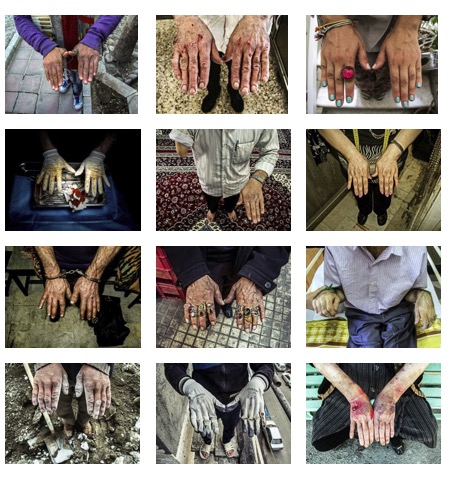
“Hand Portraits” by Ali Asadollahi
JPA: Your poems often inhabit spaces of uncertainty, memory, and reflection. Do you see poetry as a means of searching for meaning, or perhaps as a practice of dwelling within questions that cannot be answered?
AA: I have always been somewhat skeptical of the idea that poems exist to deliver answers. Meaning is not a fixed destination that poetry reaches and then presents to the reader. More often, poetry creates the conditions under which meaning can emerge. A poem is not a conclusion but an encounter: a meeting between language, perception, memory, and experience.
For that reason, I do not see poetry primarily as a search for definitive meaning. Nor do I think its value lies simply in dwelling within uncertainty. What interests me is the process through which language discovers its own way of thinking. As I have come to understand it, form is not simply a vessel for thought but one of the ways thought discovers itself. Often, I begin writing without knowing exactly what I think. The poem becomes a space of inquiry, and its formal decisions become part of that investigation.
Different questions generate different formal demands, and each structure illuminates certain dimensions of experience while leaving others in shadow. In that sense, poetry is less concerned with providing answers than with creating new ways of seeing. The visible world is far stranger and more complex than our habitual descriptions of it, and the task of poetry is often to renew our attention to that complexity.
“Meaning is not a fixed destination. More often, poetry creates the conditions under which meaning can emerge.” —AA
This may also explain why questions about poetry itself repeatedly return in my work. Again and again, I find myself asking what poetry is, what it can do, and where its boundaries lie. These are not questions I expect to answer once and for all. They remain productive precisely because they resist final resolution. Each new work approaches them from a different angle.
I sometimes think that philosophy seeks solutions to questions, while poetry seeks forms adequate to exploring them. Some of the poems that have stayed with me most deeply are those built around a question rather than an answer. Their achievement lies not in resolving uncertainty, but in giving it a memorable form.
If poetry offers meaning, it does so indirectly, through the relationship between perception, language, and form; not as something the poem arrives at, but as something that comes into being through the poem itself.
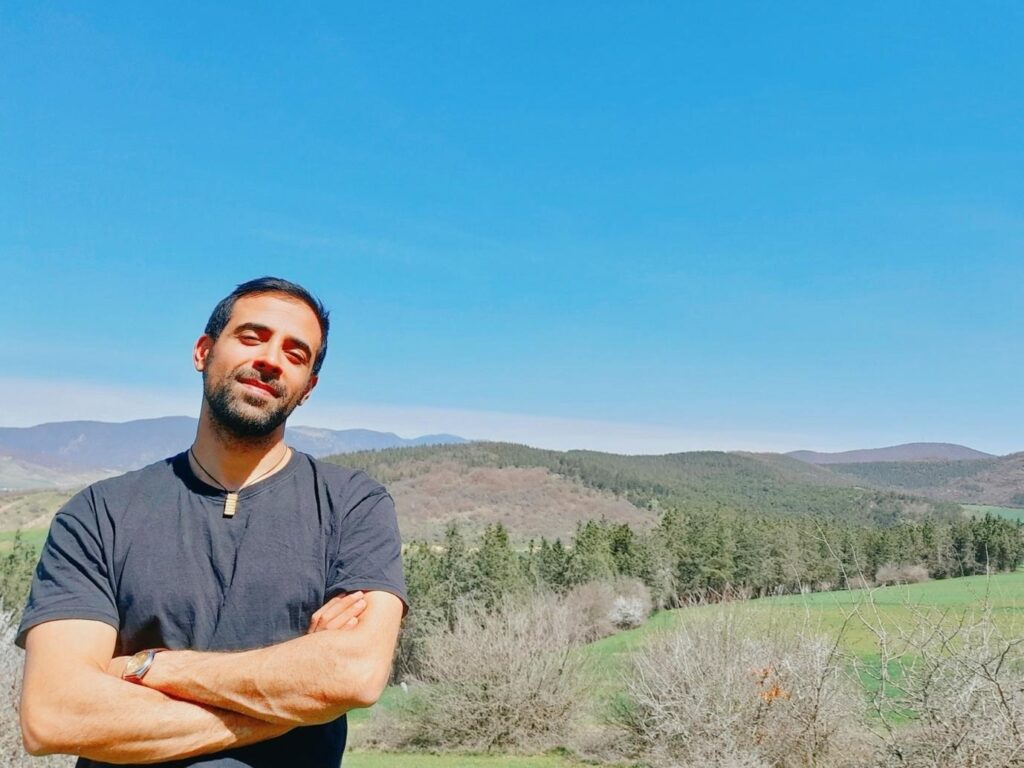
JPA: Having written and published across two decades of significant social and cultural change in Iran, what transformations have you observed in the country’s literary landscape?
AA: If I am to answer honestly, the most significant transformation I have witnessed over these two decades is not the emergence of new literary waves, but the gradual erosion of the institutions that once sustained serious literary life. Independent poetry and fiction journals have largely disappeared, while many of those that remain have become dependent on funding channels tied, directly or indirectly, to state ideological institutions. As economic, political, and cultural power has become increasingly concentrated within networks linked to the armed forces and security apparatus, the space available for independent and dissident literary activity has steadily narrowed.
The consequences are visible not only in literary institutions but also in poetry itself. Much of the most visible contemporary poetry today remains attached to a limited number of literary models established in the 1960s and 1970s. Tradition, of course, is not the problem. Every literature depends on it. The problem begins when the conversation with the past gives way to the repetition of established formulas. The absence of robust literary workshops, influential independent journals, creative writing programs, and other spaces of sustained critical exchange has only reinforced this tendency.
Censorship contributes to this condition in a less obvious way. It does not merely restrict subjects; it shapes formal choices. Writers are often pressured, implicitly or explicitly, to rely on modes of expression that have already been tested and deemed acceptable. This creates a peculiar paradox: at a time when Iranian society is undergoing profound transformation, the literary means available for responding to that transformation grow increasingly narrow. Important poets continue to emerge, but often in relative isolation, outside state-affiliated journals and workshops, and without access to sustained critical communities. As a result, some of the most interesting voices remain marginal, while ideologically sanctioned, politically safe, and market-driven forms continue to dominate public visibility.
JPA: As both a poet and a translator, you inhabit two distinct yet overlapping literary identities. Do you experience translation as an extension of your own writing practice, or as a fundamentally different form of attention?
AA: I experience translation as both a discipline of close reading and a continuation of my work with language.
For me, translation resembles jewelry making more than ordinary conversation. When we speak, decisions are often immediate and fleeting. Translation operates on a different timescale. It allows you to spend hours with a single line, weighing every word, testing alternatives, and considering possibilities that might otherwise pass unnoticed.
What I value most about translating is this opportunity for sustained reflection. A poem that captures my imagination can occupy me for days or even weeks. The task is not simply to transfer meaning from one language to another, but to search for the most precise equivalent available, drawing on one’s knowledge of language, literature, and a wide range of linguistic resources. Every choice must justify itself.
In that sense, translation is one of the most rigorous forms of reading I know. It is a way of taking a poem apart and understanding how it works. Many of the things I have learned about poetry have come not from criticism or theory, but from this slow and meticulous engagement with the work of other writers.
The situation is somewhat different when I translate my own poems. There, I allow myself a degree of freedom that I would never permit when translating another poet. If necessary, I may alter a line, rearrange a passage, or rethink a particular formulation in order to make the poem work more fully in English. With another writer’s work, however, that freedom disappears. My responsibility is to remain accountable to the original poem and to the choices its author made.
“Translation is one of the most rigorous forms of reading I know. It is a way of taking a poem apart and understanding how it works.” —AA
At the same time, translation has never been only a private exercise for me. Persian poetry contains many remarkable poets and individual poems that deserve a wider readership than they currently receive. Translation allows me not only to learn from literary traditions beyond Persian, but also to introduce readers to voices that might otherwise remain inaccessible to them.
For that reason, I do not see translation and writing as entirely separate activities. They require different kinds of concentration, but both emerge from the same fascination with language. One involves shaping language into a poem of one’s own; the other involves entering an existing poem deeply enough to reimagine it in another language.
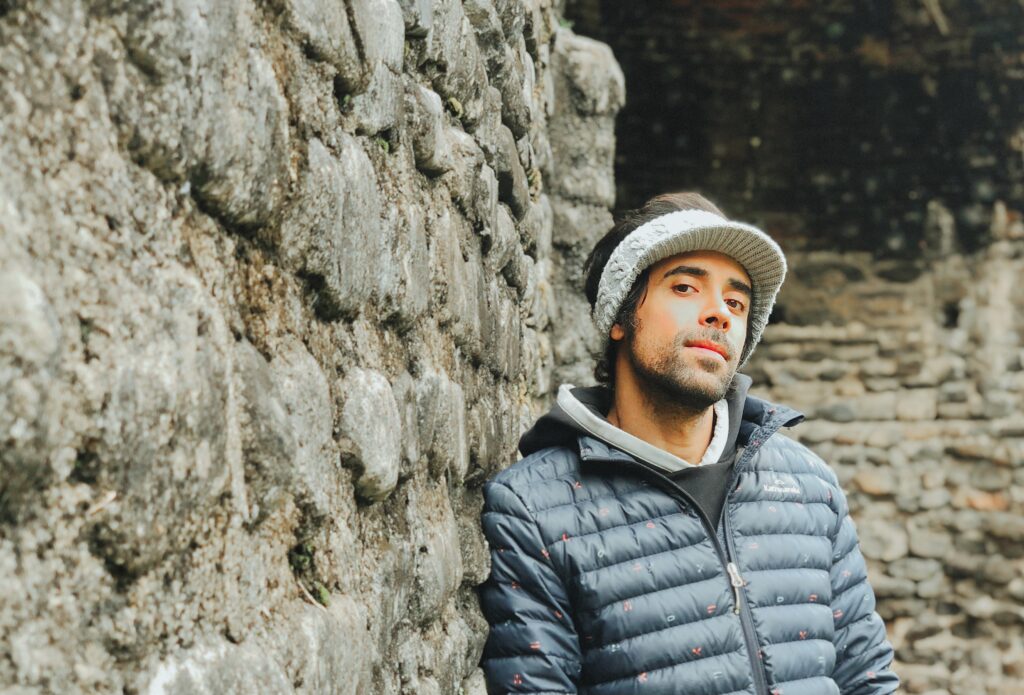
JPA: Much of your work has crossed linguistic, cultural, and national borders through translation. What do you hope remains intact when a poem leaves Persian and enters another language?
AA: I am not sure that I think about translation in terms of preserving one specific element. Rhythm, tone, imagery, ambiguity, and cultural context all matter, of course. But before any of those things, I find myself responding to something more difficult to define.
I have never chosen poems for translation by asking whether they are “translatable.” If a poem strikes me as genuinely successful, I assume that it can live in another language as well. Some aspects will inevitably change. Certain associations may be lost, rhythms may shift, and cultural references may require notes or contextual explanations. Yet none of these things, in themselves, determine whether a poem remains alive.
What I hope survives is what I can only describe as the poem’s inner life. I do not have a precise definition for it, and I am not sure that one is possible. But I suspect that anyone who has spent years reading and writing poetry knows what I mean. Every strong poem possesses a certain vitality that announces itself immediately.
To borrow an analogy from my previous answer, a skilled jeweler can often recognize the quality of a finely made piece at first glance. If it catches the eye, they look closer. They examine the details, the proportions, the craftsmanship. Poetry often works in a similar way. Long before we begin analyzing technique, something in the work convinces us that it is alive.
For me, the ultimate task of translation is to carry that vitality across languages. The technical elements matter because they contribute to it, not because they are ends in themselves. A translator may be able to explain historical references, political circumstances, or cultural symbols through notes and introductions. Such things can help readers approach a work from another tradition. But the transformation of a poem into a poem in a new language is a different challenge altogether.
That is one reason why I believe poetry translation is especially suited to poets. More than anyone else, they tend to recognize when that inner life is present and when it has failed to survive the journey. The goal is not to reproduce every feature of the original, which is impossible, but to ensure that what made the poem worth translating in the first place continues to exist on the other side.
JPA: Many international readers encounter contemporary Iranian literature through political headlines. What dimensions of contemporary Persian poetry do you feel are most often overlooked or misunderstood abroad?
AA: One of the most common misunderstandings is the assumption that contemporary Iranian poetry can be understood only through politics: censorship, oppression, terror, and exile. In a country that has lived for nearly half a century under an Islamic regime, it would be unrealistic to expect freedom, one of the foundations of modern life, not to become a central concern for writers.
At the same time, reducing contemporary Persian poetry to this single dimension obscures much of what is happening within it. Alongside poems concerned with freedom and social justice, there are poets exploring nature, perception, memory, language and modern love. These aspects of Persian poetry often receive far less attention.
I would also argue that even some of our finest political poetry has not been introduced adequately. Too often, works are selected because they confirm existing expectations of a third world suppressed poet rather than because of their literary achievement. As a result, international readers of Persian poetry are sometimes presented with repetitive images and narrations that overlook formal innovation, aesthetic diversity, and imaginative range.
What I hope readers discover is that contemporary Persian poetry is not a single story but a diverse and evolving literary field. The struggle for freedom is undoubtedly a notable part of that story, but it exists alongside many other artistic and intellectual concerns that are equally essential to understand the richness of Persian poetry today.
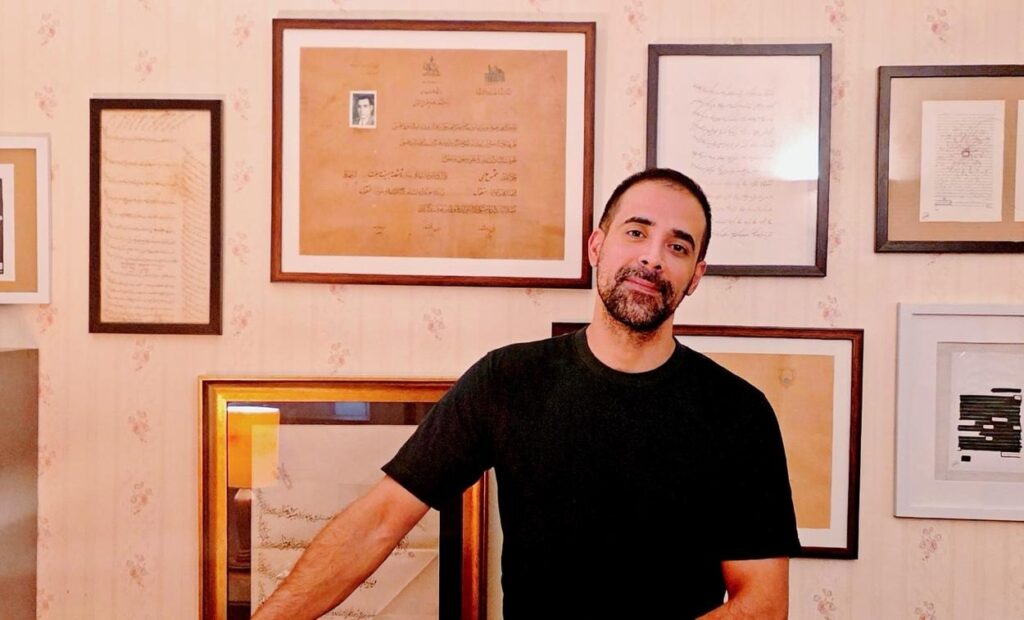
JPA: As a member of the Iranian Writers’ Association, you belong to a literary community with a long history of defending freedom of expression in the face of censorship and repression. How do you understand that legacy today?
AA: Founded in 1968 by some of the most important figures of modern Iranian literature, the IWA occupies a unique place in the country’s cultural history. Few literary organizations in Iran have paid such a high price for defending freedom of expression. Its members have faced censorship, imprisonment, exile, and even assassination. Some of those losses touched me personally. That legacy deserves recognition and respect.
One of the Association’s greatest strengths has been its principled defense of freedom of expression. In confronting censorship and defending writers’ rights, it has historically acted in a non-partisan manner, speaking on behalf of Iranian writers regardless of their political orientation, institutional affiliation, or membership status. Whether writers have been members of the Association or not, it has often defended their right to speak and publish freely.
At the same time, I do not believe any institution should be immune to criticism because of its history. As someone who has been a member for ten years, I have seen that over the past decade, IWA has become increasingly closed and ideologically homogeneous. Its membership, public voice, and official statements are overwhelmingly shaped by left-wing political and intellectual traditions.
The issue is not that left-wing writers are members of the Association; they have every right to be. The problem is that an organization called a Writers’ Association should not, in practice, become a club of writers from a single political milieu. When membership remains highly restrictive and new members are drawn largely from existing networks, many writers are effectively excluded from membership and opportunity to participate in the Association to shape its future.
This problem is reinforced by institutional practices. Communication with the wider literary community remains limited, and even basic infrastructure, such as an accessible website, has long been absent. The Association’s average age is also strikingly high, reflecting a broader difficulty in incorporating younger generations of writers and opening space for new literary voices.
The state pressures facing independent cultural institutions in Iran are real and should not be underestimated. Yet an organization founded to defend freedom of expression must also find ways to renew itself. Security concerns, however understandable, should not become a permanent obstacle to transparency, broader membership, and generational renewal. Without the active participation of younger writers and a wider diversity of intellectual and aesthetic perspectives, IWA risks becoming the guardian of an important legacy rather than a living and evolving literary institution.
JPA: The history of modern Iranian literature includes writers who have confronted censorship, surveillance, imprisonment, and exile. Do you feel yourself in conversation with that tradition, and if so, how?
AA: Yes, I do. What draws me to those writers is not only what they endured, but the ways they turned pressure, fear, and historical upheaval into art. I am interested in the forms they invented, the paths they forged, and the limits they confronted.
But a living tradition cannot survive through imitation. Each age demands its own language and imagination. I read those writers not to follow in their footsteps, but to continue the journey from a different point in history and to search for poetic forms equal to the complexities of our own time.
“Art begins where information alone becomes insufficient. Its task is not simply to communicate events but to reshape the conditions under which they become perceptible.” —AA
JPA: In moments when public speech becomes constrained, what unique possibilities remain available to poetry?
AA: I do not believe poetry enjoys any special immunity under repression. When censorship intensifies and public life comes under surveillance, poetry loses ground along with everything else. Writers become more isolated, trust becomes fragile, and everyday interactions grow more difficult when cultural life is subject to monitoring and scrutiny.
Yet repression does not simply silence literary communities; it also compels them to invent new forms of connection. For the past fifteen years, I have not published a single book through the government’s system of pre-publication censorship. Yet my first underground book was downloaded more than twenty thousand times in 2013. When official channels narrow, alternative ones often emerge.
I have also witnessed this dynamic in literary life. In 2018, two friends and I co-founded “Shab-pa” (“Night Watch”), a small literary gathering held in private spaces with limited attendance. Despite periods of pressure, including the interrogation of myself and another founder, it has continued, with its ups and downs, to this day. When public venues become difficult to use freely, writers create new spaces of cultural exchange, however modest or fragile they may be.
These alternatives are imperfect and cannot replace an open public sphere. But they reveal something important: repression reshapes literary life rather than extinguishing it. Poetry survives not because it possesses special privileges, but because writers continue to invent new ways of reaching one another when older forms of association become unavailable.
JPA: How do you balance the demands of witnessing political realities with the demands of artistic craft? Are there moments when poetry resists becoming merely documentary?
AA: I do not see a sharp boundary between poetry and documentation. In fact, one of the books that has most influenced my thinking on this subject is Empathy in Contemporary Poetry after Crisis by Joanna Orpana. Her concept of “empathetic dissonance” helped me articulate something I had long sensed intuitively: that a poem about suffering does not necessarily serve its subject best by encouraging seamless identification between reader and victim. Ethical attention may sometimes depend precisely on preserving a certain distance.
For that reason, I have no objection to documentary modes in poetry. Testimonies, court records, inventories, measurements, and seemingly impersonal facts can carry an ethical force that excessive lyricism cannot. Faced with certain forms of violence or catastrophe, restraint may prove more powerful than emotional amplification.
At the same time, I do not believe that poetry merely reproduces reality. Documents and reports already convey information; art begins where information alone becomes insufficient. Its task is not simply to communicate events but to reshape the conditions under which they become perceptible.
What matters to me is not whether a poem resembles a document, but whether artistic structure transforms documentary material into literature. A witness statement, a prison record, or a list of names can remain data, or it can become art. The difference lies in arrangement and the paratext.
This shift should not be confused with beautification. Some realities resist embellishment. Under such conditions, precision, repetition, silence, and the stubborn presence of facts may bring us closer to an event than metaphor can.
I am particularly drawn to moments when seemingly minor details acquire unexpected significance: dimensions, durations, bureaucratic classifications, or the ordinary objects through which power leaves its trace. Such details resist abstraction and confront readers with violence in its material form.
The challenge, then, is not to choose between document and poem, but to determine what shape a given reality demands. Some experiences call for metaphor; others demand its suspension.
JPA: Your work as a translator has been devoted, in part, to carrying voices across borders. Has your current situation changed the way you think about literary solidarity, and what role can literary journals, translators, and international readers play when a writer’s freedom is under threat?
AA: Literary solidarity matters, and its effects can be real. When a writer’s situation receives international attention, those responsible for censorship and persecution are reminded that this is not a forgotten person without witnesses. The fact that others are watching can sometimes increase the public costs of official silence, encourage authorities to act more cautiously, or help move a case toward some form of resolution.
At the same time, such outcomes should not be romanticized. There is no guarantee that international recognition will improve a writer’s circumstances. Systems of power do not always respond predictably; at times, global attention may even provoke greater obstinacy, as authorities seek to demonstrate that they will not yield to external pressure. Visibility alone does not automatically lead to justice.
Even so, literary organizations and communities play an important role. For Iranian writers, PEN America has long shown a sustained commitment to issues of censorship, imprisonment, and freedom of expression. Knowing that people elsewhere are paying attention, speaking out, and advocating on one’s behalf is genuinely encouraging.
Beyond any political consequences, however, the most immediate effect of solidarity is often personal. Under conditions of pressure or confinement, one of the greatest dangers is the feeling of being forgotten. To know that others read your work, speak your name, and regard you as part of a wider community of letters can become a profound source of strength.
Such gestures do more than offer encouragement. They remind a writer that they are not alone, and their efforts have not been in vain. In difficult times, this recognition can sustain hope and reaffirm that a literary life, however constrained by circumstance, remains meaningful.
“Under conditions of pressure or confinement, one of the greatest dangers is the feeling of being forgotten. To know that others read your work can become a profound source of strength.” —AA
JPA: At this moment, what questions are most urgently occupying you as a poet, translator, and reader, and what kind of literary future do you hope younger Iranian writers will inherit?
AA: What occupies me most is not a single question but a sense of narrowing space for both writing and reading. I often think about how literary life can become enclosed within familiar circles, repeating its own references, authorities, and systems of recognition.
One of the urgent needs today, in my view, is to reopen attention outward. This means engaging more seriously with contemporary poetry across languages and regions, not only from Europe and North America, but also from Latin America, Africa, East Asia, the Arab world, and elsewhere. A large number of important voices that have emerged in recent decades have remained untranslated or largely absent from Persian literary discourse.
This is not merely a matter of access or translation, but of imagination. When a literary culture becomes too insular, it begins to mirror itself. Over time, it loses not only new influences, but also a sense of what poetry might still become.
My hope for younger Iranian writers is not that they follow any single aesthetic path. Rather, I hope they remain open to the world: engaging directly with contemporary poetry in all its diversity and recognizing themselves not at the margins of world literature, but as participants in a shared and ongoing conversation.
Ali Asadollahi is an Iranian poet, translator, and editor based in Tehran. He is the recipient of the PEN/Barbey Award, the Gabo Prize for Literature in Translation, and the Iranian Journalists' Poetry Prize. He has published six collections of poetry in Persian. His poems and translations have appeared in Modern Poetry in Translation, Hayden's Ferry Review, Denver Quarterly, Epoch, Third Coast, The Los Angeles Review, Nimrod, Poetry Wales, Another Chicago Magazine, and Diode Poetry, among others.