Daughter of Two Maps
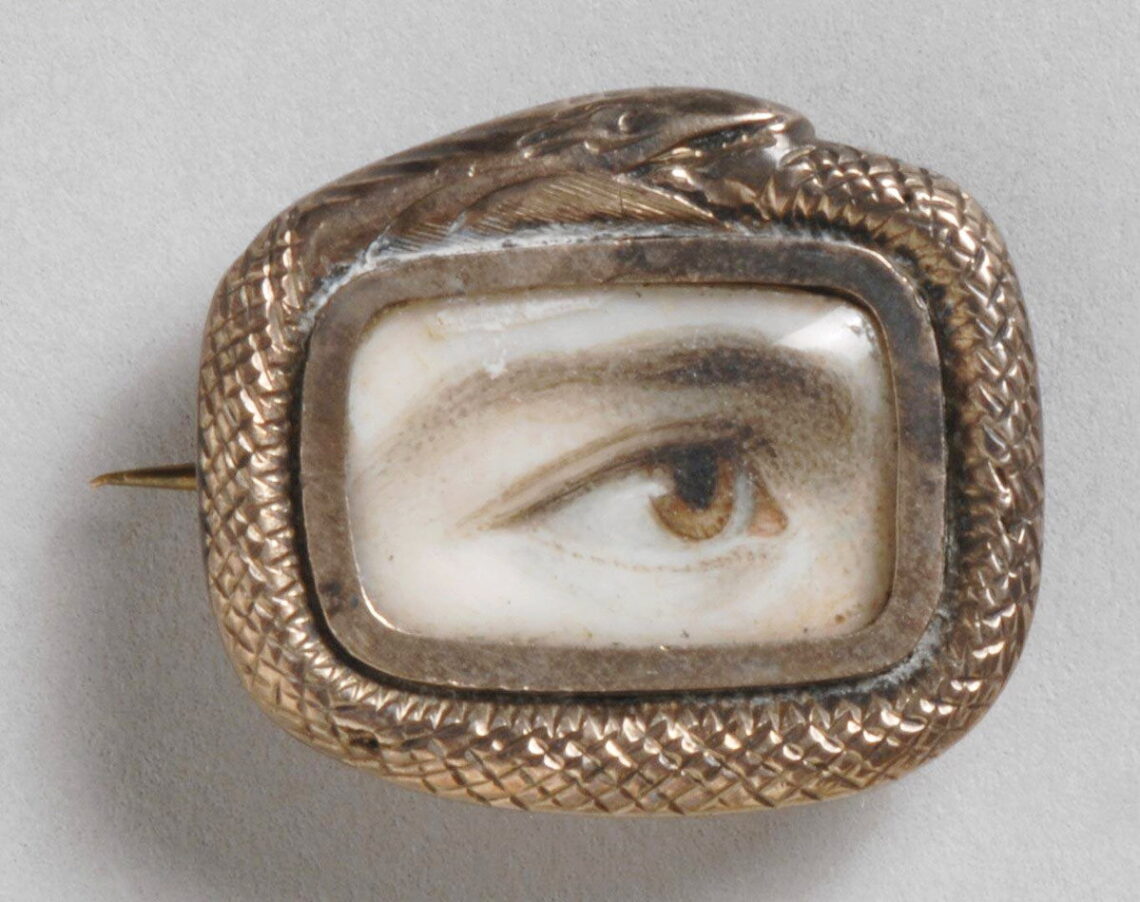
image courtesy of the Public Domain Review
by Andrea Rehani-Estes
I was born where the map ran out of patience — first breath taken on a sidewalk that owes nothing to Ashur, in a country that mangles my name into something it can pronounce without effort.
My mother calls me in her mother’s language and I answer in a third language neither of us chose.
This is the country I was born in. This is not the country I am from. I have been trying to say this my whole life in a grammatical construction that does not exist in either tongue.
Belonging, for me, is a place I visit — not a place I live.
In the apartment, my grandmother’s rug covers the floor like a kept promise. On the wall, a photograph of Nineveh taken before everything, and after — both versions hanging side by side, my father pointing at each with the same finger. This was ours. This is also ours. He taught me that the past tense is a kind of present tense if you refuse to conjugate it backward.
At school I was the girl with the lunch that smelled of sumac and rice and someone’s grandmother’s hands, the girl whose holidays fell on Tuesdays, whose Christmas came in April, whose name the teacher paused before like a driver pausing at an unfamiliar road sign — eh-SOR… esa… And me, thirteen, performing forgiveness for a mispronunciation that wasn’t malicious, just enormous, just the whole weight of a hemisphere that never needed to learn my consonants.
I know what you are thinking — that I belong to both worlds. Let me tell you what belonging to both means from inside it:
it means being a stranger with perfect attendance. It means that in the homeland I am the American, softened by safety, sunburned wrong, fumbling the greetings my tongue should know by heart — and here I am the foreigner, permanently, questioned kindly about where I’m really from, a question I have learned to translate: you are welcome here, but provisionally. It means standing in two doorways and belonging to the threshold.
But here is what else I know, and I know it the way my grandmother knew bread — by hand, by heat, without scales:
a place is not only geography. My country exists in the doubled sounds of my mother’s phone calls at midnight, in cardamom measured by memory, never by spoon, in the village news traveling faster than planes, in the jokes that only work in the old language, in the way grief is conducted at funerals — whole choirs of it, unembarrassed, loud.
My country is the kitchen at my aunt’s house, the address of which changes every decade and which is somehow never lost.
I used to think this meant we were broken — a people without a port, scattered, belonging nowhere, carrying clay from a drowned civilization like ballast.
Now I think we are the keepers. Everyone else has a country handed to them. We had to build ours out of consequence — out of memory, recipe, lullaby, liturgy, the stubborn multiplication of grandmothers.
The empires that scattered us are dust, and I mean that as archaeology, not curse: their capitals are mounds, their lions stand behind glass in foreign capitals, their archives are studied by men with spectacles who call us a vanishing minority, endangered heritage, remnant population — as if we were the ruins. As if we were the rubble.
We are not the rubble. We are the reading.
So when you ask me where I am from, I will say the name of the city where I was born, because that is true. And I will say Assyria, which also is — present tense, unbroken, a place that lives now in kitchens and consonants and the specific way my family sets a table like an altar, like an argument, like an arrival.
I was born in between, and I have decided that between is a place. It has weather. It has seasons. My grandmother’s ghost lives there comfortably, complaining about the temperature, feeding everyone.
I am from the place where exile became a household, where absence became an inheritance you set the table for, where a girl can stand in her mother’s language and her grandmother’s silence and her own impatient English, all three at once, and call it not fracture but architecture —
call it, finally, home:
the one I was born into, the one I am building, the one that fits because I made it fit.
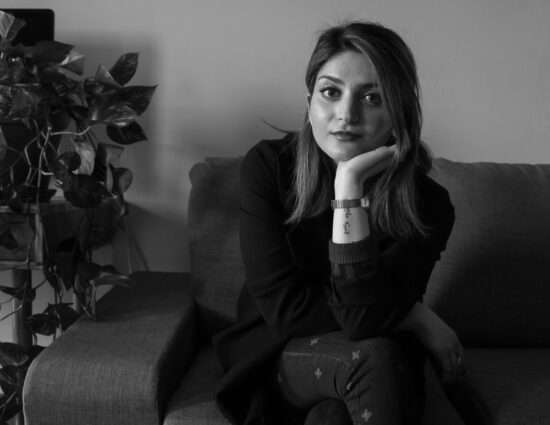
Andrea Rehani-Estes is a Poet and Writer. She holds an MFA in Creative Nonfiction Prose from The New School. Her writing has been published in Grist: A Journal of the Literary Arts, MAKE: A Literary Magazine, Orion Magazine, and elsewhere.