Veritable
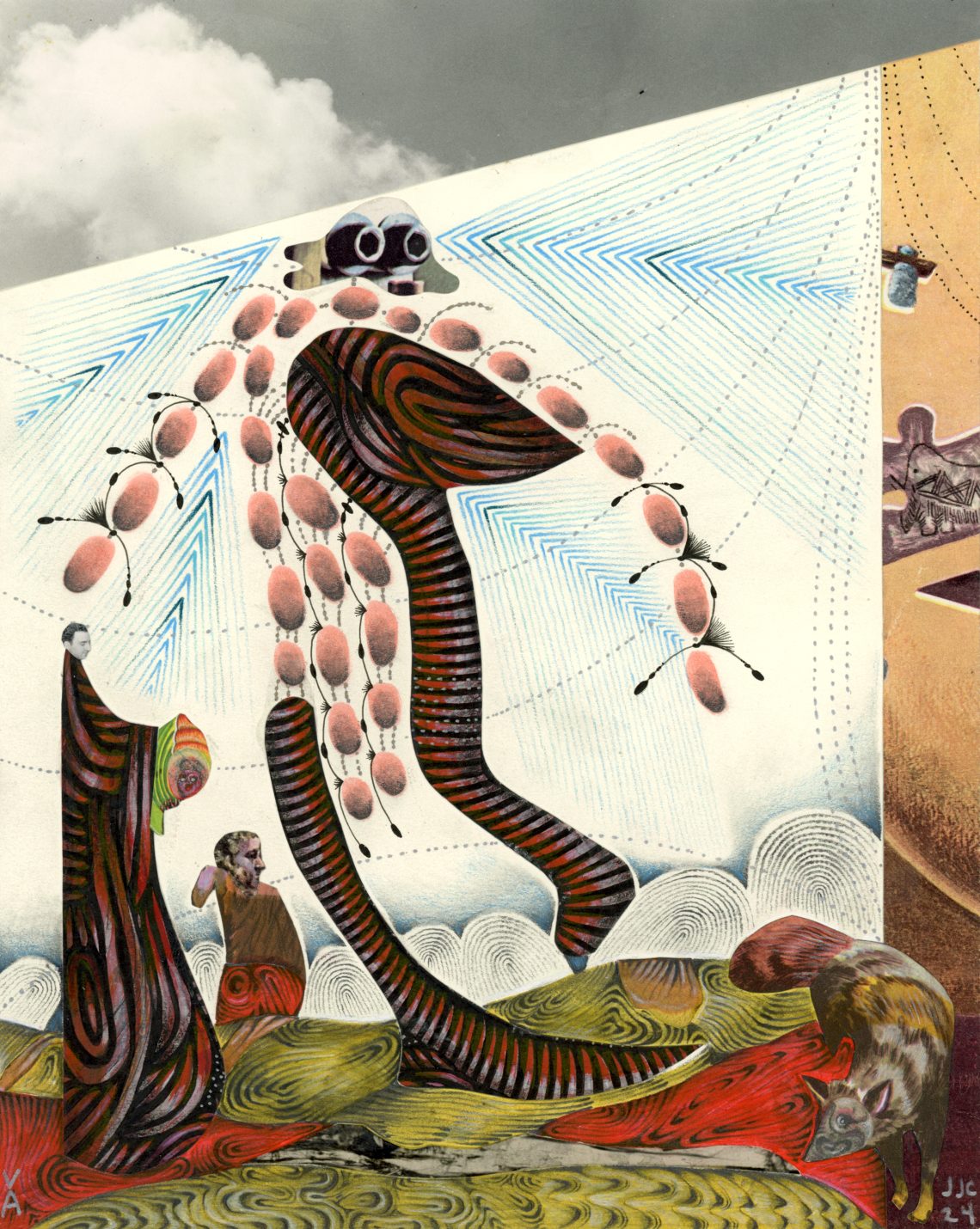
art by JJ Cromer
by Stephen Smith
For Emily
Now it seems further than the past itself,
even outside of time: Barthes and his dictionary,
though we debated if it was his own encyclopedia,
knowing we knew not the answer, the white board
always covered with what seemed the algebra of a life.
We considered it quantum, at best. I failed to get past
Marlon Riggs and his essential question, my legs
each evening folded in a chair on some cold library floor,
devouring AIDS narratives. Then it occurred to me:
though it is all moment-by-moment, this life runs
as a single stroke of steady type, yet remains untold in whole,
this realized only by chance, or it seems, a death of any kind.
Then you showed up to seminar to instruct us,
wind still in your hair from the walk up. You told us
one of your chickens had been torn open by a fox.
The others had cowered in the wire pen, eyeing
the ruby cavity made wide by a thieving muzzle.
Later, we returned from New Orleans and you became
a widow being eaten away by grief. I felt the years come on
as if they were a plague of hornets.
Not until now did I truly consider Marlon Riggs’s question
or our own—what is a life?
I should tell you, its edges are no less defined
than its middle, that as I age, I have less and less
words ready to approximate what it feels like to be
in this world, ravishing and cruel, replete with both
gruel and gold, and the people who know not they are living.
I seem to only have a yearning to explain my own yearning,
though maybe that remains all we have
after the dust of everything
flies from the plains of our palms.
Stephen Foster Smith’s poetry is published with Obsidian Literature & Arts, PRISM International, South Florida Poetry Journal, and more, with work forthcoming in Cincinnati Review. His creative nonfiction has appeared in Vagabond City Lit, 805 Lit + Art, and more, with work forthcoming in The Blue Mountain Review. He is a fellow of The Watering Hole and an alumnus of the PocketMFA program. He currently lives in Atlanta, GA.
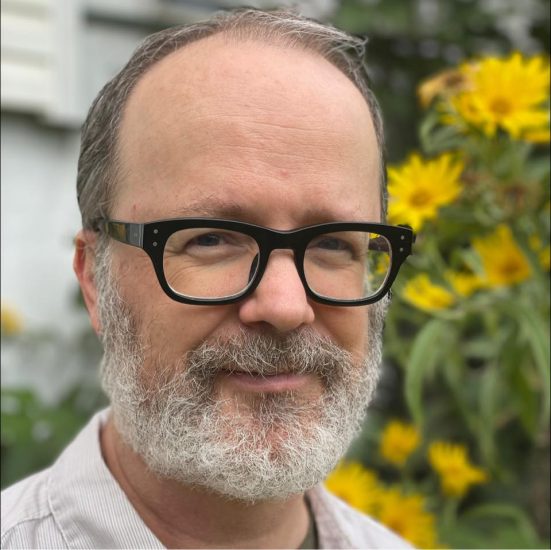
J.J. Cromer and his family live on a small farm in central Appalachia, where they’ve kept bees, geese, ducks, and chickens. Self-taught as an artist, he holds a bachelor's degree in history and two master's degrees — in English and library science. His art is held in the permanent collections of the American Visionary Art Museum, the High Museum of Art, the Taubman Museum of Art, and the American Folk Art Museum, among others.