The Two Worlds of Playwright L.B. Browne
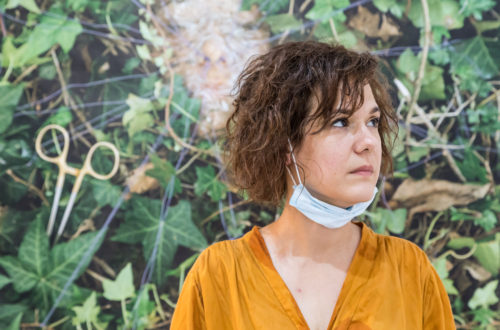
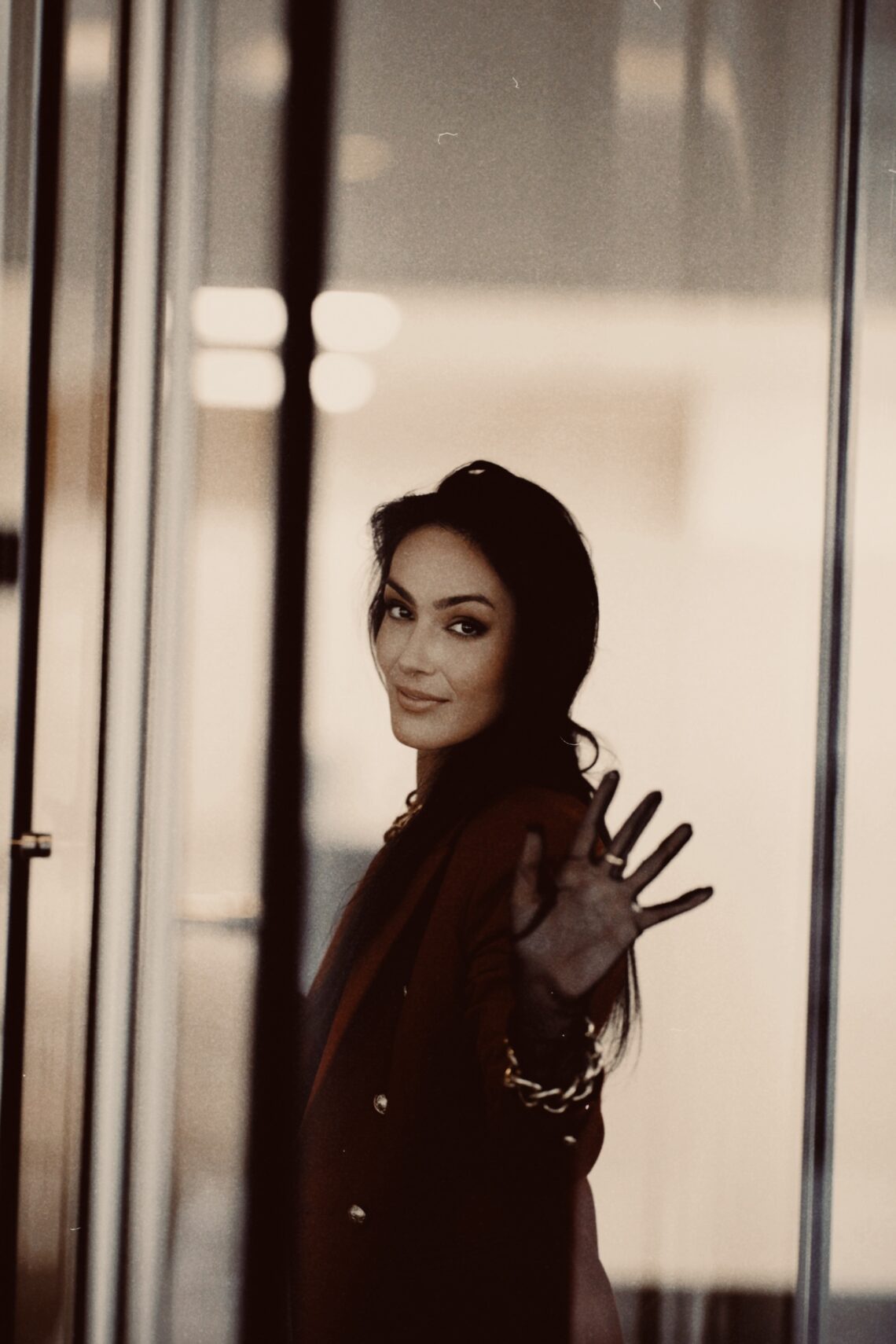
photo by Olga Prudka
by John Kazanjian
On the eve of her trip to Mackinac Island, Michigan, I ask playwright and novelist L.B. Browne if her new Off-Broadway play, Safe House, reflects anything of her own experience growing up. She obfuscates: “As an artist, it’s difficult not to incorporate your formative years in your art, consciously or subconsciously.” For a moment, I consider pressing her, but instead, I wish her a safe trip. To some degree, I know the answer. Since 2019, we’ve been close friends. We met as students in The New School’s MFA in Creative Writing Program, and over the years, we became thesis partners, co-editors of LIT’s fiction section, professors in the same English & Writing Department, and philosophical collaborators self-charged with tending the existential abyss with humor and style. Despite my knowing the answer to my question, I am aware that there is more truth in the way she dodges than in any answer.
In the midst of New York’s heatwave, Browne wisely sought a fairer location. Mackinac Island is a mild, picturesque setting surrounded by Lake Huron. There are no cars; residents get around on horses and bicycles. Its downtown is a citadel of the 19th century. When she tells people about it, they tell her that she is lucky to find a spot away from all the chaos of her Manhattan home. Yet, sanctuary is a complicated concept for Browne. For her, it is not something found in a place.
Browne’s biography attests to her perpetual acceptance of every call to adventure. All her life, Browne has been an adventurer walking in two worlds. One is the shared space where she is dedicated to elevating humanity through art and medicine. She studied French literature at L’Université Sorbonne Nouvelle in Paris, earned an MS in journalism from Columbia University, and received her MD from Duke University. As a physician, she became a Fulbright Scholar and traveled the world, providing care in Senegal, Ethiopia, Haiti, and Ukraine. As a writer, she produces plays and novels (her literary agent is currently submitting her debut novel to publishers) that explore “the intersection of gender, power, and survival within intimate social structures.” Browne’s other world is her own internal space where she tends a garden of philosophy that blooms insights into often-unseen aspects of the human condition. It serves as this adventurer’s mobile sanctuary, one that she carries from place to place. It is both a moveable feast and a room of her own. On September 2nd, when her play Safe House debuts at Beckett Theatre at Theatre Row, Browne will open the doors between these two worlds to theatregoers.
Browne’s Safe House was developed at the 2025 La MaMa Umbria Playwriting Retreat, held in a former monastery in Spoleto, Italy. Within the rustic stone buildings amid breathtaking views of rolling hills, Browne wrote the play while under the mentorship of Pulitzer Prize finalist Dael Orlandersmith. Safe House centers on the complicated relationships of a family in suburban Pennsylvania. When I ask her to summarize the play, she says, “Convinced an upcoming U.S. presidential election will plunge the country into a second civil war, Rock, the family’s patriarch, races to finish converting his basement into a doomsday bunker. But when his long-lost daughter suddenly returns home, his plan to protect his family collides with the people he is trying to save.”
For those curious why Browne, who was surrounded by Italian hills, wrote about the breakdown of a family in Pennsylvania, she explains, “Over the past several years, I kept thinking about how much of our public life has become organized around fear: of social collapse, of political violence, of pandemics, of losing power, of other people’s freedom. At the same time, questions that should belong most intimately to individuals, questions about chronic illness, pregnancy, family, free speech, and the right to self-determination, have become intensely public and contested. I wanted to write a play about how national anxieties are impossible to keep outside the family home.”
On how she synthesized her ideas prompted by the social storm of the contemporary era, Browne describes the moment the seed of the play took root: “Safe House began with a question that felt both political and intensely personal. What happens when the illusion of the private American home as separate from outside politics begins to collapse?”
Browne continues, describing how her family drama presents political stakes that are inseparable from the emotional stakes: “The image that stayed with me was of a father building a bunker underneath his house. I’d started to notice that some of the men I know personally were doing just that. On the surface, they see it as an act of protection. My character believes the country is on the edge of catastrophe, and he wants to keep his family safe. But if you scratch that brittle surface, it becomes much more complicated. What does safety mean when it is defined by the person with the most power? When does protection become control? And what happens when a father’s fear of the world becomes a way of controlling his daughter’s choices and future? Who gets to decide what safety means, and who pays the price for that decision?”
Even beside the waters of Lake Huron, Browne is at work. As a producer, she manages from contributions from benefactors, who have reached out from all around the country to offer their patronage. She coordinates casting and logistics with her play’s production company. She tirelessly works on revisions. Only on Independence Day, when there is no work to be done, does Browne close her laptop and walk along the lake. As a writer, she believes it is her role to pose questions rather than offer answers, and in her repose, she allows new questions to form. She’ll open her private internal space and once again take in the beauty of her surroundings, engage with the people around her, and stand beneath the colorful streaks of fireworks lighting the summer evening, waiting for the seed of her next project to take root.
Safe House by L.B. Browne will run this autumn from September 2 through September 13 at Beckett Theatre at Theatre Row. To support the production of Safe House, visit: https://givebutter.com/safehouse-donate . For novel-related inquiries, reach out to her literary agent, Mark Gottlieb, at mgottlieb@tridentmediagroup.com.
John Kazanjian is a writer, editor, and educator living in New York City. He is Co-Editor of LIT’s Fiction section. His work has been published in The Brooklyn Rail, Rain Taxi, Entropy Magazine, PANK, The Rupture, JMWW, and elsewhere. He holds an MFA from The New School in Manhattan and a BA in English and Textual Studies from Syracuse University. He is a voting member of the National Book Critics Circle and serves as Associate Professor and Department Chair of English & Writing at Helene Fuld College of Nursing. Find him at www.johnkazanjian.com.