Volunteering at the Peace Fair
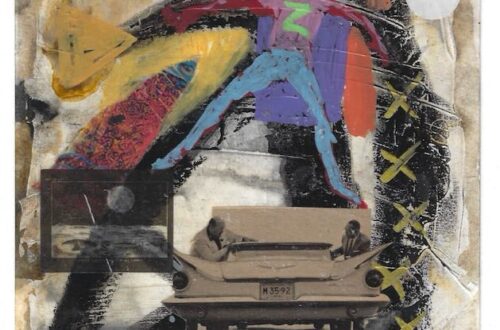
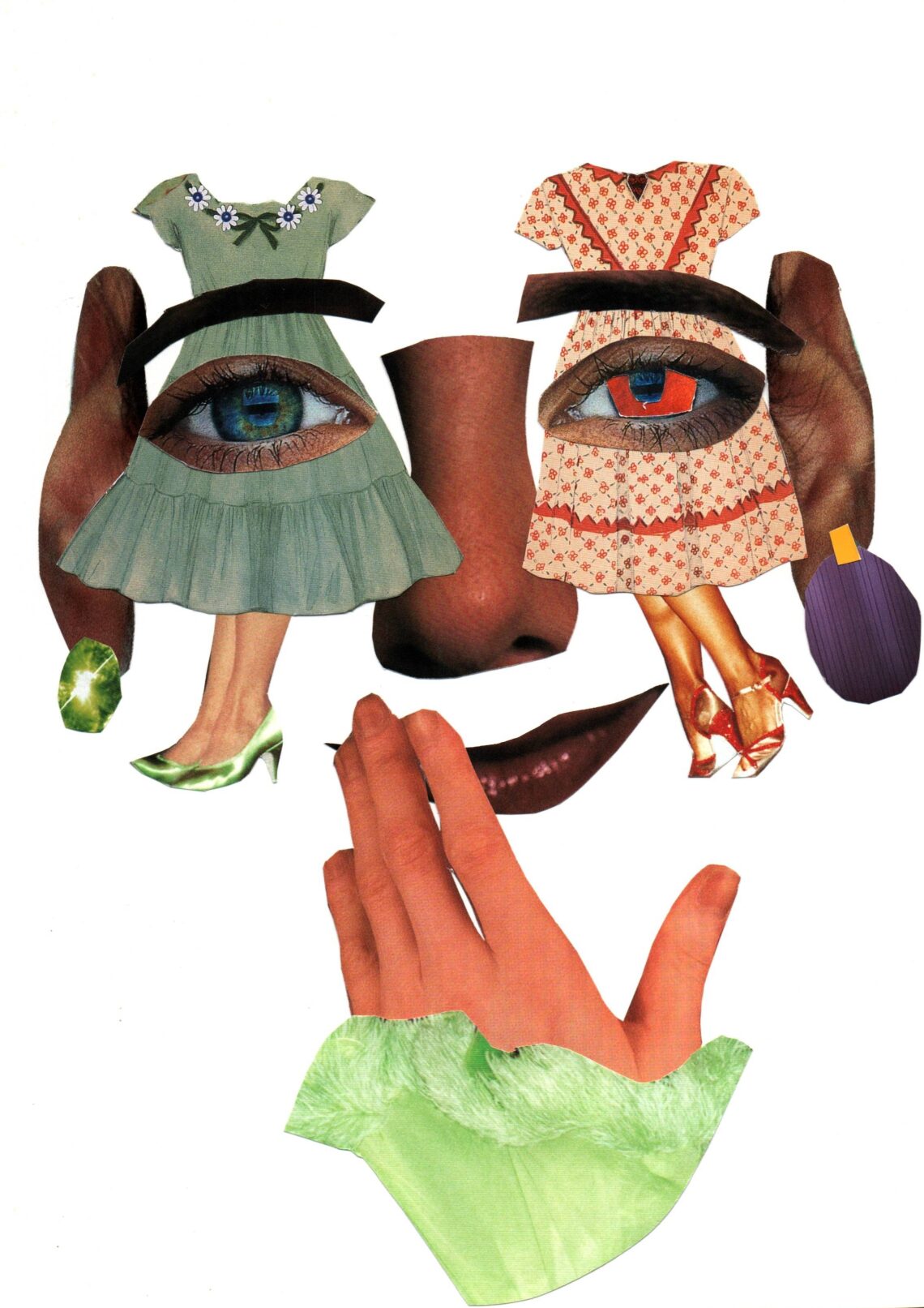
art by Kale Hensley
by Angela Townsend
Most of the volunteers at the Peace Fair are older than me. If I asked them why, they would not be offended, because they have more important things to be. They would try out theories on the spot, lively as popcorn and meaty as portobellos. They would ask my opinion. They would promise that someday I will be old enough to take back every age I have ever been, and at that point I can take the world in my arms.
I am still in the demilitarized zone between the ruddy post-grad and the opaline elder. They both call across the distance to see whose voice I will answer. One squares her hips and shouts in staccato. Come here! She has read St. Paul and Derrida. She quotes chapter and verse. She knows everyone’s motivation. It is imperative that she inform them. There are answers inside her epaulets. She is breathless and beside herself.
The other crouches to my height. She has earned the trust of many feral cats. Her voice is too soft to trip the alarm. The knees of her jeans are threadbare. She believes more than before and needs few words. There are granola bars in her rucksack in case she finds orphans. She teaches breathwork at the senior center to people ten years younger who cancel out her vote.
I come to the Peace Fair to sidle up to my selves. The entire archive endures. I have been strident, and I have been cowardly. I have appointed myself Jesus’s press secretary, and I have stuffed my cheeks with bread to keep my conscience quiet. I have gnarled my poems into barbed wire, and I have left love letters unwritten. When I try to mend the world, the needle pricks my thumb. I come here in my Be Kind T-shirt, asking absolution from vegan grandfathers and Quaker Zumba instructors.
When I open my mouth to confess what I have been and what I cannot yet be, thanksgiving sprints out instead. Before I can compose myself, I am telling a man with eyebrows like thunderclouds that he is the light of the world. He hosts a weekly potluck for immigrants. Some arrived last week, and some arrived four generations ago. He learns languages and teaches music. He is not going anywhere until all his neighbors are safe here. When I thank him, his fingers wrap my forearms. His eyes fill with tears. I wonder what he sees. He pins a button on my shirt like a medal. “Welcome the Stranger.” I try to tell him I have not earned this. He waves his big hands.
Though their caps jangle with slogans and their bumpers are sticker sanctuaries, the Peace Fair volunteers have no taste for rage. They are grilling orange meatless frankfurters and laughing that they taste like heaven but smell like farts. They are covering Pete Seeger and Woody Guthrie on a stage made of apple crates. They are covering guests like me with a blanket welcome.
Everything is purple at the Women’s Center table. I crumple a five into their donation jar. I am about to tell them I have failed many sisters, but all I can say is “thank you.” A woman in a nebula of curls wears a lilac T-shirt reading Not All Ancestors Are Grandmas. Her hand rises to my cheek. She says, “we are here for you.” It takes me a moment to realize she has not spoken an audible word. She is flanked by a Valkyrie in mesh wings and a child-sized person in a purple hat that says TODAY! I want to tell them what I have done and left undone. Instead, I stammer, “I’m so glad you’re here.” TODAY! says they will persevere. She thanks me for doing the same, as though she heard me make a promise.
By the time I make it to the last booth, I am wearing friendship bracelets I did not pay for and carrying a five-foot placard printed Love Thy Neighbor (No Exceptions). I received the latter from the Friends. The Friends caught me reading the names on their peace pole and asked me to sign a petition to our Congressperson on behalf of refugees.
Before I could say “yes,” I thanked them for being. Before I could close my mouth, I told them I did not shut up about Darfur when I was young, and also the death penalty and the Beatitudes, but I used all the wrong words, and now I crawl to the Peace Fair to relearn language by immersion. A Friend in overalls was about to take a bite of an orange frankfurter, doodled with excessive ketchup, but he put it down among the petitions to clap his hands on my two shoulders. “We are all in progress!” He spoke in the key of hallelujah. His partner pulled the placard off their display and pressed it into my hands. “I think you should have this.” I told them to keep up the good fight while reading the other placard, War is Not the Answer.
I cannot get the Peace Fair volunteers to write me off. There are too many names in their prayer journals. If I asked them why, they would say that is a long story better told over tea. But they meet every Tuesday night, and it would be swell if I might attend. They need more volunteers. They thank me for making it to the Peace Fair.
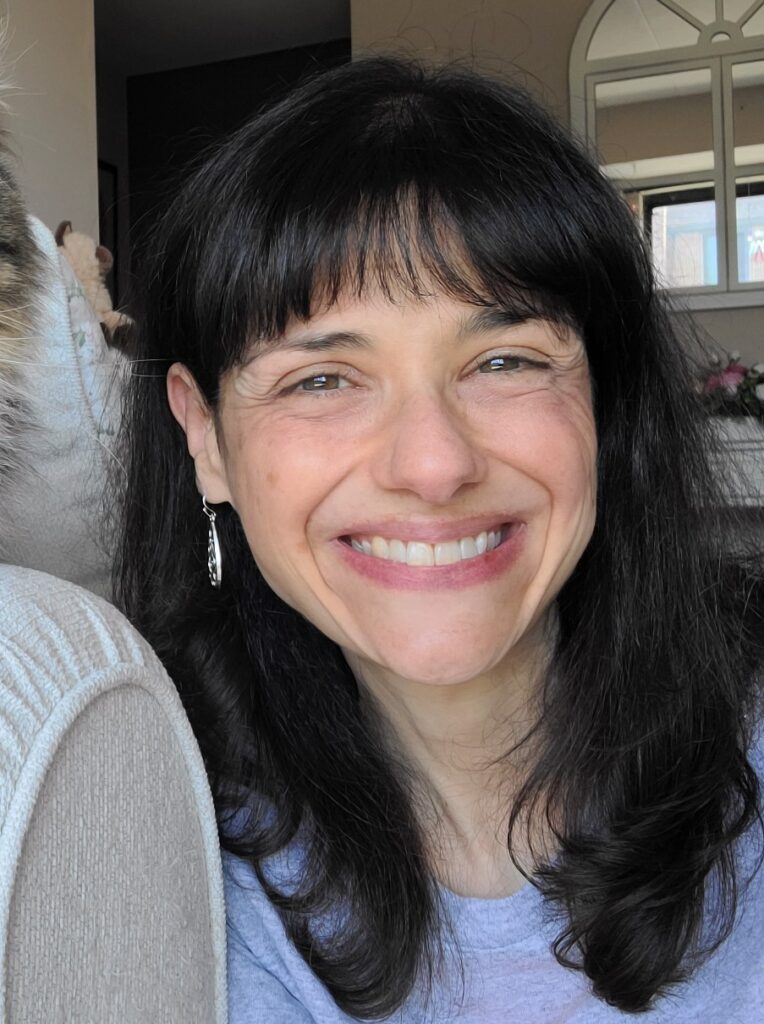
Angela Townsend (she/her) works for a cat sanctuary. She is an eleven-time Pushcart Prize nominee, twenty-one time Best of the Net nominee, five-time Best Small Fictions nominee, and the winner of The Iowa Review’s Tim McGinnis Award and West Trade Review's 704 Prize for Flash Fiction. Her work appears or is forthcoming in Arts & Letters, Blackbird, Chicago Quarterly Review, Five Points, Fourth Genre, JMWW, The Offing, SmokeLong Quarterly, trampset, and Witness. She graduated from Princeton Theological Seminary and Vassar College. Angela has lived with Type 1 diabetes for over 35 years and laughs with her poet mother every morning.
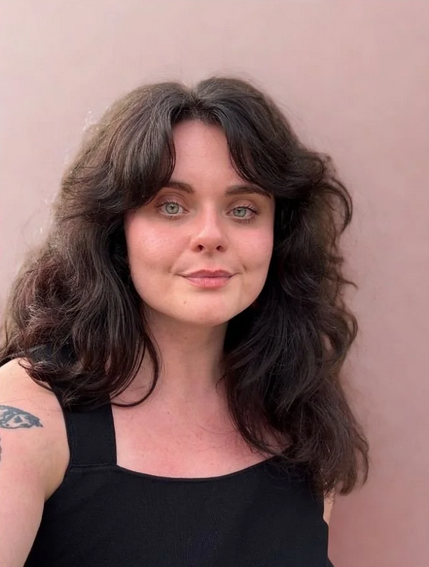
Kale Hensley is a poet and visual artist from West Virginia. Their writing has appeared in Gulf Coast, Booth, Evergreen Review, Image, and Sonora Review. They were selected by Adele Elise Williams as the recipient of the 2026 Elmer Kelton Prize for Poetry and selected by Jaia Hamid Bashir for the Clarion Poetry Prize. Find more of their writing at www.kalehens.com.